Mascots conference

Educational content designed to spark curiosity and build real understanding.

Archives (page 11 of 12)

What Example-first pedagogy Reveals About Edtech and online learning after the pandemic

Let’s work through what is actually happening here, step by step. The topic of edtech and online learning after the pandemic deserves more careful attention than the typical coverage provides, and the reason is not complicated once you know where to look.

The useful question to ask at this point is, viewed through the lens of example-first pedagogy, are micro-credential programmes gaining employer acceptance as degree alternatives? The practical read of the situation is also the more accurate one once you examine what the evidence actually shows.
What Example-first pedagogy Reveals About Edtech and online learning after the pandemic

The Pedagogy: Setting the Terms

Coursera and edX platform enrolments stabilising at 100 million combined is not just a data point in the story of edtech and online learning after the pandemic. It’s the structural condition that makes everything else in this analysis make sense. Context like this doesn’t age quickly. The conditions that produced it have been building for years, and the convergence is what makes the current moment different from previous moments that looked similar from a distance.

Micro-credential programmes gaining employer acceptance as degree alternatives, and K-12 learning loss from COVID still measurable 5 years later in standardised tests. When you look at both together, a pattern emerges that EdSurge education technology has been covering from the inside: the conditions are more durable than they first appear. The implications reach further than the immediate headline suggests.

To understand why this matters, it helps to look at what was true three years ago versus what is true now. The change isn’t simply numbers getting bigger. It’s different. The participants, the infrastructure, and the incentive structures have all shifted in ways that reinforce each other rather than cancel out. That reinforcement is the most important element to track.

What makes this moment worth examining carefully is not the novelty but the confirmation. I’ve been watching these dynamics for some time. What’s new is that they’ve reached a threshold where ignoring them requires active effort rather than simple inattention. That threshold crossing is the event, not the movement that produced it.

And AI tutoring tools showing 1-sigma improvement in maths outcomes in RCT studies is part of that same picture. These elements don’t exist in separate silos. They’re reinforcing conditions in the same structural shift.

The Worked Example: The Analysis

AI tutoring tools showing 1-sigma improvement in maths outcomes in RCT studies is where the analysis gets more specific. The surface reading is accessible and not wrong, but it misses the mechanism, and the mechanism is where the practical insight lives. The useful question to ask at this point is what mechanism we’re seeing here: teacher shortages in STEM subjects reaching crisis levels across OECD countries.

Consider what teacher shortages in STEM subjects reaching crisis levels across OECD countries represents in context. It’s not a correlation that happened to appear. It’s a downstream consequence of structural factors that have been building. Previous readings of similar situations failed because they treated the symptom as the cause. The structural account is less satisfying as a headline but more useful as an analytical tool.

The comparison to prior cycles is instructive precisely because of where it breaks down. Superficially similar conditions resolved differently in previous iterations because the foundation was different. Homeschool rates tripling from pre-pandemic baseline and holding steady represents a foundation change. The kind that alters how flexible the system is rather than just its current state. Recognising that distinction separates real analysis from pattern-matching.

The skeptical counterargument deserves honest engagement: prior moments with similar surface characteristics didn’t produce the outcomes that seemed logical at the time. That history is real. What’s different now is homeschool rates tripling from pre-pandemic baseline and holding steady, which isn’t a minor variable. It’s the infrastructure condition that previous cycles lacked. Infrastructure changes tend to stick around in ways that sentiment-driven changes don’t. The74 education journalism is tracking this dimension with the rigour it requires.

There’s also a question that often goes unaddressed in coverage of edtech and online learning after the pandemic: who captures the value created by these shifts, and who absorbs the disruption costs? The big picture can look positive while the distribution is uneven in ways that matter enormously to specific participants. Keeping that lens in view is part of reading the situation clearly rather than simply optimistically.

Implications: What This Means If You Care About Concept explainers

The implications of edtech and online learning after the pandemic extend beyond the immediate context. Coursera and edX platform enrolments stabilising at 100 million combined, along with the structural conditions described above, creates a situation where adjacent fields, decisions, and communities are affected in ways that aren’t always visible from inside the primary story. The second-order effects are frequently more important than the first-order ones, and they’re where careful attention pays the highest returns.

The frame that matters here, and this is where my perspective differs from mainstream coverage, is that K-12 learning loss from COVID still measurable 5 years later in standardised tests is a leading indicator rather than a lagging one. The people positioned to respond to what this signals, rather than to what it confirms, are the ones who will be less surprised by what follows.

The practical response depends heavily on your position relative to these dynamics. For those closest to the core of edtech and online learning after the pandemic, the implications are immediate and operational. For those at greater distance, the implications are strategic. A matter of understanding which adjacent pressures are building and which assumed stabilities are more fragile than they appear.

The practical question isn’t whether to engage with these dynamics but how. The answer depends on context. On what role you occupy relative to edtech and online learning after the pandemic and what your actual decision horizon is. But the first step is the same regardless: accurate understanding of what’s actually happening rather than what the most available narrative says is happening.

A few concrete observations are worth separating out from the broader analysis. First: micro-credential programmes gaining employer acceptance as degree alternatives isn’t a temporary condition. It’s a new baseline. Second: teacher shortages in STEM subjects reaching crisis levels across OECD countries suggests that the adjustment period isn’t over. Third, and most important: the organisations and individuals who are treating the current moment as a new steady state rather than a transition are making a categorisation error that will be costly to unwind later.

The Case Against: What the Critics Get Right

Intellectual honesty requires acknowledging the strongest counterarguments, not just the weakest ones. The case against the optimistic reading of edtech and online learning after the pandemic isn’t trivial. There are structural vulnerabilities in the current picture that deserve direct engagement rather than dismissal.

The most serious objection is about sustainability. K-12 learning loss from COVID still measurable 5 years later in standardised tests can be read not as a foundation but as a ceiling. A point beyond which growth becomes self-limiting because of the very dynamics that produced it. If the current state has already incorporated most of the available supply of early-adopting participants, the remaining growth curve may be structurally shallower than the recent trajectory implies.

There’s also the policy and regulatory dimension. Coursera and edX platform enrolments stabilising at 100 million combined describes a condition in a relatively permissive environment. Regulatory responses to the scale implied by these numbers aren’t inevitable, but they’re not implausible either. The organisations that are planning as though the current regulatory environment is permanent are making an assumption that the history of fast-growing sectors doesn’t support.

The rebuttal to these concerns isn’t that they’re wrong. It’s that they’re already partially priced into the current state of the field. Homeschool rates tripling from pre-pandemic baseline and holding steady reflects an environment where participants are already adapting to constraints rather than operating in an unconstrained space. The adjustment capacity of the ecosystem is higher than a purely top-down view of the risks suggests.

Looking Forward

The trajectory here is clearer than the pace. Making predictions about when specific thresholds will be crossed is genuinely difficult, and anyone claiming precision about timelines should be treated with scepticism. But the direction, toward Coursera and edX platform enrolments continuing to stabilise and continued development of the conditions described above, is supported by the evidence in a way that doesn’t depend on a single variable going right.

Homeschool rates tripling from pre-pandemic baseline and holding steady is the variable I’m watching as the leading indicator. Historical patterns suggest it moves first, with broader metrics following with some lag. This doesn’t make the outcome certain, but it makes it readable. And readability is what you need for good decisions.

Three questions are worth holding as the story develops. First: are the structural conditions that enabled the current state durable, or are they cyclical? Second: who’s positioned to benefit from the next phase, and does that differ materially from who benefited in the current phase? Third: what would a clean falsification of the optimistic thesis look like, and is there any evidence of that signal emerging? These questions don’t need answers today, but having asked them changes what you notice in the months ahead.

The next step, for most people reading this, is a small one. The current moment in edtech and online learning after the pandemic is one where the people who have built an accurate model of what’s actually happening are better positioned than the people who are relying on the surface story. Building that model isn’t a quick task, but it’s doable. This analysis is intended as one input into it.

What would you use this approach to teach? Or what didn’t land? I want to fix it.
Sticky post

Mascots Conference — Learning Without Limits

Mascots Conference — Learning Without Limits

Educational content that actually makes sense. We break down complex topics so you can really get them.

Here’s what bugs me: education is literally the most important thing we do as a society, yet most students and teachers are working with scraps for resources. That’s ridiculous. We write clear explanations, practical guides, and research summaries that don’t put you to sleep. Because learning shouldn’t feel like punishment.

Topics we cover: For Students · For Educators · Research · Explainers · Tools · Career

Navigating the Creative AI Revolution: Machines With Artistry

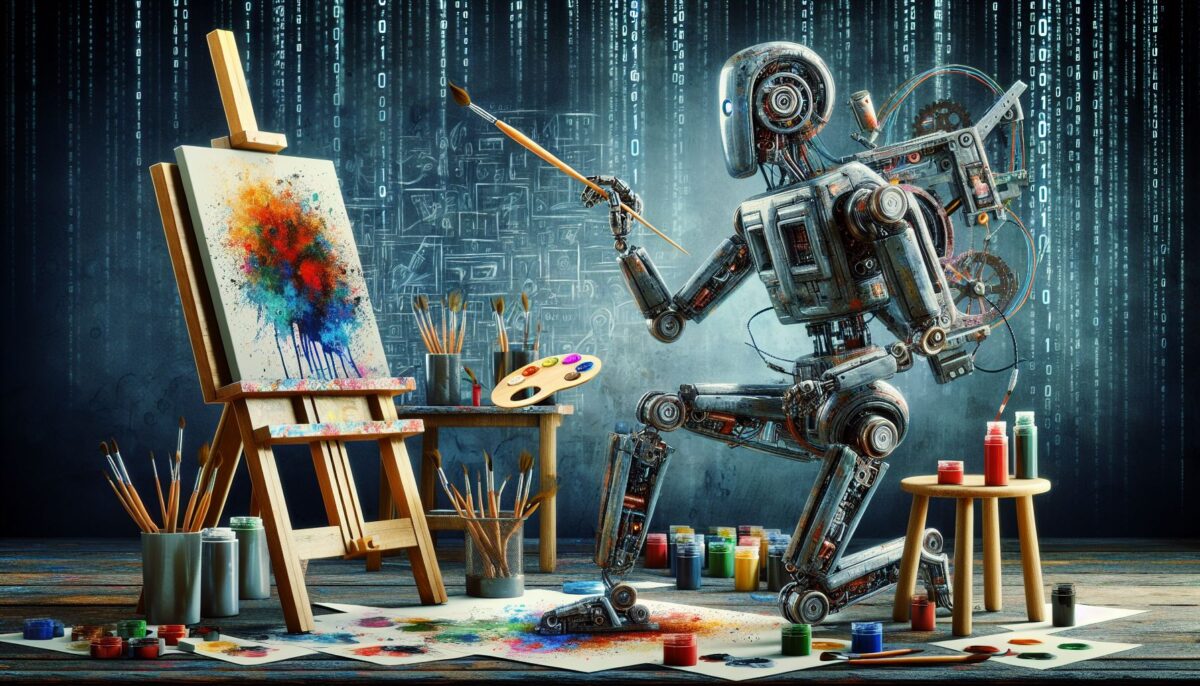
Hey fellow tech enthusiasts! Grab your favorite caffeinated beverage and settle in, because today, we’re diving into a topic that never fails to blur the lines between human potential and technological ingenuity: Artificial Intelligence in the creative arts. That’s right—machines aren’t just learning to think (if we can call it that) but they’re also learning to feel, in a manner of speaking. Imagine an AI that doesn’t just calculate but paints, crafts music, and even writes poetry. Is this the future of art? Could very well be. Let’s explore!

Machines With Imagination: Sounds Crazy, Right?

First, let me share a little personal tidbit. When I was a kid, I was fascinated by those “create your own adventure” storybooks—remember those? Fast forward to my adult life, and watching AI create stories, images, and music feels like I’ve been handed one big cosmic adventure book where each turn of the page is coded in binary stars. For me, it’s like seeing a long-lost dream come alive. But let’s not get too romantic. AI in the creative realm has serious implications and challenges that need hashing out.

Recent Milestones: Making Waves in the Art World

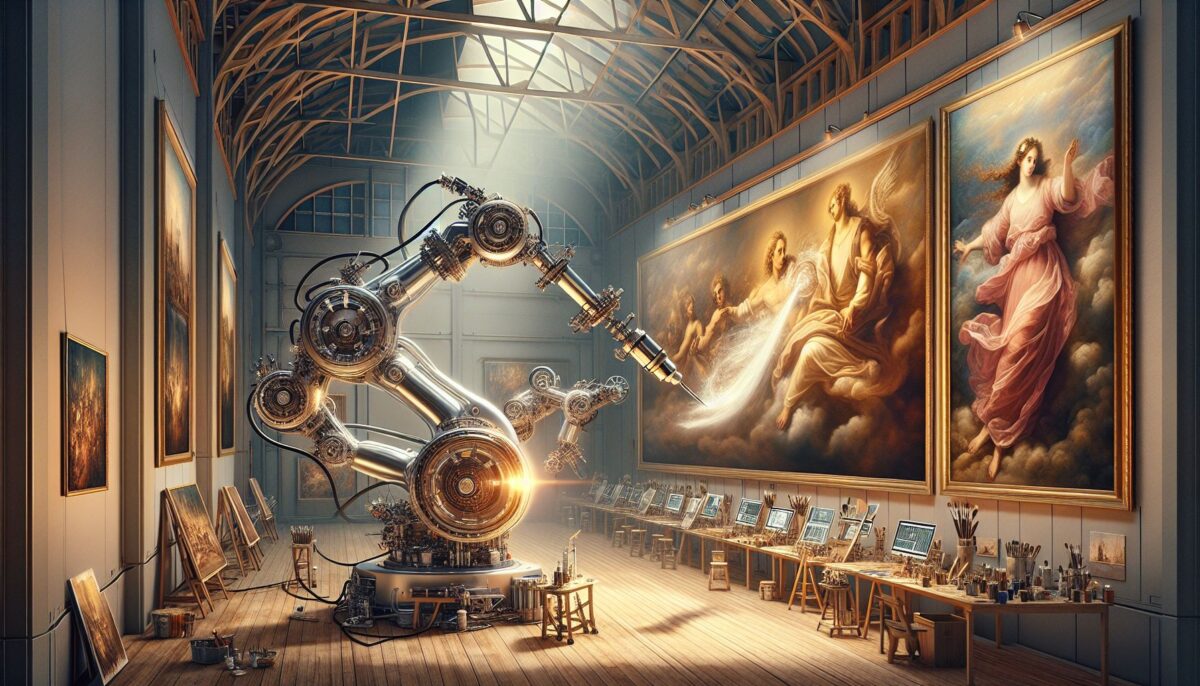
So what’s happened recently to make everyone lose their minds? For starters, AI-generated artworks have started showing up in mainstream art spaces and galleries. Take Christie’s 2018 auction of an AI-generated portrait called “Edmond de Belamy,” which sold for a jaw-dropping $432,500. That’s some serious cash for something created by an algorithm!

OpenAI’s DALL-E continues to blow minds with what it can do. Using massive datasets, DALL-E can generate images from textual descriptions. “An astronaut riding a horse in a futuristic cityscape” or “A Victorian-style portrait of a koala in a top hat”—done!

Music to Our Ears: The Sonic Frontier

The visual arts aren’t the only ones getting attention. AI is also making noise in music composition. Tools like Amper Music and AIVA use deep learning to analyze music theory and historical compositions, then come up with brand-new tunes. Fun fact: AIVA is even recognized by a musical organization—a world first—which means it can technically “compose” legally protected music. I mean, come on! How wild is that?

But let’s be real here. While AI can understand structure and theory, we’re nowhere near the masterpieces of Beethoven or The Beatles. Yet. Whether it’s cranking up heavy metal riffs or composing symphonies, getting AI to make emotionally resonant music is where the real challenge lives.

The Human Element: Are We Being Replaced?

Now, let’s tackle the elephant in the room: is AI about to kick us out of our own creative spaces? Not anytime soon, friend. While AI can mimic certain parts of creativity, it doesn’t mean we’re about to see software race past the Sistine Chapel or an AI author shooting to the top of the New York Times Best Sellers list.

Why? Because creativity is more than just mixing colors, notes, or words. It’s about emotion, experience, and sometimes, a sprinkle of madness—something that AI isn’t equipped to handle. Yet.

But here’s the thing: AI can actually boost human creativity. Imagine artists using AI to break traditional boundaries, generating ideas they couldn’t dream up on their own. It could completely change what “collaboration” means in art!

Breaking the Mold: A New Genre Emerges

Case in point: Bahrain-based artist Faiq Alfaker went viral after creating his own visual style using an AI training model of his previous works. It wasn’t just human and machine working together, but a completely new genre that developed naturally. Kind of like the jazz of the tech world.

Challenges and Ethical Quandaries

Of course, it’s not all sunshine and rainbows. AI-generated art brings its own messy set of ethical and legal questions. Who owns a piece created by AI? Who’s responsible if the generated content has unintended bias or copyright problems?

These challenges need real answers if AI art is going to work long-term in our creative world. Some interesting laws and guidelines are being discussed, but we’re still figuring this out as we go, and there’s a chance to get it right.

What Does the Crystal Ball Say?

Looking into tech’s future can be like staring at a surrealist painting—confusing yet fascinating. There’s a lot of room for guessing here. We might see a future where AI helps human artists, pushing them toward creative territories they couldn’t explore alone.

Or we could see the rise of a genre that’s purely AI-crafted, appreciated for what it is—a strange but compelling conversation between cold computation and abstract emotion.

Final Thoughts: The Coming Renaissance?

So there you have it—the full story on the wonders, challenges, and future of AI in creative arts. Whether this turns out to be a renaissance or something completely different, one thing’s certain: the relationship between humans and machines is changing, and we get front-row seats to watch it happen.

Are you ready for it? What potential collaborations excite or scare you? Drop your thoughts in the comments because this conversation, with all its messiness and complexity, is nowhere near finished.

For now, though, enjoy the ride. As they say, the world is your (digital) canvas!

The AI Artistry Revolution: When Machines Meet the Muse

Hey, tech enthusiasts! Grab your favorite caffeinated beverage and settle in because today, we’re diving into the wonderfully wild world of AI in creative arts. It’s like discovering a whole new color in the rainbow — unexpected and honestly pretty mind-blowing. As someone who’s watched AI evolve from the early, clumsy beginnings to the current explosion of creative prowess, I’m pumped to share some insights into how this technology is changing art as we know it. So, let’s roll up our sleeves and let our pixels run wild!

The Birth of AI Artistry

Once upon a time in the not-so-distant past, artificial intelligence was primarily the domain of number-crunching and predictions. You know the drill — stock markets, weather forecasts, maybe even your smart thermostat deciding it’s too cool for comfort at 2 AM. But then, like a plot twist in your favorite sci-fi novel, AI decided it wanted to try something different: get creative.

The breakthrough moment? Generative Adversarial Networks (GANs). These nifty algorithms operate on a game of cat and mouse, where two networks battle it out — one trying to create something (the generator) and the other trying to determine if it’s real or fake (the discriminator). Sounds like Hollywood material already, doesn’t it?

These networks have created AI-generated art that can make you do a double-take, questioning if an esteemed artist crafted it or a computer algorithm. From dreamy landscapes reminiscent of Monet to portraits that eerily echo the brushstrokes of Van Gogh, AI has proven it’s got a knack for mimicry and much more.

AI: The New Artist in the House

Okay, so AI’s mimicry skills are top-notch, but what does this mean for actual artists? Will their creative juices dry up, leaving a world of algorithm-generated monotony? Not so fast, my friend.

Rather than replacing artists, AI is becoming a formidable collaborator. Imagine this: you’re an aspiring author staring at a blank screen, that cursor becoming more mocking with every blink. Enter AI — not to write your novel, but to brainstorm with you, offering plot twists or character arcs you hadn’t considered.

In visual arts, programs like DeepArt and Runway ML have allowed artists to explore new styles with ease, generating drafts or ideas that can be fine-tuned by the human hand. It’s kind of like having an intern who tirelessly drafts concepts but leaves the final touches to you, the maestro. The creativity remains uniquely human, with AI working as an exciting tool that pushes the boundaries of what’s possible.

Challenges and Ethical Dilemmas

As rosy as this future sounds, it wouldn’t be a true innovation without its share of challenges. For starters, there’s the ownership conundrum: if an AI creates a masterpiece, who gets the bragging rights? The programmer? The algorithm itself? Does the AI deserve its own exhibition, complete with a press tour and a misunderstood-but-quirky persona?

Then there’s the human element — or lack thereof. One can argue that art without human emotion lacks depth, that the absence of experience and suffering (or joy) creates a void that no algorithm can fill. With AI-generated art, are we just grazing the surface of creativity without the rich subtext?

Ethics aside, there’s also the hurdle of accessibility. While big companies like OpenAI and Adobe push the envelope, the technology isn’t universally available just yet. The digital divide can still keep many budding artists from leveraging these tools, leaving a gap that needs bridging.

The Future Canvas: AI and Artistic Evolution

Fast-forward a decade, and we might see AI as an integral part of our artistic journeys, just like the trusted paintbrush or piano keys. One exciting prospect is the potential for personalized art — pieces tailor-made by AI to suit your tastes, your moods, your quirks. It might recommend the perfect artwork for your living room, created specifically with your ambiance in mind.

AI could also democratize art further, making it more accessible and allowing anyone with an idea to manifest it beautifully, regardless of their physical abilities or resources. Imagine an explosion of creativity where everyone gets their moment to shine, aided by an AI that knows just how to bring their vision to life.

Final Thoughts

To say we’re on the cusp of an artistic revolution might sound dramatic, yet also undeniably true. As AI continues to dazzle us with its creative capabilities, we stand to witness a renaissance unlike any before. Who knew silicon and syntax could wield a paintbrush or pen as deftly as an artist?

Let’s continue to contemplate, challenge, and ultimately embrace this new frontier. As technology evolves, so too will our definition of art, expanding like the universe itself. Keep those creative juices flowing, and remember: innovation, no matter how tech-driven, always starts with a spark of human curiosity. More on this next time, as we watch our palettes and prose grow richer with the power of AI.

Can we get applause — digital or otherwise — for our ethereal co-creators? Until next time, stay curious, stay creative!

Unlocking Longevity: Cracking the Code to Longer, Healthier Lives

Hey fellow tech enthusiasts, let’s talk about something both exhilarating and a bit mind-bending — not just living longer, but living better, healthier lives. The idea we’re chewing on today is longevity. Yup, that catch-all term that’s not just about adding years to our lifespan, but also making those years as healthy and disease-free as possible. Sounds like science fiction? Hang on, because the breakthroughs are closer than you’d think!

A New Era of Longevity Research

I’ve been diving into the latest reports and it feels like every month we’re hitting a new milestone. Scientists and researchers are getting closer to peeling back the layers of aging, much like the endless layers of an onion, except it’s the kind you actually want to get to the bottom of.

Organizations like the Buck Institute for Research on Aging and Harvard’s David Sinclair lab are working tirelessly, examining everything from the role of genes to the impact of environmental factors on our cellular makeup. It’s like they’ve got a map and are slowly filling in the blanks. And what happens when they finally connect all those dots? Well, folks, we’re talking about an old age that might not suck.

Gene Therapies Meet the Fountain of Youth

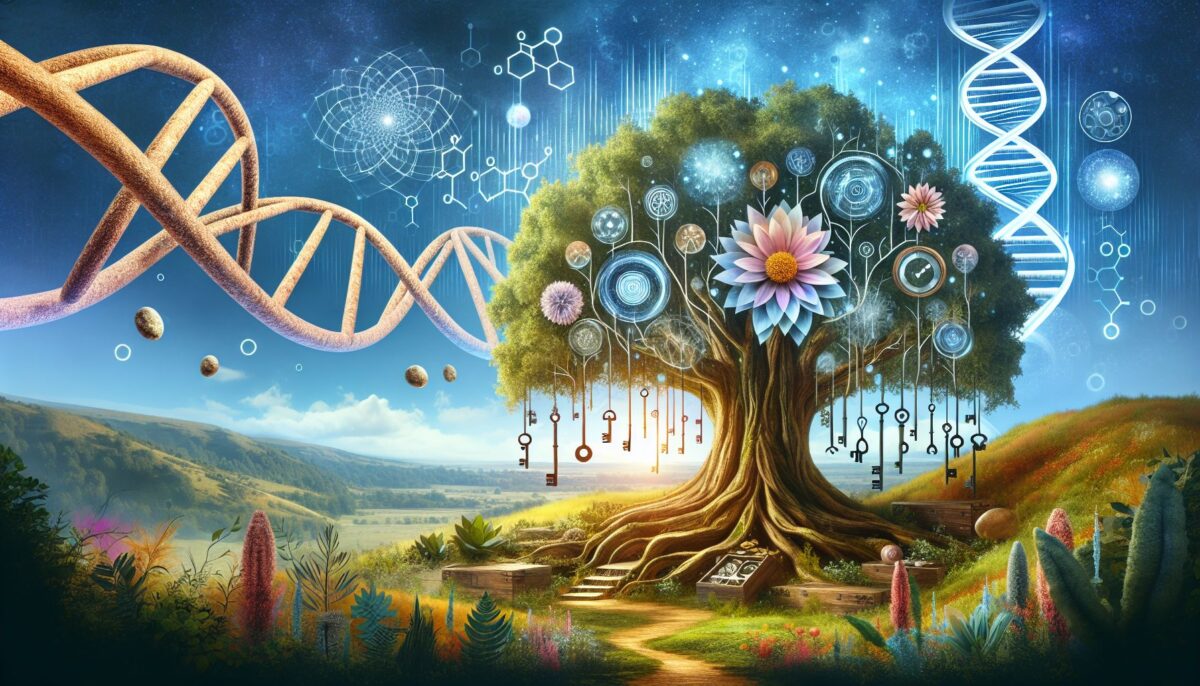
One of the frontrunners in this race is gene therapy. Ever wished you could just nix a bad trait from your family’s genetic roll of dice — no more bad backs or high cholesterol? Well, that’s what gene therapy aims to do. Using CRISPR and other gene-editing technologies, scientists are learning how to alter specific genes to either prevent them from misbehaving or enhance their positive qualities. Think of it like updating the software on your phone, except it’s your body, and the stakes are a tad higher than whether that new app loads an emoji faster.

To make it a bit more relatable, imagine running a marathon (if that’s your thing) without feeling like you’re dragging lead weights behind you because your muscles and joints feel twenty years younger. It’s like replacing your body’s worn-out parts with a brand-new set. By manipulating genes, researchers aim to delay the onset of age-related diseases like Alzheimer’s, heart disease, and even some cancers.

Nutraceuticals: Not Your Average Supplements

If you thought popping a daily multivitamin was enough to keep the doctor away, hold onto your hats. We’re now stepping into the age of nutraceuticals — supplements designed to work at the molecular level to promote longevity. Thanks to some brilliant minds, like biologist David Sinclair, we now have a deeper understanding of molecules like NAD+ (Nicotinamide Adenine Dinucleotide). This naturally occurring molecule declines as we age, but with supplements that boost its levels, we’re starting to see promising results in muscle function and metabolism for older test subjects.

And let’s not overlook the booming field of senolytics. These are drugs that specifically target senescent cells — the cellular freeloaders that accumulate as we age and contribute to inflammation and tissue breakdown. By selectively eliminating these cells, senolytics offer the potential to refresh aging tissues. Talk about detoxing at a whole new level!

Biotech Startups: Pushing the Envelope

Over the last few years, tech startups have been popping up like mushrooms after a rainstorm, and they’re aiming their sights on exactly these types of therapies. Calico Life Sciences, backed by Google’s parent company Alphabet, is a heavyweight in this space. They’re banking on deep learning models to unravel the complexities of age-related paths in the human gene.

With heavy hitters like Altos Labs and their billion-dollar funding pool, the industry isn’t kidding around. These companies are recruiting top-tier talent from various fields — anything from bioinformatics to epigenetics — in a bid to accelerate discoveries and take advantage of emerging technologies.

The Social and Ethical Jungle Gym

All this isn’t happening in a vacuum. Extending human life raises some hefty ethical considerations, not to mention social implications. If everybody lives to 120, what happens to population density, job markets, and natural resources? Will society start treating retirees as the norm rather than the exception? Plus, of course, there’s the notorious wealth gap bringing its own set of challenges. It’s not ideal if only the ultra-rich can afford these treatments while the rest of us are left watching from the sidelines.

It feels a little bit like an episode of “Black Mirror,” doesn’t it? But let’s keep it real; these technological breakthroughs offer us a tangible hope that we might overcome some of humanity’s most stubborn diseases. The key is doing it responsibly, with one foot in technological advancement and the other firmly grounded in ethics and equity.

Speculating About the Future

Crystal balls aside, if these efforts bear fruit, we’re looking at an era where medicine is personalized at the genetic level — not just to treat illness but to enhance quality of life preemptively. Within the next two decades, imagine getting a yearly update not just on your health, but on your ‘cellular software’ with actionable tweaks to your lifestyle or therapies that could keep the Grim Reaper at bay.

Could we be heading toward a world where birthday cakes stack up for over a century while people remain actively contributing members of society and not just accruing wisdom in a rocking chair? Sure, it sounds utopian, but sometimes a little crazy helps kickstart the miraculous.

Conclusion: A New Age of Optimism

So, there we have it. We’re not just racing against death; we’re redefining the playing field. These advancements aren’t pie-in-the-sky fantasies, but tangible breakthroughs that are finding their footing in today’s science world.

Every day we’re inching closer to a world where longevity isn’t a byword for protracted old-age ailments but a healthy, robust, and active life. And who knows what’s next? Maybe when we’re all 100, running marathons, and rocking out at concerts together, we’ll look back and wonder how we ever thought differently.

So let’s keep our fingers crossed, our minds open, and our genes flexible. Here’s to a world that blurs the lines between science fiction and science fact, with a promise that’s oh-so-very sweet!

AI and the Creative Arts: Redefining What’s Possible

Hey fellow tech enthusiasts,

Today, I want to talk about a topic that’s been sparking a lot of excitement (and maybe a little bit of unease) around the world: the intersection of artificial intelligence and the creative arts. This isn’t your basic “machines are coming” story. Nope, it’s more like “machines are here, and they’re jamming with us on the creative dance floor.” So grab your virtual beret, and let’s explore how AI is changing artistic expression, and what that might mean for all of us.

Painting With Pixels: How AI Is Transforming Visual Art

You’ve probably seen those AI-generated paintings that look strikingly like something you’d expect to find in a gallery. We’re talking about programs like DALL-E and DeepArt that are blurring the lines between human-made and machine-created art. It’s like your computer decided it had an inner Van Gogh just waiting to break free.

In my humble opinion, these AI artists offer some really exciting possibilities. On one hand, they’re democratizing art creation by allowing anyone with a computer to participate. Remember those days when we needed to be born with a paintbrush in hand to call ourselves artists? Well, say goodbye to those times. Now, even I can whip up a digital masterpiece while sipping my morning coffee.

On the other hand, it’s a collaboration between human and machine that feels like having a conversation with a very insightful friend. You still guide the process, but the AI offers ideas you might never have thought of on your own. It’s a whole new way of engaging with art that’s more about exploration than perfection.

AI Symphony: Composing Music With Algorithms

Let’s switch gears and talk music. Ever since I tried my hand at the guitar and realized I’m no Jimi Hendrix, I’ve been super curious about how AI could help musically-challenged folks like me.

There are already AI systems out there crafting original compositions that are surprisingly moving. Tools like AIVA (Artificial Intelligence Virtual Artist) and OpenAI’s MuseNet are pushing the boundaries by creating symphonies, jazz, folk, and even pop music. You name it, these algorithms can probably compose it.

AI in music isn’t just about cranking out tunes. Musicians are using these tools as collaborative partners in their creative workflow. It’s like having a bandmate who’s available 24/7, never gets tired, and can fluently “speak” in any genre you throw at it.

Sure, the question of authenticity comes up a lot. Is it “real” music if it’s churned out by a bunch of code? My perspective? Music is emotion. If it resonates with you, if it moves you or conjures up memories, then who cares if it was composed by a human or a silicone-based wunderkind? Maybe what matters isn’t who or what creates music, but how it connects with us.

AI Writing: The Pen Mightier Than… Well, Another Pen

As someone who’s trying to string together something coherent here, the buzz around AI in writing is particularly intriguing. And, hey, don’t look now, but folks are already experimenting with AI for writing books, screenplays, and even this blog post (wink, wink).

AI writing tools like GPT-3 and others are getting seriously good at generating text that can mimic human prose. They’re not perfect, but they can be a solid brainstorming buddy for anyone experiencing writer’s block. Plus, they never get annoyed if you reject their ideas, a very patient (and non-judgmental) creative partner!

Critics argue that AI-generated writing lacks authenticity. It’s more imitation than innovation, they insist. But here’s the thing. Every writer takes inspiration from sources, right? AI is simply another source of ideas, one that can be particularly helpful in producing volumes of content or generating ideas quickly.

Is there a risk of losing the “human touch” in AI-powered writing? Sure, that’s a valid concern. But I’m optimistic about humans integrating these tools in ways that add depth and new dimensions to storytelling rather than taking away from what makes writing meaningful.

Navigating the Bottleneck: Ethical Implications

No good conversation about AI would be complete without addressing the ethics of it all. With great power comes great responsibility (yes, I just dropped a Spider-Man reference). The rise of AI in creative fields throws some ethical curveballs, like ownership, originality, and artistic authenticity.

Who owns an AI-generated work? Is it the programmer? The end user? The AI itself (cue the existential crisis music)? These are questions that we’re still grappling with, and they deserve careful consideration.

And then there’s the issue of AI creating content that mimics human biases in whatever data it absorbs. It’s a reminder that while AI can be incredibly powerful, it’s still a tool that’s only as unbiased as its input data. Thoughtful and responsible development matters if we’re going to keep seeing positive advances.

Looking Forward: What’s Next for AI and Creativity

So, where are we headed with AI and creative arts? From my vantage point, we’ve got an interesting road ahead. Imagine a world where anyone could paint, compose, write, or film, breaking down barriers to creative expression. A world where our creative instincts are enhanced, not diminished, by the digital tools we’ve built.

Could AI one day rival human creativity, crafting original pieces that move us to tears or drive us to dance? It’s possible, though we’re not quite there yet. But do we need to see AI as a rival at all? What if, instead, we viewed these algorithmic artists as partners enhancing our own creative quests, a collective rise in artistry rather than a solo climb?

AI in the creative arts is a reminder that technology doesn’t have to replace human creativity. It can amplify it. We’re not just heading toward some predetermined destination, we’re actively building it with every choice and every line of code. Let’s make it worth creating.

Until next time, stay curious and keep creating!

Cheers!

Collision Insurance Defined

So what is collision insurance anyway? The US Department of Insurance defines it like this: “A policy insures against damage to properties that are insured. For example, a house is insured to the value of the house. If you were to damage the house, the policy would pay for the repair and replacement of the property.” But let’s be honest, that definition is confusing when we’re talking about cars. Here’s a clearer one from the same department: “A policy insures against damage to properties that are generally covered when you are in an accident. What is general coverage? General auto insurance covers damage to automobiles that don’t involve a collision.”

I know what you’re thinking, that second definition doesn’t make much sense either. Here’s what collision insurance actually means in plain English: it covers damage when you hit something that doesn’t move. You slam into a tree? Covered. You back into a stop sign? Covered. You slide off the road and hit a guardrail? Also covered. But here’s the catch: if you hit something that moves, like another car, truck, or motorcycle, that’s where things get more complicated.

Insurance companies put objects into different categories. “Fixed” objects include things like trees, poles, buildings, and road signs. “Movable” objects are things like farm equipment or livestock (yes, if you hit someone’s cow, that’s a thing). Then there’s “unattachable” items, which basically means anything with its own structure like furniture or statues. Oddly enough, motorized wheelchairs don’t fit into this last category.

Here’s where collision coverage actually starts making sense. When you hit another vehicle, collision coverage pays for damage to YOUR car from that crash. So if you hit a deer, you’re responsible for your own car’s damage because it was a collision between your vehicle and the deer. The deer obviously doesn’t have insurance, so your collision coverage kicks in to fix your car.

Several things affect how much your collision coverage costs. The make and model of your car matters a lot. A brand new BMW costs way more to fix than a 10-year-old Honda Civic. The type of vehicle also plays a role. Trucks typically cost more to insure than small cars because parts and repairs are more expensive. I’d recommend getting quotes from different insurance companies because their collision coverage values can vary quite a bit.

Your deductible choice has a huge impact on your premium. Pick a higher deductible, and your monthly payment drops. If you choose a $200 deductible, you might pay twice as much in premiums compared to a $500 or $1,000 deductible. But here’s the trade-off: if you only pay $15 a month because you have a really high deductible, you’ll shell out much more when you actually need to use the coverage. To learn about the difference between comprehensive vs collision insurance, check out Joywallet’s article.

Your driving record matters more than you might think. Lots of speeding tickets or accidents on your record? Expect to pay more. Traffic violations and other infractions also bump up your rates. Insurance companies use this information to figure out if you’re likely to file a claim. If they think you’re risky to insure, they’ll charge you more. Keep your driving record clean if you want to save money on car insurance.

Collision insurance does more than just cover crash damage. It also pays for repairs to your car after an accident. If your car gets damaged in a collision and you have medical bills too, your collision coverage handles the vehicle repairs while other parts of your policy (like your uninsured motorist coverage) might help with other expenses. It’s all about how the different pieces of your insurance policy work together.

Do You Really Need Average Family Umbrella Insurance?

If you’re a homeowner or renter, you’ve probably heard about umbrella insurance for families. The term average family carry umbrella insurance refers to coverage that protects most of your belongings’ value. This matters when you’re shopping for coverage because it helps shield you from various expenses if something happens to the items in your home or rental.

average family carry umbrella insurance

Most people assume a good family umbrella policy only covers things they own outright. That’s not always true. If you focus solely on your home’s stored items without considering all your belongings, you’re probably missing coverage opportunities. You might not realize you’re overpaying for insurance by skipping a complete inventory of what you own. Here are some examples of what gets covered and typical costs.

Your furniture and accessories can get coverage under some policies. Some insurers only cover furniture inside your home, while others pay to replace items damaged when you’re away. I’d recommend getting comprehensive coverage so you can handle any items that get damaged while your house is being repaired.

You can file claims if your items get stolen or vandalized. Most people don’t realize how much falls into this category. Things like TVs and computers can often be replaced through a replacement shop or retailer. Many families have some money sitting unused at home, but a few furniture pieces like a dresser or desk can become quite valuable if stolen.

Houses with small children often contain items that become valuable when parents are away. This coverage protects most items your kids might need if they’re left alone during an emergency.

Electronics frequently appear on these policies too. These items cost a lot to replace after catastrophic failure. Computers and TVs might have parts that break off. Without policy coverage, you could end up buying another computer or TV set entirely.

If you own any of these items at home, you might find a new one costs much less than replacing your old one. When calculating your insurance premium, this will likely affect the new item’s price.

With this in mind, it’s easy to see why coverage costs vary dramatically between companies. The price depends entirely on how much you want to pay and what type of policy you want.

Make sure you review the policy terms to understand what coverage you’ll get. Some policies don’t cover all home items, and other companies exclude certain items as well. Take time to read through the policy before buying it. If you’re unsure about your policy’s coverage, contact your provider to learn what items are covered under your desired policy.

Deductibles are one area you’ll need to think about. Some companies give customers high deductibles, meaning you’ll pay more money upfront before your insurance starts paying out. Other companies offer low deductibles, letting you make smaller monthly payments for the policy.

If you want the cheapest umbrella insurance, look into how much coverage you actually need. Also take time to find the company with the lowest premiums. You’ll find this costs you the least money if you buy the policy from a reputable company with a solid track record.

The Best Kitchen Knife Set in 2020

If you’re setting up a kitchen for the first time or just need a good set of matching knives, a knife collection might be worth considering. A kitchen doesn’t feel complete without a solid group of knives. Every kitchen needs a reliable knife for easy food prep. Even small kitchens can benefit from the right knife set.

best kitchen knife set

You should only buy a knife where the cutting edge runs down the full length of the blade. The knife should feel well balanced for even, consistent results. Global knives are considered some of the top kitchen knives in the world. German knives are made from softer steel, so you’ll need to sharpen them more often. A petty knife is thin, like a utility knife, and works great for cutting soft produce, small items, or when you need precise cuts. To see what most people are buying right now, check out the best kitchen knife set on the market today! Finding the right kitchen knife set for your needs can be tough if you don’t know what qualities to look for.

The knives are made from 1095 steel and come with excellent heat treatment. Each knife also has a ceramic blade designed to stay sharper longer. You get great control when using the knife, thanks to handles made from polypropylene material with a smooth design. Today, there are many types of kitchen knife sets you can use for different purposes. The selections above are some of the best selling and most recommended kitchen knife sets you can find today. Good kitchen knives can cost a lot. Fortunately, there are several great mid-range kitchen knife sets available.

When you shop for a knife, you’ll find numerous knife models on the market. The only way to buy the right product is by considering the brand and nothing else. Top brands use the finest materials and offer high specifications on their products. Knives play an important role in the kitchen and come in handy for many tasks, like cutting meat, chopping vegetables, and slicing fruits. With comfortable, non-slip grips, you can find some excellent quality knives for relatively low prices. Having a high quality knife for food prep is important in the kitchen, so we present the top 10 best kitchen knives in 2017 reviews that should help you choose the right product for your needs.

Second, the knife collection gives you a variety of knives you’ll likely need in your kitchen. Buying a chef’s knife can feel overwhelming. Knife sets can be a convenient solution if you want a complete set of all the essential tools but don’t want to spend a lot of money on each individual knife. Although not a traditional Japanese shape, some of the best bread knives in the world are designed and made there.

Best Kitchen Knife Set – Dead or Alive?

Blades do get dull after a certain period of time, so you need to find a knife whose blade stays sharp the longest. The blade is made from Damascus steel and the handle from stainless steel, so it’s a strong knife that should last for many years. It’s so sharp it can cut through almost any ingredient easily. Even though some blades are advertised as universal, knowing what different types do can help you put together the best kitchen knife set for your kitchen. Your serrated blades work great for cutting through breads, tomatoes, and similar foods. Single-beveled blades can be custom made by a blacksmith for left-handed use, and many manufacturers will create a left grind on request. Remember that a kitchen knife should be easy to use and have a good blade.

Life After Best Kitchen Knife Set

How to choose a kitchen knife set To start finding the best kitchen knife collection, look at what’s included. Make sure you choose a set that fits with the overall look of your kitchen and even makes the knives a feature. If money’s tight, you can invest in a smaller set with a larger block that you can add more knives to later. The knife sets are made using the best high quality materials, which provides long-term durability. It should also offer a long-term warranty to guarantee the safety of the knives.

Sets aren’t always really worthwhile, unless you just want something that looks neat on the counter. So you picked the set you’re proud to display. While you probably won’t find a set of Farberware knives in most chef’s kitchens worldwide, you’re getting a good blade for the price.

Playing With Some Sci-Fi and Fantasy Name Generators

Fantasy name generators are one of the best ways to get your fiction out of a rut when you’re stuck. In just a few clicks, you can find hundreds of suggestions for character names that fit your story instead of being stuck trying to choose a name for weeks or months when you could have been working on the plot.

Think names aren’t that important? Names can tell us where we come from, and some names have a history that spans thousands of years. Just like names influence who we are, names can influence your characters, too.

Even if you don’t mention specific character history in your story, it helps you as the author to know that it’s there. For fantasy especially, it can help to create an entire history for your characters for added background. The reader might never see this background, but it makes the writing process easier and turns your characters into real “people.”

Here are the things that your character’s name could influence within your story, and how to apply these as storytelling techniques to tell your tale better.

Fictional and Made Up: The Same Applies

Your characters have a whole history (and heritage) that isn’t necessarily part of your story, but definitely still exists inside it. Whether or not you mention this while writing your story, this history is there. Acknowledging it to yourself while writing makes it a lot easier to see where the rest of your story is going.

Small details like where your character was born or grew up will influence some of the things they do. Their accent or area-specific terms they throw in. Even if you never mention the background, this still has just as much of an impact.

Names and Surnames

Fantasy name generators can be used for both names and surnames in your story. Keep in mind that, at least in most fantasy and story universes (though yours might be a little different), names are usually chosen by parents, while surnames are inherited.

Names have nicknames, and sometimes nicknames are based around surnames.

When you find surnames that you use or like, research the name or surname to see in which fiction it might have been used before. And what the real-life history and chronology is for the name.

Names Show Trends

Names can sometimes show trends. For example, a lot of people might have named their children Dorothy in the first five years after The Wizard of Oz was big at the box office. Some parents might have gone out and called their children Sunshine at the time when Sunshine of Your Love was on the music charts.

The same way in your story, names can sometimes be influenced by trends. Did the Creatures in your story battle with the elves around the time the queen’s name was popular, for example? Use this to be creative with your storyline or make it fit with real-life trends and timelines.

Names Show Our Heritage

In real life and fiction, some surnames are traditional. What does your character’s surname show about their heritage, their family or where they come from? Even when you’re creating your own fictional universe, thinking about the heritage of character names can be a great help.

Names Show Our Preferences

Names can often show our preferences. Some people are called Nicholas but prefer to be called Nick. Some people will only call you by your full name when they’re angry at you. Some people might change their names entirely because they don’t like their birth names.

Start with a fantasy name generator, and from there, think about what your name can mean for your characters.