Mascots conference

Educational content designed to spark curiosity and build real understanding.

Archives (page 10 of 11)

The Neuroscience of Unforgettable Lessons: How to Design Activities That Stick

Why Your Brain Craves Story Structure in Learning

When I started teaching fifteen years ago, I thought engagement meant jazz hands and colorful posters. Then I discovered something that changed everything: our brains are wired for narrative structure, and the most memorable lessons follow the same arc as a good story. Research in cognitive psychology shows that information presented with a clear beginning, conflict, and resolution activates multiple neural pathways at once, creating what neuroscientists call “elaborative encoding.”

Think about your favorite lesson from school. I bet it had tension. Maybe your chemistry teacher demonstrated combustion by lighting her hand on fire, or your history teacher role-played a courtroom drama about the Salem witch trials. These weren’t just fun activities—they were neurologically optimized learning experiences. When we encounter information within a narrative framework, our brains release dopamine and norepinephrine, the same neurotransmitters involved in forming long-term memories.

The practical application is simple: every lesson needs a hook that creates cognitive tension. Instead of starting with “Today we’re learning about mitosis,” try “Your cells are dividing right now as we speak, and if they mess up even once, the consequences could be catastrophic.” Present the problem before the solution, the question before the answer. Your students’ brains will thank you by actually remembering what you taught them.

The Spacing Effect: Why Cramming Never Creates Mastery

Hermann Ebbinghaus discovered the forgetting curve in 1885, and yet somehow we still design lessons as if learning happens in single, isolated sessions. The research is clear: distributed practice, where concepts are revisited multiple times with increasing intervals between sessions, produces dramatically better retention than massed practice. This isn’t just about homework schedules—it’s about fundamentally restructuring how we think about lesson sequences.

I’ve transformed my classroom by building what I call “spiral touchpoints” into every unit. When teaching polynomial factoring, I don’t just cover it in week three and move on. I create brief, focused retrieval activities that spiral back to factoring in weeks five, eight, and twelve. These aren’t lengthy reviews. They’re strategic memory consolidations that take advantage of the brain’s natural forgetting and relearning cycles.

The magic happens in the spacing intervals. Initial review should occur within 24 hours, when memory strength has dropped by about 50 percent. The second review comes after three days, the third after one week, and subsequent reviews at increasingly longer intervals. This pattern aligns with the natural decay of memory traces and maximizes the reconsolidation process that strengthens neural pathways.

Design your lessons as episodes in a series, not standalone events. Each class should contain elements that connect to previous learning while introducing new complexity. Your students won’t just learn the material—they’ll develop the kind of durable understanding that transfers to new situations months later.

Cognitive Load Theory: The Art of Mental Traffic Management

John Sweller’s cognitive load theory changed my understanding of why some lessons click and others crash and burn. Working memory, our mental workspace, can only handle about four novel elements at once. When we overwhelm this system with too much new information, learning stops. But here’s where it gets interesting: experts can handle much larger cognitive loads because they’ve automated foundational skills into what researchers call “schemas.”

The implications for lesson design are huge. Before introducing complex concepts, you must ensure that prerequisite knowledge has reached automaticity. When teaching quadratic equations, students need instant recall of basic arithmetic operations, not hesitant finger-counting. When facilitating literary analysis, students need automatic recognition of narrative elements before they can engage with sophisticated interpretation.

I’ve learned to scaffold complexity through what I call “cognitive load mapping.” For each lesson objective, I identify the component skills required and assess which students have automated versus which still require conscious effort. Then I design targeted practice activities that move struggling skills toward automaticity while gradually introducing new complexity for students who are ready.

The key is recognizing that cognitive load isn’t just about content volume—it’s about the interaction between new information and existing knowledge structures. A concept that overwhelms a novice might be trivial for an expert. Design multiple pathways through your content that respect these individual differences in cognitive architecture.

The Generation Effect: Why Students Remember What They Create

One of the most consistent findings in learning science is the generation effect: information we actively produce is remembered far better than information we passively receive. This isn’t about learning styles or preferences—it’s about how memory consolidation actually works. When students generate answers, explanations, or solutions, they engage in what researchers call “desirable difficulties” that strengthen memory traces through effortful processing.

I’ve redesigned my lessons to maximize generation opportunities without creating chaos. Instead of explaining photosynthesis and then asking students to take notes, I present them with a mystery: “Plants somehow convert sunlight into sugar. Work in pairs to propose three possible mechanisms for how this might work.” After they’ve generated hypotheses, we explore the actual process. Their brains are now primed to notice how their intuitive theories align with or differ from scientific reality.

The generation effect works because it forces students to retrieve related knowledge, make connections, and construct understanding rather than simply receive it. This active construction process creates more elaborate memory networks that are easier to access later. When students struggle to generate an answer and then discover the correct response, the contrast enhances encoding strength.

Build generation opportunities into every lesson phase. Start with prediction activities, include explanation prompts, and end with synthesis challenges. The goal isn’t to make learning harder for its own sake, but to engage the cognitive processes that create lasting understanding.

Putting It All Together: The Neuroscience-Based Lesson Framework

Effective lesson design isn’t about following rigid templates—it’s about understanding how learning happens and aligning your instruction with cognitive principles. Every engaging lesson contains narrative tension that captures attention, spaced connections that build on prior knowledge, appropriate cognitive load that challenges without overwhelming, and generation opportunities that require active construction of understanding.

Start your planning by identifying the central question or conflict your lesson will resolve. Design entry activities that activate relevant prior knowledge while creating cognitive tension about new content. Chunk new information into digestible segments while providing opportunities for students to generate explanations, predictions, or applications. End with synthesis activities that require students to connect new learning with existing knowledge structures.

The most important insight from learning science is that engagement isn’t about entertainment—it’s about cognitive activation. When students’ brains are working hard to make sense of appropriately challenging content, they’re engaged in the deepest sense. Your job isn’t to make learning easy. It’s to make the hard work of learning irresistible.

What aspects of learning science have you noticed in your most successful lessons? I’d love to hear about the moments when everything clicked for your students, and explore together what made those experiences so powerful. The science of learning is constantly evolving, and the best insights often come from practitioners who notice patterns in their own classrooms.

When Sarah Finally Gets It: Creating Classrooms Where Every Learner Belongs

The Moment Everything Changed

Sarah sat in the back corner of my seventh-grade science class, shoulders hunched over a worksheet about the water cycle. For three weeks, she’d been turning in assignments half-finished, her responses growing shorter each day. During our unit on evaporation, I watched her eyes glaze over when I explained how water molecules gain energy and transform from liquid to gas. She nodded politely, but I could see the familiar signs of a student who had stopped believing she could understand.

That afternoon, I tried something different. Instead of starting with molecular theory, I asked Sarah to help me with an experiment. We filled a clear container with water and placed it by the sunny classroom window, then drew a line marking the water level. “What do you think will happen to this water over the next few days?” I asked. She shrugged, but agreed to check it with me each morning. By Friday, when we measured again and found the water level had dropped significantly, Sarah’s face lit up with genuine curiosity. “Where did it go?” she asked. That question became our entry point into understanding evaporation, starting from what she could observe and touch before building toward the abstract concepts.

This moment taught me something important about supporting struggling learners. The barrier wasn’t Sarah’s ability to understand complex scientific concepts. The barrier was how we were approaching those concepts. When we started with her direct experience and built outward, rather than starting with theory and working down, everything shifted. More importantly, when she realized she’d been observing evaporation her entire life without knowing it had a name, she began to see herself differently as a learner.

Reading the Invisible Signs

Struggling learners often develop sophisticated masking strategies long before we notice they need support. In my classroom, I’ve learned to watch for the subtle indicators that reveal when students are working twice as hard to keep up. Marcus always sat in the middle of the room and asked thoughtful questions about yesterday’s lesson, but never about the current day’s material. He’d mastered the art of staying engaged with content that was just behind the pace of instruction. Jennifer became the class comedian, deflecting attention from her confusion with perfectly timed jokes that made everyone laugh, including me, until I realized her humor spiked precisely when we tackled new mathematical procedures.

The most telling sign isn’t academic performance declining. It’s when students stop asking questions altogether. When a naturally curious twelve-year-old suddenly becomes passive and compliant, when they nod along without the spark of genuine engagement, that’s when I know we need to change our approach. These students have learned that struggling visibly feels too risky, so they choose invisibility instead.

Creating space for authentic struggle requires intentional design. I started building “thinking time” into lessons, where confusion is expected and valued. When teaching algebraic equations, I might say, “This is the part where your brain might feel a little tangled up, and that’s exactly what should happen when you’re learning something new.” This normalization of productive struggle helps students recognize that confusion isn’t failure. It’s the first step toward understanding.

Building Bridges, Not Remedial Islands

Traditional support often isolates struggling learners, pulling them away from rich classroom discussions for simplified worksheets or basic skills practice. This approach sends a clear message: you don’t belong in the real learning happening with your peers. Instead, I’ve found that the most effective support happens within the context of grade-level content, using what I call “multiple entry points” to the same essential learning.

When my eighth-grade class studied ecosystems, everyone explored the same essential question: How do living and non-living components interact to maintain balance in nature? But students could enter this exploration through different doorways. Some began by analyzing complex food webs and energy transfer diagrams. Others started by observing the school garden ecosystem, tracking which plants thrived and which struggled based on sunlight, water, and soil conditions. A third group used video simulations to manipulate variables and observe changes over time. All paths led to the same sophisticated understanding of ecological balance, but each honored different learning preferences and readiness levels.

The key is maintaining cognitive demand while varying the approach. When teaching about fractions, instead of giving struggling students easier problems with smaller numbers, I give them the same real-world scenario as their peers but provide different tools for solving it. Everyone figures out how to divide three pizzas among eight people, but some use visual fraction strips, others use decimal calculations, and still others use proportional reasoning. The mathematical thinking remains rigorous, but the access points vary.

This approach does something powerful for classroom culture. When students see their classmates succeeding through different methods, it normalizes the idea that there are multiple ways to be smart, multiple ways to demonstrate understanding. The student who struggles with traditional algorithms but excels at spatial reasoning isn’t deficient. They’re bringing a different kind of mathematical intelligence to our shared exploration.

The Language That Lifts

The words we choose shape how students see themselves as learners. I’ve eliminated phrases like “the easy way” or “the basic version” from my vocabulary because they immediately signal to students that they’re receiving something less than what their peers deserve. Instead, I use language that positions different approaches as strategic choices rather than accommodations for deficits.

When introducing a new problem-solving strategy, I might say, “Today we’re adding another tool to our mathematical toolkit. Some of you will find this approach clicks immediately with how your brain works, others might prefer the method we learned last week, and that’s exactly what we want. The more strategies we have available, the more flexible and powerful our thinking becomes.” This framing helps students understand that learning differences aren’t weaknesses to overcome, but strengths to leverage.

I also pay careful attention to how I respond to student thinking, especially when it’s partially correct or headed in an unexpected direction. Instead of immediately redirecting toward the “right” answer, I practice what I call “generous interpretation.” When a student offers a response that seems off-track, I look for the logical thinking behind it and build from there. “I can see you’re thinking about how the character’s actions in Chapter 3 might connect to this scene. Tell me more about that connection you’re seeing.” This approach validates their thinking process while guiding them toward deeper analysis.

Perhaps most importantly, I make my own learning visible. When I encounter something challenging, I narrate my thinking process aloud. “This word problem is tricky because I’m not sure if they want me to find the total distance or just the distance between two points. Let me re-read this part to figure out what they’re really asking.” Students need to see that even experienced learners wrestle with confusion and use strategies to work through it.

What This Really Means

Supporting struggling learners without stigma isn’t about lowering expectations or making things easier. It’s about recognizing that every student brings unique strengths and challenges to their learning, and our job is to create environments where those differences become assets rather than obstacles. When we succeed, we don’t just help students master academic content. We help them develop resilience, self-advocacy skills, and most importantly, the belief that they belong in rigorous intellectual communities.

The students who struggle most in traditional academic settings often become the most creative problem-solvers, the most empathetic collaborators, and the most persistent learners when they find environments that honor how their minds work. Our classrooms should be places where every student can experience the joy of understanding, the satisfaction of intellectual challenge, and the confidence that comes from knowing their thinking matters.

What specific challenges are you noticing with learners in your own context, and what small shifts might create more inclusive entry points into rigorous learning? I’d love to hear about the moments when you’ve seen struggling students discover their own intellectual power.

The Science of Supporting Struggling Learners: Creating Environments Where Every Student Thrives

Understanding the Neuroscience Behind Learning Differences

When I watch a student’s face crumple as they encounter yet another math problem they can’t solve, I’m reminded of what neuroscience tells us about the learning brain. Research from cognitive scientists like Daniel Willingham and educational neuroscientists such as Stanislas Dehaene reveals that struggling learners aren’t lazy or less intelligent—their brains are simply processing information through different pathways. Some students have working memory limitations that make multi-step problems feel overwhelming. Others have processing speed differences that require more time to connect new concepts to existing knowledge.

The Science of Supporting Struggling Learners: Creating Environments Where Every Student Thrives

The most surprising discovery from recent brain imaging studies is that struggle itself isn’t the enemy of learning. It’s actually essential. When students encounter productive struggle, their brains form stronger neural pathways. But here’s the thing: there’s a critical difference between productive struggle and destructive frustration. Productive struggle happens in an environment of psychological safety, where students feel supported and believe they can eventually succeed. Destructive frustration happens when students feel isolated, judged, or convinced they’re simply “not a math person” or “bad at reading.”

This distinction matters enormously because it shapes how we design support systems. Instead of removing challenges entirely, effective support maintains appropriate challenge levels while providing scaffolding. These are temporary supports that help students bridge the gap between what they can do independently and what they can accomplish with guidance. Think of it like learning to ride a bicycle: we don’t start with a stationary bike, but we might hold the seat steady while the child pedals.

Illustration for The Science of Supporting Struggling Learners: Creating Environments Where Every Student Thrives

The Hidden Impact of Academic Labels and Fixed Mindset Messages

One of the most damaging aspects of traditional approaches to supporting struggling learners is the tendency to create visible distinctions that accidentally signal deficit. When students are pulled out of class for “remedial” help or placed in clearly identified “low” groups, we’re sending powerful messages about their capabilities. Research shows these messages can become self-fulfilling prophecies. Carol Dweck’s extensive research on mindset demonstrates that students who believe intelligence is fixed perform worse over time than those who understand that abilities can be developed through effort and effective strategies.

The language we use matters profoundly. Instead of saying “You’re struggling with fractions,” try “You’re learning fractions. Let’s figure out which strategy works best for your brain.” This subtle shift moves from a deficit model (what’s wrong with this student) to a learning model (what does this student need to succeed). I’ve seen remarkable transformations when students begin to view their learning challenges as puzzles to solve rather than evidence of inadequacy.

Schools that successfully support struggling learners without stigma often implement universal design for learning principles. Multiple ways of accessing and demonstrating knowledge are built into regular instruction rather than added as afterthoughts for “special needs” students. When choice in learning approaches becomes the norm for everyone, support doesn’t feel like remediation. It feels like customization.

Evidence-Based Strategies for Invisible Support Systems

The most effective support systems are often invisible to students themselves. Research from the Institute of Education Sciences shows that strategic peer partnerships, where students with complementary strengths work together, can accelerate learning for all participants without creating hierarchies. When I pair a student who excels at visual organization with one who has strong verbal processing skills, both students benefit from experiencing different approaches to the same problem.

Another powerful strategy involves what researchers call “interleaving”: mixing different types of problems or concepts rather than practicing one skill in isolation. While this initially feels more difficult, studies by cognitive scientists like Robert Bjork show that interleaved practice leads to better long-term retention and transfer. For struggling learners, this approach prevents them from becoming dependent on single strategies that may not work across different contexts.

Technology can also provide invisible scaffolding when implemented thoughtfully. Text-to-speech tools, adjustable reading speeds, and visual organizers can level the playing field without marking students as different. The key is making these tools available to all students as options rather than prescriptions for specific individuals. When assistive technology becomes part of the regular classroom toolkit, students can choose what works for their learning without feeling singled out.

Formative assessment practices that emphasize growth over performance create additional opportunities for invisible support. Instead of traditional quizzes that highlight what students don’t know, techniques like exit tickets, learning logs, and peer explanations help teachers identify needs while reinforcing the message that learning is an ongoing process rather than a series of judgments.

Building Classroom Communities That Celebrate Learning Differences

Creating truly inclusive learning environments requires intentional community building that celebrates cognitive diversity as a strength rather than tolerating it as a necessity. Research from social psychologist Claude Steele on stereotype threat shows that when students feel their group membership is being judged, their performance suffers dramatically. But when learning differences are framed as valuable perspectives that enrich the classroom, all students benefit from exposure to varied thinking styles.

One of my favorite strategies involves “learning style showcases” where students teach the class about a concept using their preferred approach: visual, auditory, kinesthetic, or analytical. When the student who struggles with traditional note-taking demonstrates how they use color-coding and diagrams to understand historical timelines, their classmates gain new strategies while that student experiences the pride of being the expert rather than the one who needs help.

Collaborative learning structures also reduce stigma when designed carefully. Literature circles where students choose books at their reading level from a diverse selection of high-interest texts allow for differentiation without obvious tracking. Mathematical discourse where students explain their thinking processes helps everyone understand that there are multiple valid approaches to problem-solving.

The most powerful community-building tool is modeling intellectual humility as the teacher. When I demonstrate my own learning process, including mistakes, confusion, and breakthrough moments, students see that learning involves uncertainty and revision for everyone. This transparency creates psychological safety that’s essential for academic risk-taking.

Monitoring Progress While Maintaining Dignity

Effective progress monitoring for struggling learners requires systems that track growth while preserving student dignity and motivation. Traditional approaches often involve frequent testing that can feel punitive and anxiety-provoking. Instead, research supports using authentic assessments that mirror real-world applications of skills. When students see clear connections between what they’re learning and how they’ll use it, engagement and retention increase significantly.

Student self-assessment and goal-setting create ownership while providing valuable data about learning progress. Teaching students to track their own growth using tools like learning progressions or skill checklists helps them develop metacognitive awareness: the ability to think about their thinking. This skill is particularly important for struggling learners who need to become strategic about their approach to challenging tasks.

Family communication about struggling learners should focus on specific strengths and growth areas rather than general labels or comparisons to grade-level expectations. Instead of “Sarah is below grade level in reading,” try “Sarah has made significant progress in identifying main ideas and is working on making inferences from text evidence.” This approach maintains honesty about challenges while emphasizing the learning trajectory rather than deficits.

Have you noticed students in your life who seem to shut down when faced with academic challenges? What small changes might create more supportive learning environments in your context? I’d love to hear about the strategies you’ve observed or tried, and explore how we can continue building learning communities where every student feels valued and capable of growth.

Building Critical Thinking Skills: A Step-by-Step Guide Rooted in Learning Science

Why Critical Thinking Matters More Than Ever

We’re drowning in information, and the ability to analyze, evaluate, and make sense of complex ideas has become as basic as reading itself. Critical thinking isn’t some academic buzzword. It’s the mental toolkit that helps students sort through social media nonsense, understand scientific research, make personal decisions, and participate meaningfully in democracy. Research from the Foundation for Critical Thinking shows that students who develop these skills get better at problem-solving across all subjects, not just logic or philosophy classes.

Building Critical Thinking Skills: A Step-by-Step Guide Rooted in Learning Science

Here’s what gets me excited about critical thinking from a learning science angle: it’s both a skill and a mindset. Neuroscientist Daniel Siegel’s work on neuroplasticity shows that when we repeatedly practice analytical thinking, we actually strengthen the neural pathways that support deeper reasoning. Critical thinking can be developed through deliberate practice, just like learning piano or mastering algebra. Your brain literally rewires itself to think better.

The problem many teachers run into is that critical thinking feels vague to students. How do you teach someone to “think better”? The answer is breaking this complex mental process into specific, concrete steps that build on each other.

Illustration for Building Critical Thinking Skills: A Step-by-Step Guide Rooted in Learning Science

Foundation Skills: Observation and Question Formation

Before students can analyze or evaluate anything, they need sharp observation skills and the ability to ask good questions. Cognitive scientist Daniel Willingham’s research emphasizes that thinking critically about any topic requires solid background knowledge in that area. That’s why we start with careful observation. It builds the knowledge base everything else depends on.

I start with what I call “noticing practice.” Give students something rich and complex—a historical photograph, a data set, a poem, or even a simple object like a pinecone. Ask them to spend five minutes writing down everything they notice, without making judgments or jumping to conclusions. This trains their brains to gather information systematically before forming opinions, which research shows separates expert thinkers from beginners.

Once observation skills get stronger, introduce question formation using the Question Formulation Technique from the Right Question Institute. Students learn to generate their own questions about a topic, categorize them as open-ended or closed-ended, and then decide which questions might lead to the most valuable insights. This transforms passive information consumers into active investigators who drive their own learning.

Practice these foundation skills across different subjects and contexts. Students might observe patterns in math sequences, notice literary techniques in poetry, or identify variables in science experiments. The key is consistency. These skills need to become automatic responses, not special activities you pull out for “critical thinking lessons.”

Analysis and Evidence Evaluation

With solid observation and questioning skills, students are ready for analysis and evidence evaluation. This is where we move from gathering information to making sense of it. Educational psychologist Richard Paul’s research shows that effective analysis requires students to identify assumptions, recognize patterns, and understand how different pieces of information relate to each other.

Start with assumption identification using what I call the “iceberg method.” Every statement or argument has visible parts (what’s explicitly stated) and hidden parts (the underlying assumptions). If someone argues that “homework improves academic performance,” the hidden assumptions might include beliefs about how students learn, what counts as improvement, and whether correlation means causation. Making these assumptions visible lets students examine whether they’re reasonable and well-supported.

Next, introduce evidence quality through hands-on evaluation exercises. Not all evidence is created equal, and students need frameworks for assessment. I use the acronym CRAAP (Currency, Relevance, Authority, Accuracy, Purpose) to help students systematically evaluate sources. But go deeper than just checking credentials. Teach them to spot logical fallacies, understand how statistics can be manipulated, and identify bias in seemingly objective presentations.

Pattern recognition activities strengthen analytical thinking across all subjects. Whether students are identifying themes in literature, recognizing mathematical relationships, or understanding cause-and-effect chains in history, the mental process is similar. Present multiple examples and guide students to spot commonalities, differences, and underlying structures. This builds what cognitive scientists call “schema”—mental frameworks that support more sophisticated reasoning.

Synthesis and Perspective-Taking

The ability to synthesize information from multiple sources and consider different perspectives represents advanced critical thinking. Educational researcher Diana Halpern’s work shows that these skills require explicit instruction and scaffolded practice. They don’t develop naturally just through exposure.

Synthesis begins with what I call “conversation between sources.” Instead of treating each piece of information separately, students learn to identify connections, contradictions, and complementary insights across multiple texts, data sets, or viewpoints. Start with structured comparison activities using graphic organizers, then gradually remove the training wheels as students internalize the process. The goal is for students to naturally ask, “How does this source confirm, challenge, or extend what I learned from the previous source?”

Perspective-taking requires deliberate cultivation of intellectual empathy. Research by psychologist Steven Pinker suggests that understanding how others think—even when we disagree—is fundamental to rational discussion and effective problem-solving. Create opportunities for students to argue from multiple positions on complex issues, requiring them to steel-man (present the strongest version of) opposing viewpoints rather than dismissing them.

Role-playing activities work particularly well for developing perspective-taking skills. Have students embody different stakeholders in historical events, scientific debates, or contemporary issues. This isn’t about moral relativism or “all opinions are equal.” It’s about understanding the reasoning processes and evidence that lead different people to different conclusions.

Metacognitive Reflection and Application

The final step in building critical thinking skills involves metacognition—thinking about thinking itself. Research by cognitive scientist John Flavell shows that students who develop metacognitive awareness become more effective learners and problem-solvers because they can monitor and adjust their thinking processes in real-time.

Introduce regular reflection protocols that help students examine their thinking processes. After completing any analysis or problem-solving task, ask students to consider questions like: “What strategies did I use? Where did I get stuck? What assumptions did I make? How might I approach this differently next time?” This builds awareness of thinking patterns and promotes intellectual humility—recognizing that our initial judgments might be wrong or incomplete.

Transfer activities help students apply critical thinking skills beyond the classroom context where they first learned them. Present novel problems that require similar mental processes but different content knowledge. If students learned to evaluate historical sources, have them analyze contemporary news articles. If they practiced identifying assumptions in literature, apply those skills to advertisements or political speeches.

Create opportunities for students to teach others what they’ve learned about thinking critically. When students explain their reasoning processes to peers, they solidify their own understanding and identify gaps in their knowledge. This also builds confidence in their intellectual capabilities, which is crucial for lifelong learning.

Building critical thinking skills takes patience, consistent attention, and the right conditions for growth. Each step builds naturally on the previous one, creating a foundation for lifelong learning and thoughtful citizenship. What aspects of critical thinking do you find most challenging to develop, either in yourself or in the students you work with? I’d love to hear about your experiences and continue this conversation about nurturing these essential thinking skills.

Redesigning Higher Education: A Systems Approach to the Affordability Crisis

The Current Architecture Is Fundamentally Broken

American higher education operates on a design principle that would fail any basic systems analysis. We’ve built a pathway where students must commit to four years of escalating costs before they understand the career outcomes, market demands, or even their own aptitudes. The result is predictable: the average student now carries $37,000 in debt upon graduation. That’s not just individual financial burden, that’s systemic design failure.

Redesigning Higher Education: A Systems Approach to the Affordability Crisis

This setup forces students into a high-stakes gamble with borrowed money. They pick majors based on limited information, rack up debt according to what colleges charge rather than what the market values, and graduate into a job market that increasingly questions whether their degree was worth the cost. College enrollment has dropped for the fourth straight year as families run these numbers and walk away.

The enrollment decline tells us something important. People are figuring out that the current system has it backwards. Instead of loading all the costs upfront and hoping career clarity comes later, we need pathways that let students test, learn, and invest gradually based on what actually works for them.

Alternative Pathways Are Gaining Market Validation

While traditional colleges struggle with their value proposition, alternative pathways are seeing unprecedented demand. Vocational and trade programs have hit record enrollment levels, driven by a skilled labor shortage that offers immediate, well-paying careers. These programs get the systems design right: shorter duration, lower costs, direct industry connections, and clear job outcomes.

The coding bootcamp market tells a messier but more realistic story about alternative education. After rapid expansion between 2020 and 2022, the market is consolidating as weaker programs fail and stronger ones get better at what they do. This natural selection process shows how market-responsive education systems self-correct faster than traditional institutions protected by federal funding and accreditation barriers.

Community colleges might be the most promising systematic alternative. Attendance has grown significantly as students recognize these institutions as cost-effective pathways to both immediate career prep and eventual four-year degree completion. College Board research shows that community colleges offer the kind of flexible, stackable credentials that let students build careers step by step while managing financial risk.

New Financial Models Challenge Traditional Assumptions

Income Share Agreements (ISAs) completely reimagine educational financing by aligning what schools want with what students need. Under ISA models, schools get paid only when graduates earn above specified income thresholds. This creates powerful motivation for institutions to focus on job outcomes rather than just getting butts in seats. Risk shifts from students to institutions, forcing educational providers to design programs that actually deliver career value.

Testing ISAs across various institutions gives us real-world data about which programs and approaches generate genuine return on investment. Unlike traditional loan models that spread risk around while concentrating profit, ISAs create feedback loops that reward effective curriculum design and career placement. Schools must now consider not just what they can teach, but what students can actually do with that education in the marketplace.

These alternative financing models also enable better tracking of career outcomes across different educational pathways. As Inside Higher Ed news coverage has documented, institutions using outcome-based financing develop much more detailed understanding of which specific skills and credentials translate into career advancement.

Design Principles for a Reformed System

A properly designed higher education system would incorporate several key principles that current institutions largely ignore. First, modular progression lets students stack credentials and build expertise step by step, reducing financial risk while providing multiple exit points to employment. Second, industry integration means curriculum development responds to actual market demands rather than academic preferences or institutional inertia.

The third principle involves transparent outcome tracking that gives prospective students detailed data about career trajectories, salary ranges, and employment rates for specific programs and institutions. This information needs to be detailed enough to guide decisions and standardized enough to enable meaningful comparisons across options.

Most importantly, reformed systems must account for individual differences in learning styles, career interests, and life circumstances. The current one-size-fits-all approach to higher education ignores basic differences in how people learn, what motivates them, and what success looks like in their particular contexts. Effective system design creates multiple pathways that work for different types of learners while maintaining quality standards.

Implementation Requires Coordinated Change

Reforming higher education can’t succeed through piecemeal adjustments to the existing system. The current crisis stems from fundamental misalignment between educational design and economic reality. Real change requires coordinated reforms across accreditation, financing, employer hiring practices, and institutional accountability measures.

Employers must expand their recognition of alternative credentials and competency-based hiring. Accreditation bodies need frameworks that evaluate educational effectiveness rather than just procedural compliance. Financial aid policies should reward programs that demonstrate career outcomes rather than simply maintaining enrollment numbers.

The transition period will require careful attention to how different stakeholders adapt to new models. Students need guidance navigating expanded options. Employers need training to evaluate diverse credentials. Institutions need support developing outcome-focused programs. The complexity of this transition demands systematic planning rather than letting the market figure it out through trial and error.

The higher education affordability crisis gives us a chance to fundamentally redesign how we approach post-secondary learning and career preparation. The emerging alternatives to traditional college show that students are ready for change, but realizing the full potential of educational reform requires intentional system design that puts learner outcomes over institutional preservation. What aspects of this transition do you think will prove most challenging to implement in your particular educational or professional context?

Redesigning Higher Education: Beyond the Affordability Crisis

The Architecture of Educational Debt

The current higher education system operates on a fundamentally flawed design principle: front-loading enormous costs for uncertain future returns. With average student loan debt reaching thirty-seven thousand dollars per borrower in 2025, we’re seeing the inevitable outcome of a system that prioritizes institutional revenue over student outcomes. This debt burden is more than financial stress—it’s a structural misalignment between educational investment and career preparation.

The traditional four-year degree pathway assumes a linear progression from general education to specialized knowledge, often without meaningful connection to practical application. Students pile up debt while navigating curricula designed decades ago, when economic conditions and career trajectories followed more predictable patterns. The system’s rigidity creates artificial scarcity through credential inflation, requiring expensive degrees for positions that could be filled through alternative preparation methods.

Understanding this crisis requires examining not just the symptoms but the underlying design assumptions. The current model treats education as a product to be purchased rather than a capability to be developed. This misconception drives institutions to maximize enrollment and extend program duration rather than optimize learning outcomes and career readiness.

Market Signals and Student Responses

Students increasingly vote with their feet, challenging the presumed value proposition of traditional higher education. College enrollment has declined for the fourth consecutive year as prospective students question return on investment calculations. This trend is more than demographic shifts or economic uncertainty. It signals growing awareness that the existing system fails to deliver proportional value for its cost.

Meanwhile, vocational trade programs experience record enrollment amid persistent skilled labor shortages. This migration reveals student preference for direct pathways to employment over abstract academic preparation. Trades offer clear skill development sequences, immediate application opportunities, and transparent connections between effort and economic outcome. The contrast highlights deficiencies in traditional higher education’s approach to career preparation.

The coding bootcamp market, after rapid expansion from 2020 to 2022, now faces consolidation as providers struggle with sustainable business models. This evolution demonstrates both the potential and limitations of accelerated skill development programs. Successful bootcamps emphasize practical application, mentorship, and direct industry connections—elements often absent from traditional computer science programs despite significantly higher costs.

Alternative Pathways and System Innovation

Community colleges emerge as increasingly viable alternatives, offering cost-effective pathways that maintain academic rigor while reducing financial burden. These institutions often demonstrate superior responsiveness to local economic needs and employer requirements. Their success suggests that effective education requires neither prestigious branding nor excessive overhead costs, but rather focused curriculum design and practical application opportunities.

Income share agreements represent experimental approaches to aligning institutional incentives with student outcomes. Under these arrangements, students pay a percentage of future income rather than fixed tuition amounts, creating direct accountability for educational effectiveness. While still in testing phases, such models force institutions to consider actual career outcomes rather than simply enrollment metrics. College Board research continues monitoring these alternative financing structures as they develop.

These innovations share common characteristics: outcome-based measurement, responsive curriculum design, and reduced financial risk for students. They prioritize capability development over credential acquisition, suggesting pathways toward more sustainable educational models. However, implementation requires careful attention to quality standards and transferability between programs.

Systematic Redesign Principles

Effective educational redesign must begin with clear outcome definitions and work backward to curriculum structure. This approach requires abandoning the credit-hour system in favor of competency-based progression, allowing students to advance upon demonstrated mastery rather than time served. Such systems accommodate individual learning variations while maintaining rigorous standards.

Modular program design enables flexible pathways that respond to changing economic conditions and individual circumstances. Rather than requiring complete degree programs, students could assemble relevant skill sets through stackable credentials. This approach reduces financial risk while providing multiple exit points toward employment. Industry partnerships become essential for maintaining relevance and ensuring practical application opportunities.

Quality assurance mechanisms must evolve beyond accreditation systems designed for traditional institutions. New models require direct measurement of student learning outcomes, employment rates, and employer satisfaction. Inside Higher Ed news regularly covers emerging accountability frameworks that prioritize student success over institutional compliance.

Implementation Strategies and Individual Considerations

Transitioning toward sustainable educational models requires coordinated effort across multiple stakeholders. Employers must articulate specific skill requirements and participate actively in curriculum development. Educational providers need flexibility to experiment with innovative delivery methods while maintaining quality standards. Students benefit from enhanced transparency regarding program outcomes and career trajectories.

Individual circumstances significantly influence optimal educational pathways. Some learners thrive in self-directed environments, while others require structured guidance and peer interaction. Effective systems provide multiple entry points and progression options rather than assuming universal approaches. Geographic location, financial constraints, and career objectives create additional variables requiring personalized consideration.

The transition period presents both opportunities and risks. Early adopters of alternative pathways may gain competitive advantages, while others face uncertainty about credential recognition and transferability. Successful navigation requires careful evaluation of local market conditions, employer preferences, and individual learning styles.

The higher education affordability crisis demands systematic redesign rather than incremental reforms. Current market signals indicate growing readiness for change, with students, employers, and innovative institutions leading the transformation. Those interested in contributing to or benefiting from this evolution should examine emerging models, engage with local stakeholders, and consider how alternative pathways might better serve their specific circumstances and career objectives.

The Post-Pandemic Learning Landscape: What Science Tells Us About Education’s New Reality

The Great Educational Experiment: Lessons from Five Years of Digital Transformation

The pandemic forced the world into the largest uncontrolled experiment in educational technology we’ve ever seen. Five years later, the data tells a messy story of transformation, loss, and some genuinely surprising discoveries. Sure, emergency remote learning was a disaster at first, but the way digital tools have stuck around has completely changed how we think about learning and skill development.

The Post-Pandemic Learning Landscape: What Science Tells Us About Education's New Reality
The Post-Pandemic Learning Landscape: What Science Tells Us About Education’s New Reality

What really catches my attention is how permanent these changes feel. Major online learning platforms like Coursera and edX now have almost 100 million learners combined. These aren’t just people who signed up during lockdown and forgot about it. The numbers have stayed high, which is honestly incredible when you think about how tiny online learning was before 2020. We’re not asking whether digital education will stick around anymore. The real question is whether we can figure out how to make it actually work for the learning problems we’re still facing.

Illustration for The Post-Pandemic Learning Landscape: What Science Tells Us About Education's New Reality
Illustration for The Post-Pandemic Learning Landscape: What Science Tells Us About Education’s New Reality

The Measurement of Loss: Understanding K-12 Learning Gaps

The standardized testing data is pretty brutal. Five years after schools first closed, we can still measure learning gaps across every grade level. Math got hit the worst. These aren’t just numbers on a spreadsheet. We’re talking about millions of kids whose entire educational path got derailed during some of the most important learning years of their lives.

The science behind why these gaps stick around comes down to how learning actually works, especially in math. You need those building blocks in place. When kids miss foundational concepts, it creates this domino effect where everything else becomes harder to understand. Remote learning tried its best, but it often missed those quick feedback moments and peer interactions that help concepts really click into place.

Here’s the thing though, new research shows we can actually fix these gaps with the right approach. It comes down to understanding how memory works and how skills transfer from one context to another. Then you design learning experiences that recreate what made traditional classrooms effective, whether that’s happening online or in a mix of formats. The74 education journalism has covered tons of schools that successfully closed learning gaps by combining good human teaching with smart use of technology.

AI as Learning Partner: The Promise of Personalized Tutoring

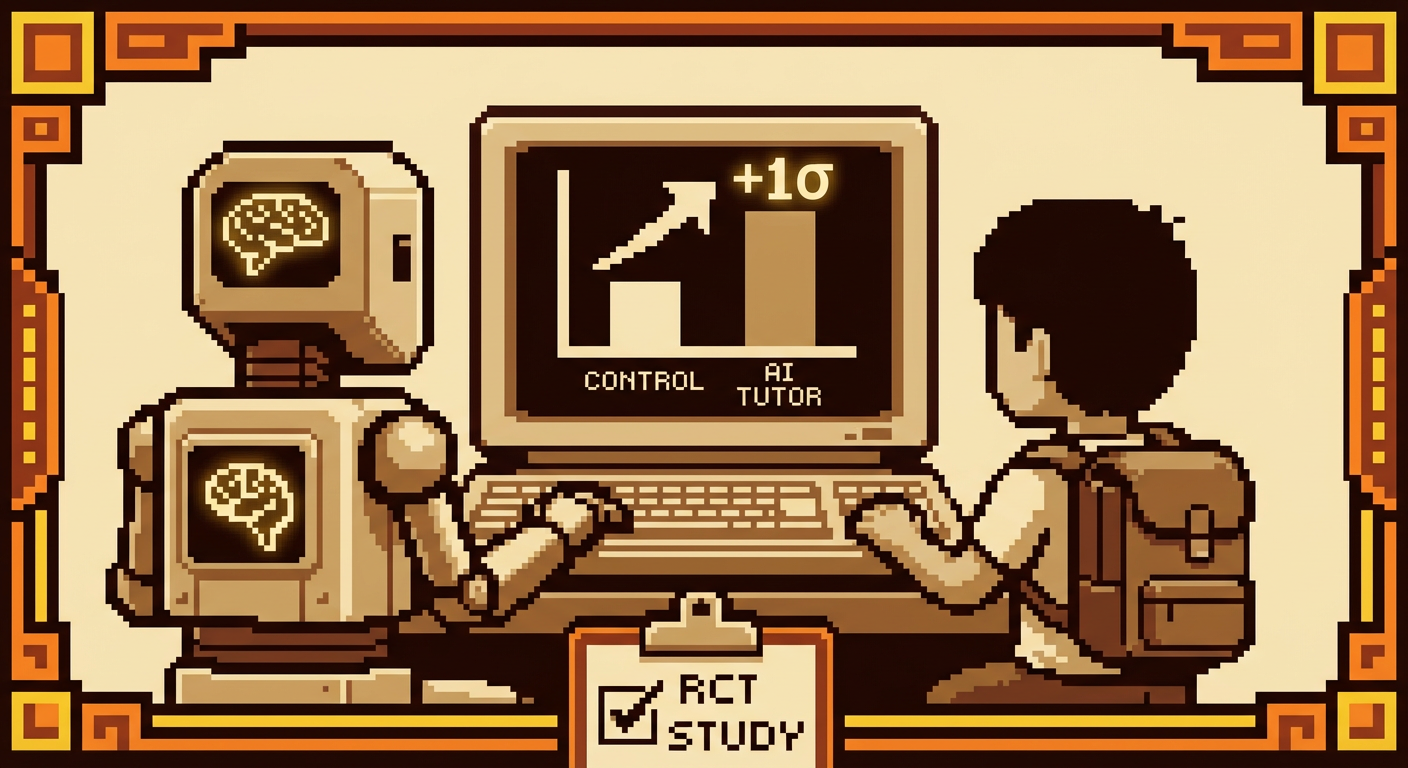
AI tutoring systems are finally doing what we’ve been promised for decades. Solid research shows these tools can boost math learning by one standard deviation. That means taking a kid from the middle of the pack to the 84th percentile. That’s huge.

What makes AI tutoring work so well comes down to two things: adaptive feedback and spaced repetition. These systems are incredibly good at figuring out exactly where a student is struggling and adjusting the difficulty in real time. They can give unlimited practice while keeping things challenging but not overwhelming. Try doing that in a classroom with 30 kids and one teacher.

But what really excites me is that these systems are starting to understand the thinking process behind learning. By looking at response patterns, how long students take, and what kinds of mistakes they make, AI tutors can spot misconceptions before they get stuck in a kid’s head. Instead of waiting until a student is already struggling, we can catch problems early. That’s a complete flip from how education usually works.

The Crisis of Human Capital: Teacher Shortages and Alternative Pathways

We’re in a full-blown STEM teacher crisis. Between retirements, career changes during the pandemic, and not enough new teachers entering the field, we have supply gaps that traditional hiring just can’t fix fast enough. This isn’t something we can solve with business as usual.

At the same time, employers are getting much more comfortable with micro-credentials instead of traditional degrees. These focused, skill-specific certifications make sense for how careers actually work now. Most jobs require constant learning and relearning rather than getting all your education upfront and calling it good. The learning research backs this up: competency-based credentials often predict job performance better than broad academic degrees anyway.

When you put the teacher shortage together with employers accepting alternative credentials, you get some interesting possibilities for rethinking how education works. EdSurge education technology has covered innovative programs where working professionals with micro-credentials teach specialized classes, bringing real-world expertise directly into schools. It’s a way to use the knowledge that’s already out there while dealing with staffing problems.

The Homeschool Revolution: Sustained Changes in Educational Choice

Homeschooling rates are still about triple what they were before the pandemic. This isn’t families waiting for things to go back to normal. This is a permanent shift for many parents who discovered educational approaches that actually work better for their kids. The fact that these numbers have stayed high tells me many families found something they weren’t getting in traditional schools.

Learning science shows that highly individualized instruction can be incredibly effective when done right. Homeschooling often creates perfect conditions for mastery-based learning, where kids move forward based on actually understanding something rather than because the calendar says it’s time. It also lets kids dive deep into what they’re genuinely interested in, which research shows dramatically improves motivation and how much they remember.

The catch is that successful homeschooling requires parents to understand a lot about how learning works, and most figure this out through trial and error. The families doing it well combine structured curriculum with flexible pacing. They assess regularly and adjust based on what’s working. They stay connected to broader learning communities. These principles mirror what works in traditional schools, which suggests success has more to do with how well you implement good practices than whether you’re in a school building or not.

The post-pandemic education world gives us both serious challenges and opportunities we’ve never had before. The approaches that seem most promising combine human expertise with technology, personalized learning with community connection, and evidence-based practices with innovative ways of delivering them. For educators, policymakers, and families, the question is how quickly we can actually use what we’ve learned about effective education in these new ways of doing things.

Edtech and online learning after the pandemic: Curriculum and system design

Let’s work through what is actually happening here, step by step. The topic of edtech and online learning after the pandemic deserves more careful attention than the typical coverage provides, and the reason is pretty straightforward once you know where to look.

The question worth asking at this point is, viewed through the lens of curriculum and system design, are micro-credential programmes actually gaining employer acceptance as degree alternatives? The systematic read of the situation is also the more accurate one once you examine what the evidence actually shows.

Edtech and online learning after the pandemic: Curriculum and system design

The Design: Setting the Terms

Coursera and edX platform enrollments stabilizing at 100 million combined isn’t just a data point in the story of edtech and online learning after the pandemic. It’s the structural condition that makes everything else in this analysis make sense. Context like this doesn’t age quickly. The conditions that produced it have been building for years, and this convergence is what makes the current moment different from previous moments that looked similar from a distance.

Micro-credential programmes are gaining employer acceptance as degree alternatives while K-12 learning loss from COVID is still measurable 5 years later in standardized tests. When you look at both together, a pattern emerges that EdSurge education technology has been covering from the inside: the conditions are more durable than they first appear, and the implications go further than the immediate headline suggests.

To understand why this matters, it helps to look at what was true three years ago versus what is true now. The difference isn’t simply quantitative, it’s qualitative. The participants, the infrastructure, and the incentive structures have all shifted in ways that compound rather than cancel out. That compounding effect is the most important element to track.

What makes this moment worth examining carefully isn’t the novelty but the confirmation. The underlying dynamics have been visible for some time. What’s new is that they’ve reached a threshold where ignoring them requires active effort rather than simple inattention. That threshold crossing is the event, not the underlying movement that produced it.

And AI tutoring tools showing 1-sigma improvement in math outcomes in RCT studies is part of that same picture. These elements don’t exist in separate silos. They’re reinforcing conditions in the same structural shift.

Illustration for Edtech and online learning after the pandemic: Curriculum and system design

The System Design: The Analysis

AI tutoring tools showing 1-sigma improvement in math outcomes in RCT studies is where the analysis gets more specific. The surface reading is accessible and not wrong, but it misses the mechanism, and the mechanism is where the practical insight lives. The question worth asking at this point: the mechanism is teacher shortages in STEM subjects reaching crisis levels across OECD countries, and understanding it changes what you do with the information.

Consider what teacher shortages in STEM subjects reaching crisis levels across OECD countries represents in context. It’s not a correlation that happened to appear. It’s a downstream consequence of structural factors that have been compounding. Previous readings of similar situations failed because they treated the symptom as the cause. The structural account is less satisfying as a headline but more useful as an analytical tool.

The comparison to prior cycles is instructive precisely because of where it breaks down. Similar conditions resolved differently in previous iterations because the substrate was different. What homeschool rates tripling from pre-pandemic baseline and holding steady represents is a substrate change, the kind that alters the elasticity of the system rather than just its current value. Recognizing that distinction is what separates analysis from pattern-matching.

The skeptical counterargument deserves honest engagement: prior moments with similar surface characteristics didn’t produce the outcomes that seemed logical at the time. That history is real. What’s different now is homeschool rates tripling from pre-pandemic baseline and holding steady, which isn’t a minor variable. It’s the infrastructure condition that previous cycles lacked. Infrastructure changes tend to be persistent in ways that sentiment-driven changes are not. The74 education journalism is one source tracking this dimension with the rigor it requires.

There’s also a distributional question that often goes unaddressed in coverage of edtech and online learning after the pandemic: who captures the value created by these shifts, and who absorbs the disruption costs? The aggregate picture can be positive while the distribution is uneven in ways that matter enormously to specific participants. Keeping that distributional lens in view is part of reading the situation clearly rather than simply optimistically.

Implications: What This Means If You Care About Skill Learning Roadmaps

The implications of edtech and online learning after the pandemic extend beyond the immediate context. Coursera and edX platform enrollments stabilizing at 100 million combined, along with the structural conditions described above, creates a situation where adjacent fields, decisions, and communities are affected in ways that aren’t always visible from inside the primary story. The second-order effects are frequently more important than the first-order ones, and they’re where careful attention pays the highest returns.

The frame that matters here, and this is where this perspective departs from the mainstream coverage, is that K-12 learning loss from COVID still measurable 5 years later in standardized tests is a leading indicator rather than a lagging one. The people positioned to respond to what this signals, rather than to what it confirms, are the ones who will be less surprised by what follows.

The practical response depends heavily on your position relative to the dynamics at play. For those closest to the core of edtech and online learning after the pandemic, the implications are immediate and operational. For those at greater distance, the implications are strategic, a matter of understanding which adjacent pressures are building and which assumed stabilities are more fragile than they appear.

The practical question isn’t whether to engage with these dynamics but how. The answer depends on context, on what role you occupy relative to edtech and online learning after the pandemic and what your actual decision horizon is. But the first step is the same regardless: accurate understanding of what’s actually happening rather than what the most available narrative says is happening.

A few concrete observations are worth separating out from the broader analysis. First: micro-credential programmes gaining employer acceptance as degree alternatives isn’t a temporary condition, it’s a new baseline. Second: teacher shortages in STEM subjects reaching crisis levels across OECD countries suggests that the adjustment period isn’t over. Third, and most important: the organizations and individuals who are treating the current moment as a new steady state rather than a transition are making a categorization error that will be costly to unwind later.

The Case Against: What the Critics Get Right

Intellectual honesty requires acknowledging the strongest counterarguments, not just the weakest ones. The case against the optimistic reading of edtech and online learning after the pandemic isn’t trivial. There are structural vulnerabilities in the current picture that deserve direct engagement rather than dismissal.

The most serious objection is about sustainability. K-12 learning loss from COVID still measurable 5 years later in standardized tests can be read not as a foundation but as a ceiling, a point beyond which growth becomes self-limiting because of the very dynamics that produced it. If the current state has already incorporated most of the available supply of early-adopting participants, the remaining growth curve may be structurally shallower than the recent trajectory implies.

There’s also the policy and regulatory dimension. Coursera and edX platform enrollments stabilizing at 100 million combined describes a condition in a relatively permissive environment. Regulatory responses to the scale implied by these numbers aren’t inevitable, but they’re not implausible either. The organizations that are planning as though the current regulatory environment is permanent are making an assumption that the history of fast-growing sectors doesn’t support.

The rebuttal to these concerns isn’t that they’re wrong, it’s that they’re already partially priced into the current state of the field. Homeschool rates tripling from pre-pandemic baseline and holding steady reflects an environment where participants are already adapting to constraints rather than operating in an unconstrained space. The adjustment capacity of the ecosystem is higher than a purely top-down view of the risks suggests.

Looking Forward

The trajectory here is clearer than the pace. Making predictions about when specific thresholds will be crossed is genuinely difficult, and anyone claiming precision about timelines should be treated with skepticism. But the direction, toward Coursera and edX platform enrollments stabilizing at 100 million and continued development of the conditions described above, is supported by the evidence in a way that isn’t contingent on a single variable going right.

Homeschool rates tripling from pre-pandemic baseline and holding steady is the variable to watch as the leading indicator. Historical patterns suggest it moves first, with broader metrics following with some lag. This doesn’t make the outcome certain, but it makes it readable, and readability is the precondition for good decisions.

Three questions are worth holding as the story develops. First: are the structural conditions that enabled the current state durable, or are they cyclical? Second: who is positioned to benefit from the next phase, and does that differ materially from who benefited in the current

What Example-first pedagogy Reveals About Edtech and online learning after the pandemic

Let’s work through what is actually happening here, step by step. The topic of edtech and online learning after the pandemic deserves more careful attention than the typical coverage provides, and the reason is not complicated once you know where to look.

The useful question to ask at this point is, viewed through the lens of example-first pedagogy, are micro-credential programmes gaining employer acceptance as degree alternatives? The practical read of the situation is also the more accurate one once you examine what the evidence actually shows.

What Example-first pedagogy Reveals About Edtech and online learning after the pandemic

The Pedagogy: Setting the Terms

Coursera and edX platform enrolments stabilising at 100 million combined is not just a data point in the story of edtech and online learning after the pandemic. It’s the structural condition that makes everything else in this analysis make sense. Context like this doesn’t age quickly. The conditions that produced it have been building for years, and the convergence is what makes the current moment different from previous moments that looked similar from a distance.

Micro-credential programmes gaining employer acceptance as degree alternatives, and K-12 learning loss from COVID still measurable 5 years later in standardised tests. When you look at both together, a pattern emerges that EdSurge education technology has been covering from the inside: the conditions are more durable than they first appear. The implications reach further than the immediate headline suggests.

To understand why this matters, it helps to look at what was true three years ago versus what is true now. The change isn’t simply numbers getting bigger. It’s different. The participants, the infrastructure, and the incentive structures have all shifted in ways that reinforce each other rather than cancel out. That reinforcement is the most important element to track.

What makes this moment worth examining carefully is not the novelty but the confirmation. I’ve been watching these dynamics for some time. What’s new is that they’ve reached a threshold where ignoring them requires active effort rather than simple inattention. That threshold crossing is the event, not the movement that produced it.

And AI tutoring tools showing 1-sigma improvement in maths outcomes in RCT studies is part of that same picture. These elements don’t exist in separate silos. They’re reinforcing conditions in the same structural shift.

The Worked Example: The Analysis

AI tutoring tools showing 1-sigma improvement in maths outcomes in RCT studies is where the analysis gets more specific. The surface reading is accessible and not wrong, but it misses the mechanism, and the mechanism is where the practical insight lives. The useful question to ask at this point is what mechanism we’re seeing here: teacher shortages in STEM subjects reaching crisis levels across OECD countries.

Consider what teacher shortages in STEM subjects reaching crisis levels across OECD countries represents in context. It’s not a correlation that happened to appear. It’s a downstream consequence of structural factors that have been building. Previous readings of similar situations failed because they treated the symptom as the cause. The structural account is less satisfying as a headline but more useful as an analytical tool.

The comparison to prior cycles is instructive precisely because of where it breaks down. Superficially similar conditions resolved differently in previous iterations because the foundation was different. Homeschool rates tripling from pre-pandemic baseline and holding steady represents a foundation change. The kind that alters how flexible the system is rather than just its current state. Recognising that distinction separates real analysis from pattern-matching.

The skeptical counterargument deserves honest engagement: prior moments with similar surface characteristics didn’t produce the outcomes that seemed logical at the time. That history is real. What’s different now is homeschool rates tripling from pre-pandemic baseline and holding steady, which isn’t a minor variable. It’s the infrastructure condition that previous cycles lacked. Infrastructure changes tend to stick around in ways that sentiment-driven changes don’t. The74 education journalism is tracking this dimension with the rigour it requires.

There’s also a question that often goes unaddressed in coverage of edtech and online learning after the pandemic: who captures the value created by these shifts, and who absorbs the disruption costs? The big picture can look positive while the distribution is uneven in ways that matter enormously to specific participants. Keeping that lens in view is part of reading the situation clearly rather than simply optimistically.

Implications: What This Means If You Care About Concept explainers

The implications of edtech and online learning after the pandemic extend beyond the immediate context. Coursera and edX platform enrolments stabilising at 100 million combined, along with the structural conditions described above, creates a situation where adjacent fields, decisions, and communities are affected in ways that aren’t always visible from inside the primary story. The second-order effects are frequently more important than the first-order ones, and they’re where careful attention pays the highest returns.

The frame that matters here, and this is where my perspective differs from mainstream coverage, is that K-12 learning loss from COVID still measurable 5 years later in standardised tests is a leading indicator rather than a lagging one. The people positioned to respond to what this signals, rather than to what it confirms, are the ones who will be less surprised by what follows.

The practical response depends heavily on your position relative to these dynamics. For those closest to the core of edtech and online learning after the pandemic, the implications are immediate and operational. For those at greater distance, the implications are strategic. A matter of understanding which adjacent pressures are building and which assumed stabilities are more fragile than they appear.

The practical question isn’t whether to engage with these dynamics but how. The answer depends on context. On what role you occupy relative to edtech and online learning after the pandemic and what your actual decision horizon is. But the first step is the same regardless: accurate understanding of what’s actually happening rather than what the most available narrative says is happening.

A few concrete observations are worth separating out from the broader analysis. First: micro-credential programmes gaining employer acceptance as degree alternatives isn’t a temporary condition. It’s a new baseline. Second: teacher shortages in STEM subjects reaching crisis levels across OECD countries suggests that the adjustment period isn’t over. Third, and most important: the organisations and individuals who are treating the current moment as a new steady state rather than a transition are making a categorisation error that will be costly to unwind later.

The Case Against: What the Critics Get Right

Intellectual honesty requires acknowledging the strongest counterarguments, not just the weakest ones. The case against the optimistic reading of edtech and online learning after the pandemic isn’t trivial. There are structural vulnerabilities in the current picture that deserve direct engagement rather than dismissal.

The most serious objection is about sustainability. K-12 learning loss from COVID still measurable 5 years later in standardised tests can be read not as a foundation but as a ceiling. A point beyond which growth becomes self-limiting because of the very dynamics that produced it. If the current state has already incorporated most of the available supply of early-adopting participants, the remaining growth curve may be structurally shallower than the recent trajectory implies.

There’s also the policy and regulatory dimension. Coursera and edX platform enrolments stabilising at 100 million combined describes a condition in a relatively permissive environment. Regulatory responses to the scale implied by these numbers aren’t inevitable, but they’re not implausible either. The organisations that are planning as though the current regulatory environment is permanent are making an assumption that the history of fast-growing sectors doesn’t support.

The rebuttal to these concerns isn’t that they’re wrong. It’s that they’re already partially priced into the current state of the field. Homeschool rates tripling from pre-pandemic baseline and holding steady reflects an environment where participants are already adapting to constraints rather than operating in an unconstrained space. The adjustment capacity of the ecosystem is higher than a purely top-down view of the risks suggests.

Looking Forward

The trajectory here is clearer than the pace. Making predictions about when specific thresholds will be crossed is genuinely difficult, and anyone claiming precision about timelines should be treated with scepticism. But the direction, toward Coursera and edX platform enrolments continuing to stabilise and continued development of the conditions described above, is supported by the evidence in a way that doesn’t depend on a single variable going right.

Homeschool rates tripling from pre-pandemic baseline and holding steady is the variable I’m watching as the leading indicator. Historical patterns suggest it moves first, with broader metrics following with some lag. This doesn’t make the outcome certain, but it makes it readable. And readability is what you need for good decisions.

Three questions are worth holding as the story develops. First: are the structural conditions that enabled the current state durable, or are they cyclical? Second: who’s positioned to benefit from the next phase, and does that differ materially from who benefited in the current phase? Third: what would a clean falsification of the optimistic thesis look like, and is there any evidence of that signal emerging? These questions don’t need answers today, but having asked them changes what you notice in the months ahead.

The next step, for most people reading this, is a small one. The current moment in edtech and online learning after the pandemic is one where the people who have built an accurate model of what’s actually happening are better positioned than the people who are relying on the surface story. Building that model isn’t a quick task, but it’s doable. This analysis is intended as one input into it.

What would you use this approach to teach? Or what didn’t land? I want to fix it.

Sticky post

Mascots Conference — Learning Without Limits

Mascots Conference — Learning Without Limits

Educational content that actually makes sense. We break down complex topics so you can really get them.

Here’s what bugs me: education is literally the most important thing we do as a society, yet most students and teachers are working with scraps for resources. That’s ridiculous. We write clear explanations, practical guides, and research summaries that don’t put you to sleep. Because learning shouldn’t feel like punishment.

Topics we cover: For Students · For Educators · Research · Explainers · Tools · Career