Field notes on the objects, spaces, and rituals of school culture — for leaders mid-decision on symbols, ceremonies, and tradition change.

Category: Main (page 13 of 15)

Why Your Brain Treats Cramming Like Junk Food (And What Actually Works Instead)

Picture this: It’s 11 PM the night before your chemistry exam, and you’re frantically highlighting every line in Chapter 12 while chugging your third energy drink. Sound familiar? Your brain is processing this marathon study session exactly like your stomach processes a sleeve of cookies — it might feel satisfying in the moment, but you’ll crash hard, and very little will stick around for the long haul.

After fifteen years of watching students struggle with the same study habits that sabotage their success, I’ve learned that most people aren’t studying wrong because they’re lazy or unfocused. They’re studying wrong because nobody ever taught them how their memory actually works. Let’s change that by looking at what happens when you shift from cramming to strategies that work with your brain instead of against it.

The Power of Spacing: Why Your Brain Loves Comebacks

Your memory operates on a “use it or lose it” principle, but here’s the twist: the moment right before you’re about to forget something is when reviewing becomes most powerful. This is called the spacing effect. It’s like interval training for your brain. When you review material just as it starts to fade from memory, you force your neural pathways to work harder to reconstruct that information. This makes the memory stronger and more durable.

Here’s how to put this into practice: After you first learn something new, review it again after one day, then after three days, then after a week, then after two weeks. Let’s say you’re learning Spanish vocabulary. Instead of drilling fifty words for three hours straight, study ten words today, review those same ten tomorrow, add five new ones the day after that, and keep cycling through them. Students who use this method typically remember 80% of material after a month. Compare that to just 20% for those who cram everything in one session.

The key insight here? Forgetting isn’t your enemy. It’s actually part of the learning process. Each time you successfully retrieve information that was starting to slip away, you’re building a more robust memory. Think of it like building muscle: the resistance is what makes you stronger.

Active Recall: Testing Yourself Before the Test

Reading your notes over and over feels productive, but it’s actually one of the least effective study methods. It’s like thinking you can learn to drive by watching someone else behind the wheel. Active recall — forcing yourself to retrieve information from memory without looking — is what actually builds lasting knowledge. This means closing your book and trying to explain the concept out loud, testing yourself with flashcards, or attempting practice problems without peeking at the solutions.

Let me show you what this looks like in practice. Instead of re-reading your biology notes about cellular respiration, close your notebook and try to draw the entire process from memory. Include all the stages, the molecules involved, where each step happens in the cell. When you get stuck (and you will), that’s valuable information about what you haven’t truly learned yet. Only then should you open your notes to fill in the gaps.

Research consistently shows that students who test themselves during study sessions perform significantly better on actual exams than those who just review their materials. The discomfort you feel when struggling to remember something isn’t a sign that the method isn’t working. It’s a sign that it is. Your brain is doing the hard work of strengthening those neural connections.

The Elaboration Technique: Building Bridges in Your Mind

Your brain doesn’t store information in isolation. It creates networks of connected ideas. The more connections you can build around a piece of information, the more pathways your brain has to access it later. Elaboration means taking new information and connecting it to things you already know, explaining why it makes sense, or finding examples from your own life.

When you’re studying the causes of World War I, don’t just memorize the list. Ask yourself: How is the alliance system similar to friend groups in high school? What does this remind me of in current politics? If I had to explain this to my little sister, what analogy would I use? When you learn that plants bend toward light through phototropism, connect it to how you automatically lean forward when trying to hear a quiet conversation. These connections turn isolated facts into part of a larger, meaningful story.

This is why teaching someone else is such a powerful study technique. When you explain photosynthesis to a friend, you’re forced to find connections, create analogies, and identify the most important concepts. If you can’t find anyone to teach, explain it to your dog, your mirror, or record yourself giving a mini-lecture. The act of putting ideas into your own words and connecting them to familiar concepts dramatically improves retention.

Interleaving: The Study Strategy That Feels Wrong But Works Right

Here’s a counterintuitive truth: mixing different types of problems or topics in a single study session is more effective than focusing on one thing at a time. This feels more difficult and less organized, but it works. This technique is called interleaving, and it works because it forces your brain to constantly identify which strategy or concept to use. This strengthens your ability to tell different types of problems apart.

Instead of doing twenty algebra problems in a row, then twenty geometry problems, then twenty statistics problems, try mixing them up: algebra, geometry, statistics, algebra, statistics, geometry. Yes, it will feel messier and more challenging. You’ll make more mistakes during practice. But when exam time comes, you’ll be much better at identifying what type of problem you’re looking at and selecting the right approach.

This principle applies beyond math. If you’re studying for a literature exam, alternate between analyzing poetry, discussing themes in novels, and practicing essay techniques within the same study session. If you’re learning a language, mix vocabulary, grammar exercises, listening practice, and speaking drills rather than dedicating entire sessions to just one skill. The temporary confusion you experience is actually your brain getting stronger at making distinctions and connections.

Creating Your Personal Study Ecosystem

The most effective study approach isn’t about finding the one perfect technique. It’s about creating a sustainable system that works with your schedule, your preferences, and your goals. Start by identifying which subjects or types of material you find most challenging, then experiment with one new technique for a week before adding another.

Maybe you begin by implementing spaced repetition for vocabulary or formulas, using a simple calendar to track when to review what. Once that feels natural, add active recall by creating practice tests for yourself. Then try elaboration by starting a study journal where you explain concepts in your own words and make connections. Finally, experiment with interleaving during your longer study sessions.

Remember that these techniques work precisely because they’re more difficult than passive reviewing. Your brain will resist the extra effort at first. That’s normal and temporary. The students who see the biggest improvements are those who push through the initial discomfort and trust the process. What study habit will you experiment with first? And how will you know if it’s making a difference?
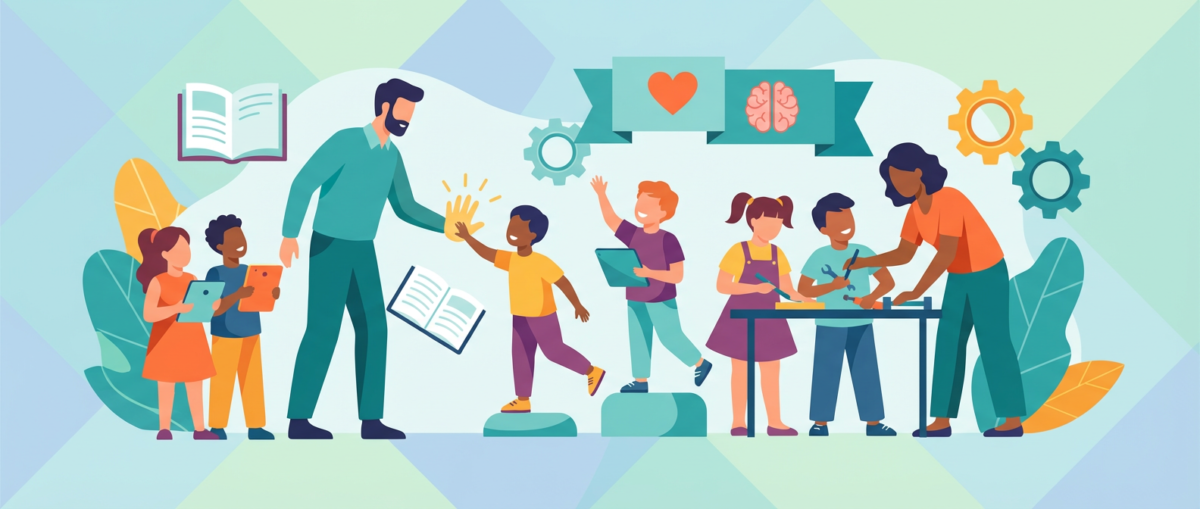
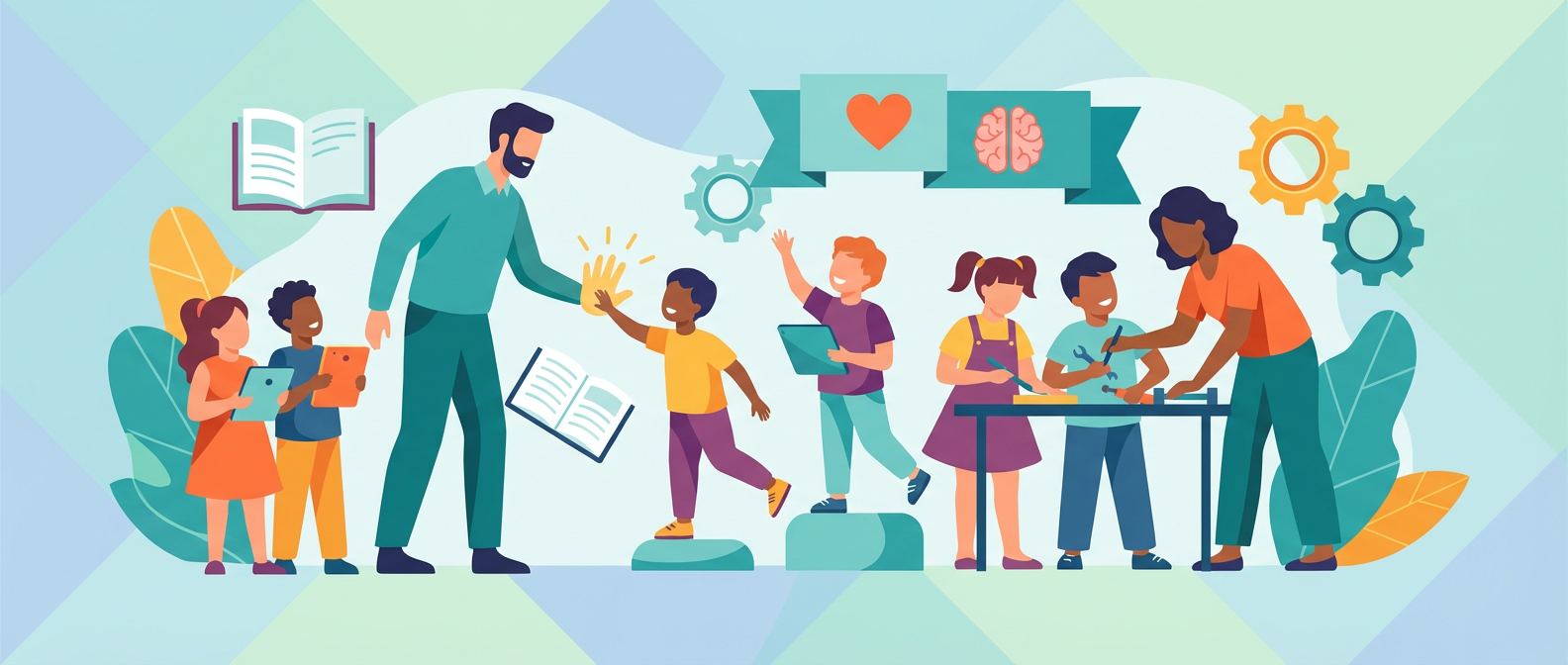
Building Learning Support That Lifts Students Up, Not Out

The Hidden Architecture of Academic Struggle

Every September, I watch it happen again. Students shuffle into my classroom carrying invisible backpacks stuffed with years of academic disappointment. Sarah sits in the third row, already convinced she’s “bad at math” because she struggled with fractions in fourth grade. Marcus hovers near the back door, ready to bolt at the first sign he doesn’t belong. These students aren’t lazy or unmotivated. They’re products of well-intentioned systems that accidentally taught them their struggles were personal failures rather than predictable challenges requiring different approaches.

Building Learning Support That Lifts Students Up, Not Out

Most schools have what I call “leak points” where students fall through cracks that shouldn’t exist. We design courses assuming everyone arrives with identical foundational knowledge. Wrong. We pace instruction as if all brains process information at the same speed. Also wrong. We assess learning as if there’s only one valid way to demonstrate understanding. Then we act surprised when some students can’t keep up with a system designed for an imaginary average learner who doesn’t actually exist.

Real support begins with recognizing that academic struggle isn’t a character flaw to be fixed in isolation. It’s often a mismatch between how a student’s brain works and how we’ve structured the learning environment. When we frame it this way, the solution shifts from fixing the student to designing better systems that work for more kinds of minds.

Illustration for Building Learning Support That Lifts Students Up, Not Out

Scaffolding That Fades, Not Dependence That Stays

The most effective support systems I’ve built follow what I call the “construction crane principle.” Just as construction cranes provide essential support during building but disappear once the structure can stand alone, educational scaffolding should be temporary, strategic, and designed to work itself out of a job. Too often, I see support programs that accidentally create learned helplessness by providing the same level of help indefinitely.

Consider how we typically approach reading comprehension support. The traditional model pulls struggling readers out of their regular English class for separate intervention. While these students practice basic skills in isolation, their peers analyze complex texts and engage in rich discussions. By the time struggling readers return to grade-level content, the gap has widened further. They’ve missed the very experiences that build advanced reading skills.

Instead, I design reading support that happens within the context of grade-appropriate content. Students might receive pre-teaching of key vocabulary, access to audio versions of texts, or graphic organizers that highlight text structure. But they’re engaging with the same challenging material as their peers, just with different entry points and processing tools. The scaffolding gradually reduces as students internalize strategies and build confidence with complex texts.

The key is building supports that teach independence, not dependence. Every accommodation should come with a plan for helping students develop the skills to eventually succeed without it. This requires careful attention to which supports are truly necessary for access versus which might accidentally limit growth.

Making Support Invisible and Universal

The most powerful support systems I’ve designed are the ones students don’t even notice. When support feels special or different, it carries stigma. When it’s woven into the fabric of everyday instruction, it becomes just how learning happens in this classroom. Universal Design for Learning principles guide this approach, creating environments where supports benefit everyone, not just those who “need” them.

In my science classes, I provide concept maps for every unit because visual organization helps all students see connections between ideas. I offer choice in how students demonstrate their understanding because authentic assessment reveals what students know rather than how well they perform on a specific format. I teach note-taking strategies explicitly because even academically successful students often struggle with information processing under the cognitive load of new content.

When these supports are universal, struggling learners access help without feeling singled out. Advanced learners discover new ways to deepen their understanding. Everyone benefits from instruction that acknowledges learning differences as natural variation rather than deficits to overcome.

This approach also prevents the “watering down” trap that often accompanies special support. Instead of simplifying content for struggling learners, we provide multiple pathways to engage with complex ideas. Students might access the same challenging concepts through different modalities, with different levels of scaffolding, or through different demonstration methods, but the intellectual rigor remains intact.

Assessment That Informs, Not Condemns

Traditional assessment practices often compound academic struggle by treating every quiz, test, and assignment as a final judgment rather than a learning opportunity. Students who struggle begin to see assessment as proof of their inadequacy rather than information about what they need to learn next. Shifting to assessment practices that support learning requires fundamental changes in how we design, administer, and respond to student performance data.

I’ve restructured my assessment system around what I call “learning loops.” Instead of the traditional teach-test-move-on cycle, I use frequent low-stakes assessments to identify misconceptions early. When students show incomplete understanding, they get targeted re-teaching and opportunities to try again. This isn’t about lowering standards. It’s about recognizing that learning is messy and that mastery takes time.

Formative assessment becomes particularly powerful when students learn to use it themselves. I teach students to self-assess their understanding using specific criteria, to identify their own learning gaps, and to seek appropriate resources for improvement. When students become partners in the assessment process rather than passive recipients of grades, they develop metacognitive skills that help them far beyond any single course.

The goal is creating assessment cultures where struggle is expected, feedback is immediate, and improvement is always possible. Students learn that not knowing something yet is different from not being able to learn it. This mindset shift often proves more valuable than any specific content knowledge they acquire.

Professional Learning That Sustains Real Change

Building truly supportive learning environments requires more than individual teacher innovation. It demands systematic professional learning that helps entire educational communities understand and implement research-based practices. Too often, professional development treats support strategies as add-ons to existing practice rather than fundamental shifts in how we think about teaching and learning.

The most effective professional learning I’ve experienced focuses on understanding how learning actually works rather than collecting intervention strategies. When teachers understand how working memory functions, they design lessons differently. When they grasp the relationship between background knowledge and reading comprehension, they approach content instruction with new intentionality. When they recognize how anxiety affects cognitive processing, they create classroom environments that support rather than hinder learning.

Sustainable change also requires examining the systems and structures that accidentally create barriers for struggling learners. This means questioning grading practices that punish learning processes, scheduling structures that fragment instruction, and communication patterns that position families as problems rather than partners. It’s harder work than implementing individual strategies, but it creates lasting change that supports all students.

The conversation about supporting struggling learners without stigma continues to evolve as we learn more about how brains learn and how systems can either support or hinder that process. I’m curious about your experiences with these approaches and the challenges you’ve encountered in implementing systematic support. What strategies have you found most effective for maintaining high expectations while providing meaningful assistance?

Assessment That Actually Helps Students Learn: Three Strategies That Changed My Classroom

The Moment Everything Clicked: When Assessment Became Learning

Picture this: It’s third period on a Tuesday, and Maria is staring at her algebra quiz with that familiar look of panic. She’s studied for hours, but the traditional test format has her freezing up again. Meanwhile, across the room, James is confidently working through the same problems during our new “math talk” assessment, explaining his reasoning step by step to his partner. Both students know the material, but only one assessment method is actually showing me what they understand.

Assessment That Actually Helps Students Learn: Three Strategies That Changed My Classroom

This moment made me realize something I’d been struggling with for years. Traditional tests often measure how well kids take tests, not how much they actually learned. After fifteen years in the classroom, I’ve figured out that the best assessments don’t just measure learning, they actually create more of it. I want to share three specific strategies that completely changed how my students think about being evaluated. These turned assessment from something scary into something that actually helps them learn.

Illustration for Assessment That Actually Helps Students Learn: Three Strategies That Changed My Classroom

Strategy One: The Weekly Learning Portfolio

Instead of depending only on unit tests, I started asking students to keep weekly learning portfolios. Each Friday, students pick three pieces of work from that week: one they’re proud of, one that shows how they learned something, and one they’d like to fix. They write a short reflection explaining their choices and what they learned. When we studied cellular respiration, Emma chose her first diagram (where she mixed up the mitochondria with the nucleus), her corrected version after our lab, and her final write-up where she connected respiration to her grandmother’s diabetes medication.

The magic happens in those reflections. Students start seeing mistakes as learning steps instead of failures. They notice their own learning patterns. Sarah figured out she learns best when she can connect new ideas to her experience as a baker. This led her to explain photosynthesis through bread-making metaphors that helped three other students finally get it. Portfolios show me how students think in ways that multiple-choice tests never could.

Getting started is simple but you have to be consistent. I give them a basic template: “I chose this work because…”, “This shows my learning by…”, and “Next week, I want to focus on…”. The trick is making this about celebrating growth, not just another assignment to grade. I respond to portfolios with questions and encouragement, not points. This creates real conversations about learning.

Strategy Two: Peer Teaching Assessments

Nothing shows you how well someone understands something like watching them teach it to someone else. Once per unit, I pair students strategically (not by how smart they are, but by how they learn differently) and give them twenty minutes to teach each other a concept we’ve covered. During our Revolutionary War unit, I watched Marcus explain taxation without representation using a pizza-sharing analogy while his partner Jessica drew a timeline that helped Marcus see how events led to conflict.

My rubric looks at three things: getting the facts right, explaining clearly, and answering follow-up questions. Students know ahead of time that they’ll get a random topic, so everyone pays attention throughout the unit. What surprises other teachers is how this catches partial understanding that regular tests miss. When Kevin couldn’t explain photosynthesis to his partner, he realized he’d just memorized the equation without understanding what was actually happening. He came for help before the unit test.

The prep phase makes or breaks this strategy. Students get their teaching topics three days early, plus a checklist of key concepts and some suggested teaching methods. I walk around during the peer teaching, taking notes on what students say and what misconceptions come up. These notes shape how I teach going forward and help me figure out who needs extra support.

Strategy Three: Real-World Application Projects

The most honest assessment asks students to use what they’ve learned on real problems they actually care about. Instead of testing slope calculations in isolation, my algebra students design wheelchair ramps for our school. They calculate gradients and costs while learning accessibility requirements. In biology, when we study ecosystems, students investigate local water quality issues, collect data, and present findings to our city council. These projects test content knowledge, but also critical thinking, communication, and the ability to use learning in new situations.

Making application projects work comes down to good scaffolding and giving students choices. Students pick their focus area within broad guidelines, which keeps them invested while still meeting learning goals. For the water quality project, some students looked at chemical pollutants while others focused on habitat destruction, but everyone used the same scientific methods and ecosystem concepts. I meet with students throughout the project timeline to help them refine their approach and work through problems.

My assessment criteria go beyond traditional academic stuff to include process skills and real-world impact. Students submit reflection journals documenting their research process, how they made decisions, and what obstacles they hit. The final presentation includes peer feedback, self-assessment, and response from their authentic audience. When the city council actually implemented two student recommendations for watershed protection, the learning became real and meaningful in ways no test score could match.

Making These Strategies Work in Your Classroom

Rolling out new assessment strategies takes patience and flexibility, both from teachers and students who might be used to traditional testing. Start small. Maybe try weekly portfolios in one class or peer teaching for just one unit. Students buy in more when they understand why we’re doing these things and see how the feedback actually helps them learn. I always explain why we’re using each strategy and how it connects to their growth as learners.

Time management gets easier with practice and clear systems. Portfolio reflections take ten minutes when students know what’s expected. Peer teaching sessions replace traditional review activities, so you’re getting both instruction and assessment. Real-world projects can substitute for traditional unit tests when you design them thoughtfully around learning objectives. The upfront work pays off in student engagement and real evidence of learning.

These strategies work because they match how learning actually happens: through reflection, explanation, application, and genuine engagement with meaningful problems. They give students multiple ways to show understanding while building the thinking-about-thinking skills that support lifelong learning. Most importantly, they change assessment from something done to students into something done with them. This creates a classroom where growth and understanding matter more than perfect scores.

I’d love to hear how these strategies might work in your teaching situation or what assessment approaches have been game-changers in your classroom. Every student deserves assessment methods that show their true abilities and support their continued growth as learners.

From Blank Page to Breakthrough: Building Lesson Plans That Actually Connect

Start with the Story, Not the Standard

Picture this: you’re teaching photosynthesis, and instead of jumping straight into chloroplasts and chemical equations, you begin with a simple question. “Who here has ever wondered why leaves change color in fall?” Hands shoot up. Suddenly, the room buzzes with stories about crunching through autumn leaves and theories about why some trees stay green while others burst into orange and red.

From Blank Page to Breakthrough: Building Lesson Plans That Actually Connect

This is example-first pedagogy in action. Rather than starting with abstract concepts and working toward applications, we flip the script. We begin with the concrete, the observable, the relatable, and then build toward understanding. When I plan lessons this way, I see something magical happen in those first few minutes. Students lean forward instead of slumping back. They start asking questions before I’ve even finished explaining.

Here’s why this works: our brains are wired for narrative and pattern recognition. When we start with a real scenario, a puzzling observation, or an interesting problem, we activate prior knowledge and curiosity at the same time. That autumn leaf question doesn’t just grab attention. It creates mental scaffolding for everything that follows, from understanding cellular respiration to grasping the relationship between sunlight and sugar production.

Your lesson planning changes when you begin each unit by asking yourself: “What real-world example would make my students say ‘wait, I never thought about that’?” Sometimes it’s as simple as starting a geometry lesson by examining why pizza is cut into triangles or beginning a discussion about fractions by dividing up a bag of candy. The key is choosing examples that genuinely connect to your students’ lived experiences while naturally leading toward your learning objectives.

Illustration for From Blank Page to Breakthrough: Building Lesson Plans That Actually Connect

The Gradual Release That Actually Works

Here’s how this looks in practice. Let’s say I’m teaching the concept of slope in algebra. I don’t start by writing y = mx + b on the board. Instead, I show students a photograph of a wheelchair ramp outside our school building. “This ramp has to meet specific requirements,” I tell them. “Too steep, and wheelchairs can’t navigate it safely. Too gradual, and it takes up too much space. So how do architects figure out the perfect angle?”

We measure the ramp together. Students use rulers and protractors, discovering that for every 12 inches horizontal, the ramp rises 1 inch vertical. They’re calculating slope without knowing that’s what they’re doing. Only after they’ve wrestled with this concrete problem do we introduce the mathematical language and notation. The formula becomes a tool for describing something they’ve already experienced, not an abstract rule to memorize.

This gradual release from concrete to abstract requires careful planning. I structure each learning sequence in deliberate stages: first, the hook example that creates curiosity, second, guided exploration where students investigate the example hands-on, third, collaborative discussion where we talk through patterns and observations, fourth, explicit instruction that names and formalizes what they’ve discovered, and finally, independent practice with new examples that follow the same underlying principles.

The beauty of this approach is that by the time we reach the abstract concepts, students have built their own foundation. They’re not just accepting mathematical rules on faith. They’ve seen these principles emerge from their own investigations, which means the learning sticks in ways that traditional instruction rarely achieves.

Building Bridges Between Islands of Understanding

One of the most powerful aspects of example-first teaching is how it reveals connections that students might otherwise miss. When we start with concrete scenarios, patterns begin to emerge across seemingly different topics. That wheelchair ramp problem connects to graphing linear equations, sure, but it also relates to ratios in cooking, angles in architecture, and rates of change in physics.

I plan lessons to highlight these connections deliberately. After students master slope through the ramp example, we examine roller coaster hills, escalator angles, and roof pitches. Each new context reinforces the core concept while expanding their ability to recognize slope in different situations. This isn’t just review, it’s building what educators call transfer, the ability to apply learning in novel contexts.

Your lesson plans should include what I call “bridge questions” that help students see these connections. Questions like “How is this similar to what we discovered yesterday?” or “Where else might you encounter this same pattern?” These prompts train students to look for underlying structures rather than treating each lesson as an isolated event.

The goal is creating learners who can recognize familiar patterns in unfamiliar situations. When students encounter slope in a science class discussion about velocity or in a social studies graph showing population growth, they should think “I know how to work with this” rather than “I’ve never seen this before.”

Assessment That Measures Understanding, Not Memory

Example-first lesson planning demands a different approach to assessment. Traditional tests that focus on reproducing procedures or recalling definitions miss the deeper understanding we’re building. Instead, I design assessments that present students with new scenarios and ask them to apply their learning.

For that slope unit, my assessment might show students a photograph of a hiking trail with elevation markers and ask them to determine whether it meets accessibility standards for elderly hikers. Or I might present data about a car’s fuel efficiency at different speeds and ask them to identify the rate of change. These questions require the same mathematical thinking as traditional slope problems, but they test whether students can recognize and apply the concept in novel situations.

This assessment philosophy should inform your entire lesson planning process. As you design activities, constantly ask yourself: “Will this help students recognize this concept in new contexts?” and “How will I know if they truly understand rather than just remember?” When your lessons focus on building transferable understanding rather than procedural compliance, your assessments naturally become more meaningful and authentic.

The most telling assessment question I’ve learned to ask is simply “Explain why this makes sense.” Students who have built genuine understanding can explain the reasoning behind their work. They can explain not just how to solve a problem, but why their approach is logical and when it might apply elsewhere.

Making It Sustainable for Real Classrooms

Now, I know what you’re thinking. This sounds wonderful in theory, but who has time to find perfect real-world examples for every single lesson? You’re managing 150 students across five different preps, grading papers until midnight, and attending meetings about meetings. I get it. The key is starting small and building your collection of examples over time.

Begin with one unit or one particularly challenging concept that students consistently struggle with. Spend time finding one really good concrete example that naturally leads to the abstract principle you need to teach. Use that example to anchor the entire unit, returning to it repeatedly as you build complexity. A single powerful example can carry multiple lessons when you mine it thoroughly.

Keep a running list of potential examples as you encounter them in daily life. That news article about rising sea levels could illustrate exponential growth. The way your coffee cools down demonstrates logarithmic decay. The GPS directions to school involve coordinate geometry. Once you start noticing, examples appear everywhere. Social media, current events, sports statistics, cooking measurements, music patterns — the world is full of mathematical and scientific principles in action.

Remember that perfect examples are less important than authentic engagement with ideas. Sometimes an imperfect example that generates genuine curiosity helps learning more than a textbook scenario that feels artificial. Trust your instincts about what will resonate with your particular students in your specific context.

Start planning your next unit with this question: “What real situation would make my students genuinely curious about this concept?” Then build everything else around that moment of authentic wonder. Your students will feel the difference, and so will you. What concrete example might you try first?

The Science-Backed Digital Tools That Actually Transform How We Learn

Why Most Educational Technology Misses the Mark

Walk into any classroom today and you’ll see tablets, interactive whiteboards, and students typing away on laptops. Yet despite this digital revolution, learning outcomes haven’t dramatically improved. The problem isn’t technology itself, but how we’re applying it. Most educational apps and platforms are essentially digitized worksheets with flashy graphics. They miss the fundamental principles of how our brains actually acquire, process, and retain new information.

The Science-Backed Digital Tools That Actually Transform How We Learn

The disconnect lies in understanding what cognitive science tells us about effective learning. Our brains don’t work like filing cabinets, neatly storing isolated facts. Instead, learning happens through complex processes of pattern recognition, memory consolidation, and neural pathway strengthening. When digital tools align with these natural learning mechanisms, they become powerful accelerators. When they don’t, they’re just expensive distractions.

The good news is that researchers have identified specific features that make digital learning tools genuinely effective. These aren’t marketing buzzwords or educational fads, but evidence-based principles rooted in decades of cognitive psychology research. Let me walk you through the digital tools that actually work, and more importantly, why they work.

Illustration for The Science-Backed Digital Tools That Actually Transform How We Learn

Spaced Repetition Systems: Hacking Your Memory’s Schedule

Your brain has a predictable pattern for forgetting information. Hermann Ebbinghaus discovered this “forgetting curve” over a century ago, showing that we lose roughly 50% of new information within an hour, and 90% within a week, unless we actively review it. Spaced repetition systems like Anki, Memrise, and Quizlet work with this scientific insight by presenting information just before you’re likely to forget it.

What makes these tools powerful isn’t the flashcard format itself, but the sophisticated algorithms running behind the scenes. These systems track your performance on individual pieces of information and calculate optimal review intervals. If you consistently remember that mitochondria are the powerhouses of cells, the system spaces out reviews. If you keep mixing up “affect” and “effect,” it brings those cards back more frequently.

Research by Piotr Wozniak and others has shown that spaced repetition can increase long-term retention rates by 300-500% compared to traditional study methods. The key is that these systems handle the complex scheduling that your brain would otherwise have to manage. Instead of guessing when to review material, you’re following a scientifically optimized schedule that maximizes retention while minimizing study time.

For students and lifelong learners, tools like Anki are particularly effective for building foundational knowledge in subjects like medical terminology, foreign language vocabulary, or historical dates. The magic happens when you trust the system’s scheduling, even when it feels like you’re reviewing material too early or too late. Your intuition about optimal timing is usually wrong. The algorithm’s prediction is remarkably accurate.

Adaptive Learning Platforms: Personalized Practice That Responds to Your Brain

One of the most promising developments in educational technology is adaptive learning platforms that adjust in real-time to your performance and learning patterns. Systems like Khan Academy’s mastery learning, DreamBox for mathematics, and Duolingo’s language courses use sophisticated data analysis to personalize the learning experience for each individual user.

These platforms work by continuously assessing not just whether you get answers right or wrong, but how quickly you respond, what types of mistakes you make, and which concepts you struggle with consistently. The system then adjusts the difficulty, sequence, and type of practice problems accordingly. If you’re flying through basic algebra but stumbling on word problems, the platform will provide more word problem practice while maintaining your algebra skills.

The learning science behind adaptive platforms draws from Zone of Proximal Development theory, developed by psychologist Lev Vygotsky. This concept suggests that optimal learning happens when material is challenging enough to require effort, but not so difficult that it becomes overwhelming. Adaptive systems constantly calibrate this sweet spot, providing what researchers call “desirable difficulties” that promote learning without causing frustration.

What sets quality adaptive platforms apart from simple question banks is their ability to recognize learning patterns across thousands of users. When the system notices that students who struggle with concept A often have trouble with concept B, it can preemptively provide additional support. This collective intelligence creates personalized learning paths that no individual teacher could design, even with years of experience.

Collaborative Knowledge Building: Learning Through Digital Communities

Social constructivist theory tells us that learning is fundamentally a social process. We build understanding through interaction, discussion, and collaborative problem-solving. Digital tools that facilitate meaningful peer interaction can dramatically enhance learning outcomes, but only when they’re designed with clear pedagogical principles in mind.

Platforms like Slack or Discord for study groups, collaborative Google Docs for group projects, and specialized tools like Flipgrid for video discussions create opportunities for what researchers call “elaborative interrogation.” When students explain concepts to each other, ask questions, and build on each other’s ideas, they’re engaging in deeper cognitive processing than they would through individual study alone.

Here’s what I’ve noticed from years of watching digital collaboration work and fail: not all group work is created equal. Effective digital collaboration requires structured interaction protocols, clear roles and responsibilities, and mechanisms for ensuring individual accountability. Tools that simply put students in virtual rooms without guidance often turn into social chat rather than meaningful learning experiences.

Wikipedia is one of the most successful examples of collaborative knowledge building at scale. The process of researching, writing, editing, and defending contributions to Wikipedia articles engages students in authentic academic work while building digital literacy skills. Research by Andrea Forte and others has shown that students who contribute to Wikipedia demonstrate significant improvements in research skills, critical thinking, and understanding of how knowledge is constructed and validated.

Metacognitive Reflection Tools: Teaching Your Brain to Learn Better

Perhaps the most powerful category of digital learning tools focuses on metacognition, or “thinking about thinking.” These platforms help learners develop awareness of their own learning processes, identify effective strategies, and adjust their approaches based on performance data. Tools like learning journals, reflection prompts, and progress tracking dashboards turn learning into a more conscious, strategic process.

Research by cognitive scientist John Dunlosky has identified several high-impact learning strategies that many students never discover on their own: self-testing, distributed practice, and mixing different types of problems. Digital tools can support these strategies by prompting students to quiz themselves, spacing out practice sessions automatically, and mixing problem types in ways that enhance transfer of learning.

Simple tools like digital learning journals or apps that prompt regular self-reflection can have surprisingly powerful effects. When students regularly answer questions like “What was the most challenging concept today?” or “What strategy helped you understand this material?” they develop metacognitive awareness that transfers across subjects and contexts.

The most sophisticated metacognitive tools provide learners with detailed analytics about their study patterns, performance trends, and strategy effectiveness. These dashboards help students identify their peak learning times, recognize when they’re engaging in ineffective strategies like passive re-reading, and experiment with new approaches based on data rather than intuition.

As you explore these science-backed digital tools, remember that technology is only as effective as the learning principles it embodies. The magic happens when we align digital capabilities with what we know about how humans actually learn, creating experiences that feel both engaging and genuinely transformative. I’d love to hear about your experiences with these tools and what you’ve discovered works best for your unique learning style.

The Neuroscience of Unforgettable Lessons: How to Design Activities That Stick

Why Your Brain Craves Story Structure in Learning

When I started teaching fifteen years ago, I thought engagement meant jazz hands and colorful posters. Then I discovered something that changed everything: our brains are wired for narrative structure, and the most memorable lessons follow the same arc as a good story. Research in cognitive psychology shows that information presented with a clear beginning, conflict, and resolution activates multiple neural pathways at once, creating what neuroscientists call “elaborative encoding.”

Think about your favorite lesson from school. I bet it had tension. Maybe your chemistry teacher demonstrated combustion by lighting her hand on fire, or your history teacher role-played a courtroom drama about the Salem witch trials. These weren’t just fun activities—they were neurologically optimized learning experiences. When we encounter information within a narrative framework, our brains release dopamine and norepinephrine, the same neurotransmitters involved in forming long-term memories.

The practical application is simple: every lesson needs a hook that creates cognitive tension. Instead of starting with “Today we’re learning about mitosis,” try “Your cells are dividing right now as we speak, and if they mess up even once, the consequences could be catastrophic.” Present the problem before the solution, the question before the answer. Your students’ brains will thank you by actually remembering what you taught them.

The Spacing Effect: Why Cramming Never Creates Mastery

Hermann Ebbinghaus discovered the forgetting curve in 1885, and yet somehow we still design lessons as if learning happens in single, isolated sessions. The research is clear: distributed practice, where concepts are revisited multiple times with increasing intervals between sessions, produces dramatically better retention than massed practice. This isn’t just about homework schedules—it’s about fundamentally restructuring how we think about lesson sequences.

I’ve transformed my classroom by building what I call “spiral touchpoints” into every unit. When teaching polynomial factoring, I don’t just cover it in week three and move on. I create brief, focused retrieval activities that spiral back to factoring in weeks five, eight, and twelve. These aren’t lengthy reviews. They’re strategic memory consolidations that take advantage of the brain’s natural forgetting and relearning cycles.

The magic happens in the spacing intervals. Initial review should occur within 24 hours, when memory strength has dropped by about 50 percent. The second review comes after three days, the third after one week, and subsequent reviews at increasingly longer intervals. This pattern aligns with the natural decay of memory traces and maximizes the reconsolidation process that strengthens neural pathways.

Design your lessons as episodes in a series, not standalone events. Each class should contain elements that connect to previous learning while introducing new complexity. Your students won’t just learn the material—they’ll develop the kind of durable understanding that transfers to new situations months later.

Cognitive Load Theory: The Art of Mental Traffic Management

John Sweller’s cognitive load theory changed my understanding of why some lessons click and others crash and burn. Working memory, our mental workspace, can only handle about four novel elements at once. When we overwhelm this system with too much new information, learning stops. But here’s where it gets interesting: experts can handle much larger cognitive loads because they’ve automated foundational skills into what researchers call “schemas.”

The implications for lesson design are huge. Before introducing complex concepts, you must ensure that prerequisite knowledge has reached automaticity. When teaching quadratic equations, students need instant recall of basic arithmetic operations, not hesitant finger-counting. When facilitating literary analysis, students need automatic recognition of narrative elements before they can engage with sophisticated interpretation.

I’ve learned to scaffold complexity through what I call “cognitive load mapping.” For each lesson objective, I identify the component skills required and assess which students have automated versus which still require conscious effort. Then I design targeted practice activities that move struggling skills toward automaticity while gradually introducing new complexity for students who are ready.

The key is recognizing that cognitive load isn’t just about content volume—it’s about the interaction between new information and existing knowledge structures. A concept that overwhelms a novice might be trivial for an expert. Design multiple pathways through your content that respect these individual differences in cognitive architecture.

The Generation Effect: Why Students Remember What They Create

One of the most consistent findings in learning science is the generation effect: information we actively produce is remembered far better than information we passively receive. This isn’t about learning styles or preferences—it’s about how memory consolidation actually works. When students generate answers, explanations, or solutions, they engage in what researchers call “desirable difficulties” that strengthen memory traces through effortful processing.

I’ve redesigned my lessons to maximize generation opportunities without creating chaos. Instead of explaining photosynthesis and then asking students to take notes, I present them with a mystery: “Plants somehow convert sunlight into sugar. Work in pairs to propose three possible mechanisms for how this might work.” After they’ve generated hypotheses, we explore the actual process. Their brains are now primed to notice how their intuitive theories align with or differ from scientific reality.

The generation effect works because it forces students to retrieve related knowledge, make connections, and construct understanding rather than simply receive it. This active construction process creates more elaborate memory networks that are easier to access later. When students struggle to generate an answer and then discover the correct response, the contrast enhances encoding strength.

Build generation opportunities into every lesson phase. Start with prediction activities, include explanation prompts, and end with synthesis challenges. The goal isn’t to make learning harder for its own sake, but to engage the cognitive processes that create lasting understanding.

Putting It All Together: The Neuroscience-Based Lesson Framework

Effective lesson design isn’t about following rigid templates—it’s about understanding how learning happens and aligning your instruction with cognitive principles. Every engaging lesson contains narrative tension that captures attention, spaced connections that build on prior knowledge, appropriate cognitive load that challenges without overwhelming, and generation opportunities that require active construction of understanding.

Start your planning by identifying the central question or conflict your lesson will resolve. Design entry activities that activate relevant prior knowledge while creating cognitive tension about new content. Chunk new information into digestible segments while providing opportunities for students to generate explanations, predictions, or applications. End with synthesis activities that require students to connect new learning with existing knowledge structures.

The most important insight from learning science is that engagement isn’t about entertainment—it’s about cognitive activation. When students’ brains are working hard to make sense of appropriately challenging content, they’re engaged in the deepest sense. Your job isn’t to make learning easy. It’s to make the hard work of learning irresistible.

What aspects of learning science have you noticed in your most successful lessons? I’d love to hear about the moments when everything clicked for your students, and explore together what made those experiences so powerful. The science of learning is constantly evolving, and the best insights often come from practitioners who notice patterns in their own classrooms.

When Sarah Finally Gets It: Creating Classrooms Where Every Learner Belongs

The Moment Everything Changed

Sarah sat in the back corner of my seventh-grade science class, shoulders hunched over a worksheet about the water cycle. For three weeks, she’d been turning in assignments half-finished, her responses growing shorter each day. During our unit on evaporation, I watched her eyes glaze over when I explained how water molecules gain energy and transform from liquid to gas. She nodded politely, but I could see the familiar signs of a student who had stopped believing she could understand.

That afternoon, I tried something different. Instead of starting with molecular theory, I asked Sarah to help me with an experiment. We filled a clear container with water and placed it by the sunny classroom window, then drew a line marking the water level. “What do you think will happen to this water over the next few days?” I asked. She shrugged, but agreed to check it with me each morning. By Friday, when we measured again and found the water level had dropped significantly, Sarah’s face lit up with genuine curiosity. “Where did it go?” she asked. That question became our entry point into understanding evaporation, starting from what she could observe and touch before building toward the abstract concepts.

This moment taught me something important about supporting struggling learners. The barrier wasn’t Sarah’s ability to understand complex scientific concepts. The barrier was how we were approaching those concepts. When we started with her direct experience and built outward, rather than starting with theory and working down, everything shifted. More importantly, when she realized she’d been observing evaporation her entire life without knowing it had a name, she began to see herself differently as a learner.

Reading the Invisible Signs

Struggling learners often develop sophisticated masking strategies long before we notice they need support. In my classroom, I’ve learned to watch for the subtle indicators that reveal when students are working twice as hard to keep up. Marcus always sat in the middle of the room and asked thoughtful questions about yesterday’s lesson, but never about the current day’s material. He’d mastered the art of staying engaged with content that was just behind the pace of instruction. Jennifer became the class comedian, deflecting attention from her confusion with perfectly timed jokes that made everyone laugh, including me, until I realized her humor spiked precisely when we tackled new mathematical procedures.

The most telling sign isn’t academic performance declining. It’s when students stop asking questions altogether. When a naturally curious twelve-year-old suddenly becomes passive and compliant, when they nod along without the spark of genuine engagement, that’s when I know we need to change our approach. These students have learned that struggling visibly feels too risky, so they choose invisibility instead.

Creating space for authentic struggle requires intentional design. I started building “thinking time” into lessons, where confusion is expected and valued. When teaching algebraic equations, I might say, “This is the part where your brain might feel a little tangled up, and that’s exactly what should happen when you’re learning something new.” This normalization of productive struggle helps students recognize that confusion isn’t failure. It’s the first step toward understanding.

Building Bridges, Not Remedial Islands

Traditional support often isolates struggling learners, pulling them away from rich classroom discussions for simplified worksheets or basic skills practice. This approach sends a clear message: you don’t belong in the real learning happening with your peers. Instead, I’ve found that the most effective support happens within the context of grade-level content, using what I call “multiple entry points” to the same essential learning.

When my eighth-grade class studied ecosystems, everyone explored the same essential question: How do living and non-living components interact to maintain balance in nature? But students could enter this exploration through different doorways. Some began by analyzing complex food webs and energy transfer diagrams. Others started by observing the school garden ecosystem, tracking which plants thrived and which struggled based on sunlight, water, and soil conditions. A third group used video simulations to manipulate variables and observe changes over time. All paths led to the same sophisticated understanding of ecological balance, but each honored different learning preferences and readiness levels.

The key is maintaining cognitive demand while varying the approach. When teaching about fractions, instead of giving struggling students easier problems with smaller numbers, I give them the same real-world scenario as their peers but provide different tools for solving it. Everyone figures out how to divide three pizzas among eight people, but some use visual fraction strips, others use decimal calculations, and still others use proportional reasoning. The mathematical thinking remains rigorous, but the access points vary.

This approach does something powerful for classroom culture. When students see their classmates succeeding through different methods, it normalizes the idea that there are multiple ways to be smart, multiple ways to demonstrate understanding. The student who struggles with traditional algorithms but excels at spatial reasoning isn’t deficient. They’re bringing a different kind of mathematical intelligence to our shared exploration.

The Language That Lifts

The words we choose shape how students see themselves as learners. I’ve eliminated phrases like “the easy way” or “the basic version” from my vocabulary because they immediately signal to students that they’re receiving something less than what their peers deserve. Instead, I use language that positions different approaches as strategic choices rather than accommodations for deficits.

When introducing a new problem-solving strategy, I might say, “Today we’re adding another tool to our mathematical toolkit. Some of you will find this approach clicks immediately with how your brain works, others might prefer the method we learned last week, and that’s exactly what we want. The more strategies we have available, the more flexible and powerful our thinking becomes.” This framing helps students understand that learning differences aren’t weaknesses to overcome, but strengths to leverage.

I also pay careful attention to how I respond to student thinking, especially when it’s partially correct or headed in an unexpected direction. Instead of immediately redirecting toward the “right” answer, I practice what I call “generous interpretation.” When a student offers a response that seems off-track, I look for the logical thinking behind it and build from there. “I can see you’re thinking about how the character’s actions in Chapter 3 might connect to this scene. Tell me more about that connection you’re seeing.” This approach validates their thinking process while guiding them toward deeper analysis.

Perhaps most importantly, I make my own learning visible. When I encounter something challenging, I narrate my thinking process aloud. “This word problem is tricky because I’m not sure if they want me to find the total distance or just the distance between two points. Let me re-read this part to figure out what they’re really asking.” Students need to see that even experienced learners wrestle with confusion and use strategies to work through it.

What This Really Means

Supporting struggling learners without stigma isn’t about lowering expectations or making things easier. It’s about recognizing that every student brings unique strengths and challenges to their learning, and our job is to create environments where those differences become assets rather than obstacles. When we succeed, we don’t just help students master academic content. We help them develop resilience, self-advocacy skills, and most importantly, the belief that they belong in rigorous intellectual communities.

The students who struggle most in traditional academic settings often become the most creative problem-solvers, the most empathetic collaborators, and the most persistent learners when they find environments that honor how their minds work. Our classrooms should be places where every student can experience the joy of understanding, the satisfaction of intellectual challenge, and the confidence that comes from knowing their thinking matters.

What specific challenges are you noticing with learners in your own context, and what small shifts might create more inclusive entry points into rigorous learning? I’d love to hear about the moments when you’ve seen struggling students discover their own intellectual power.

The Science of Supporting Struggling Learners: Creating Environments Where Every Student Thrives

Understanding the Neuroscience Behind Learning Differences

When I watch a student’s face crumple as they encounter yet another math problem they can’t solve, I’m reminded of what neuroscience tells us about the learning brain. Research from cognitive scientists like Daniel Willingham and educational neuroscientists such as Stanislas Dehaene reveals that struggling learners aren’t lazy or less intelligent—their brains are simply processing information through different pathways. Some students have working memory limitations that make multi-step problems feel overwhelming. Others have processing speed differences that require more time to connect new concepts to existing knowledge.

The Science of Supporting Struggling Learners: Creating Environments Where Every Student Thrives

The most surprising discovery from recent brain imaging studies is that struggle itself isn’t the enemy of learning. It’s actually essential. When students encounter productive struggle, their brains form stronger neural pathways. But here’s the thing: there’s a critical difference between productive struggle and destructive frustration. Productive struggle happens in an environment of psychological safety, where students feel supported and believe they can eventually succeed. Destructive frustration happens when students feel isolated, judged, or convinced they’re simply “not a math person” or “bad at reading.”

This distinction matters enormously because it shapes how we design support systems. Instead of removing challenges entirely, effective support maintains appropriate challenge levels while providing scaffolding. These are temporary supports that help students bridge the gap between what they can do independently and what they can accomplish with guidance. Think of it like learning to ride a bicycle: we don’t start with a stationary bike, but we might hold the seat steady while the child pedals.

Illustration for The Science of Supporting Struggling Learners: Creating Environments Where Every Student Thrives

The Hidden Impact of Academic Labels and Fixed Mindset Messages

One of the most damaging aspects of traditional approaches to supporting struggling learners is the tendency to create visible distinctions that accidentally signal deficit. When students are pulled out of class for “remedial” help or placed in clearly identified “low” groups, we’re sending powerful messages about their capabilities. Research shows these messages can become self-fulfilling prophecies. Carol Dweck’s extensive research on mindset demonstrates that students who believe intelligence is fixed perform worse over time than those who understand that abilities can be developed through effort and effective strategies.

The language we use matters profoundly. Instead of saying “You’re struggling with fractions,” try “You’re learning fractions. Let’s figure out which strategy works best for your brain.” This subtle shift moves from a deficit model (what’s wrong with this student) to a learning model (what does this student need to succeed). I’ve seen remarkable transformations when students begin to view their learning challenges as puzzles to solve rather than evidence of inadequacy.

Schools that successfully support struggling learners without stigma often implement universal design for learning principles. Multiple ways of accessing and demonstrating knowledge are built into regular instruction rather than added as afterthoughts for “special needs” students. When choice in learning approaches becomes the norm for everyone, support doesn’t feel like remediation. It feels like customization.

Evidence-Based Strategies for Invisible Support Systems

The most effective support systems are often invisible to students themselves. Research from the Institute of Education Sciences shows that strategic peer partnerships, where students with complementary strengths work together, can accelerate learning for all participants without creating hierarchies. When I pair a student who excels at visual organization with one who has strong verbal processing skills, both students benefit from experiencing different approaches to the same problem.

Another powerful strategy involves what researchers call “interleaving”: mixing different types of problems or concepts rather than practicing one skill in isolation. While this initially feels more difficult, studies by cognitive scientists like Robert Bjork show that interleaved practice leads to better long-term retention and transfer. For struggling learners, this approach prevents them from becoming dependent on single strategies that may not work across different contexts.

Technology can also provide invisible scaffolding when implemented thoughtfully. Text-to-speech tools, adjustable reading speeds, and visual organizers can level the playing field without marking students as different. The key is making these tools available to all students as options rather than prescriptions for specific individuals. When assistive technology becomes part of the regular classroom toolkit, students can choose what works for their learning without feeling singled out.

Formative assessment practices that emphasize growth over performance create additional opportunities for invisible support. Instead of traditional quizzes that highlight what students don’t know, techniques like exit tickets, learning logs, and peer explanations help teachers identify needs while reinforcing the message that learning is an ongoing process rather than a series of judgments.

Building Classroom Communities That Celebrate Learning Differences

Creating truly inclusive learning environments requires intentional community building that celebrates cognitive diversity as a strength rather than tolerating it as a necessity. Research from social psychologist Claude Steele on stereotype threat shows that when students feel their group membership is being judged, their performance suffers dramatically. But when learning differences are framed as valuable perspectives that enrich the classroom, all students benefit from exposure to varied thinking styles.

One of my favorite strategies involves “learning style showcases” where students teach the class about a concept using their preferred approach: visual, auditory, kinesthetic, or analytical. When the student who struggles with traditional note-taking demonstrates how they use color-coding and diagrams to understand historical timelines, their classmates gain new strategies while that student experiences the pride of being the expert rather than the one who needs help.

Collaborative learning structures also reduce stigma when designed carefully. Literature circles where students choose books at their reading level from a diverse selection of high-interest texts allow for differentiation without obvious tracking. Mathematical discourse where students explain their thinking processes helps everyone understand that there are multiple valid approaches to problem-solving.

The most powerful community-building tool is modeling intellectual humility as the teacher. When I demonstrate my own learning process, including mistakes, confusion, and breakthrough moments, students see that learning involves uncertainty and revision for everyone. This transparency creates psychological safety that’s essential for academic risk-taking.

Monitoring Progress While Maintaining Dignity

Effective progress monitoring for struggling learners requires systems that track growth while preserving student dignity and motivation. Traditional approaches often involve frequent testing that can feel punitive and anxiety-provoking. Instead, research supports using authentic assessments that mirror real-world applications of skills. When students see clear connections between what they’re learning and how they’ll use it, engagement and retention increase significantly.

Student self-assessment and goal-setting create ownership while providing valuable data about learning progress. Teaching students to track their own growth using tools like learning progressions or skill checklists helps them develop metacognitive awareness: the ability to think about their thinking. This skill is particularly important for struggling learners who need to become strategic about their approach to challenging tasks.

Family communication about struggling learners should focus on specific strengths and growth areas rather than general labels or comparisons to grade-level expectations. Instead of “Sarah is below grade level in reading,” try “Sarah has made significant progress in identifying main ideas and is working on making inferences from text evidence.” This approach maintains honesty about challenges while emphasizing the learning trajectory rather than deficits.

Have you noticed students in your life who seem to shut down when faced with academic challenges? What small changes might create more supportive learning environments in your context? I’d love to hear about the strategies you’ve observed or tried, and explore how we can continue building learning communities where every student feels valued and capable of growth.

Building Critical Thinking Skills: A Step-by-Step Guide Rooted in Learning Science

Why Critical Thinking Matters More Than Ever

We’re drowning in information, and the ability to analyze, evaluate, and make sense of complex ideas has become as basic as reading itself. Critical thinking isn’t some academic buzzword. It’s the mental toolkit that helps students sort through social media nonsense, understand scientific research, make personal decisions, and participate meaningfully in democracy. Research from the Foundation for Critical Thinking shows that students who develop these skills get better at problem-solving across all subjects, not just logic or philosophy classes.

Building Critical Thinking Skills: A Step-by-Step Guide Rooted in Learning Science

Here’s what gets me excited about critical thinking from a learning science angle: it’s both a skill and a mindset. Neuroscientist Daniel Siegel’s work on neuroplasticity shows that when we repeatedly practice analytical thinking, we actually strengthen the neural pathways that support deeper reasoning. Critical thinking can be developed through deliberate practice, just like learning piano or mastering algebra. Your brain literally rewires itself to think better.

The problem many teachers run into is that critical thinking feels vague to students. How do you teach someone to “think better”? The answer is breaking this complex mental process into specific, concrete steps that build on each other.

Illustration for Building Critical Thinking Skills: A Step-by-Step Guide Rooted in Learning Science

Foundation Skills: Observation and Question Formation

Before students can analyze or evaluate anything, they need sharp observation skills and the ability to ask good questions. Cognitive scientist Daniel Willingham’s research emphasizes that thinking critically about any topic requires solid background knowledge in that area. That’s why we start with careful observation. It builds the knowledge base everything else depends on.

I start with what I call “noticing practice.” Give students something rich and complex—a historical photograph, a data set, a poem, or even a simple object like a pinecone. Ask them to spend five minutes writing down everything they notice, without making judgments or jumping to conclusions. This trains their brains to gather information systematically before forming opinions, which research shows separates expert thinkers from beginners.

Once observation skills get stronger, introduce question formation using the Question Formulation Technique from the Right Question Institute. Students learn to generate their own questions about a topic, categorize them as open-ended or closed-ended, and then decide which questions might lead to the most valuable insights. This transforms passive information consumers into active investigators who drive their own learning.

Practice these foundation skills across different subjects and contexts. Students might observe patterns in math sequences, notice literary techniques in poetry, or identify variables in science experiments. The key is consistency. These skills need to become automatic responses, not special activities you pull out for “critical thinking lessons.”

Analysis and Evidence Evaluation

With solid observation and questioning skills, students are ready for analysis and evidence evaluation. This is where we move from gathering information to making sense of it. Educational psychologist Richard Paul’s research shows that effective analysis requires students to identify assumptions, recognize patterns, and understand how different pieces of information relate to each other.

Start with assumption identification using what I call the “iceberg method.” Every statement or argument has visible parts (what’s explicitly stated) and hidden parts (the underlying assumptions). If someone argues that “homework improves academic performance,” the hidden assumptions might include beliefs about how students learn, what counts as improvement, and whether correlation means causation. Making these assumptions visible lets students examine whether they’re reasonable and well-supported.

Next, introduce evidence quality through hands-on evaluation exercises. Not all evidence is created equal, and students need frameworks for assessment. I use the acronym CRAAP (Currency, Relevance, Authority, Accuracy, Purpose) to help students systematically evaluate sources. But go deeper than just checking credentials. Teach them to spot logical fallacies, understand how statistics can be manipulated, and identify bias in seemingly objective presentations.

Pattern recognition activities strengthen analytical thinking across all subjects. Whether students are identifying themes in literature, recognizing mathematical relationships, or understanding cause-and-effect chains in history, the mental process is similar. Present multiple examples and guide students to spot commonalities, differences, and underlying structures. This builds what cognitive scientists call “schema”—mental frameworks that support more sophisticated reasoning.

Synthesis and Perspective-Taking

The ability to synthesize information from multiple sources and consider different perspectives represents advanced critical thinking. Educational researcher Diana Halpern’s work shows that these skills require explicit instruction and scaffolded practice. They don’t develop naturally just through exposure.

Synthesis begins with what I call “conversation between sources.” Instead of treating each piece of information separately, students learn to identify connections, contradictions, and complementary insights across multiple texts, data sets, or viewpoints. Start with structured comparison activities using graphic organizers, then gradually remove the training wheels as students internalize the process. The goal is for students to naturally ask, “How does this source confirm, challenge, or extend what I learned from the previous source?”

Perspective-taking requires deliberate cultivation of intellectual empathy. Research by psychologist Steven Pinker suggests that understanding how others think—even when we disagree—is fundamental to rational discussion and effective problem-solving. Create opportunities for students to argue from multiple positions on complex issues, requiring them to steel-man (present the strongest version of) opposing viewpoints rather than dismissing them.

Role-playing activities work particularly well for developing perspective-taking skills. Have students embody different stakeholders in historical events, scientific debates, or contemporary issues. This isn’t about moral relativism or “all opinions are equal.” It’s about understanding the reasoning processes and evidence that lead different people to different conclusions.

Metacognitive Reflection and Application

The final step in building critical thinking skills involves metacognition—thinking about thinking itself. Research by cognitive scientist John Flavell shows that students who develop metacognitive awareness become more effective learners and problem-solvers because they can monitor and adjust their thinking processes in real-time.

Introduce regular reflection protocols that help students examine their thinking processes. After completing any analysis or problem-solving task, ask students to consider questions like: “What strategies did I use? Where did I get stuck? What assumptions did I make? How might I approach this differently next time?” This builds awareness of thinking patterns and promotes intellectual humility—recognizing that our initial judgments might be wrong or incomplete.

Transfer activities help students apply critical thinking skills beyond the classroom context where they first learned them. Present novel problems that require similar mental processes but different content knowledge. If students learned to evaluate historical sources, have them analyze contemporary news articles. If they practiced identifying assumptions in literature, apply those skills to advertisements or political speeches.

Create opportunities for students to teach others what they’ve learned about thinking critically. When students explain their reasoning processes to peers, they solidify their own understanding and identify gaps in their knowledge. This also builds confidence in their intellectual capabilities, which is crucial for lifelong learning.

Building critical thinking skills takes patience, consistent attention, and the right conditions for growth. Each step builds naturally on the previous one, creating a foundation for lifelong learning and thoughtful citizenship. What aspects of critical thinking do you find most challenging to develop, either in yourself or in the students you work with? I’d love to hear about your experiences and continue this conversation about nurturing these essential thinking skills.

Redesigning Higher Education: A Systems Approach to the Affordability Crisis

The Current Architecture Is Fundamentally Broken

American higher education operates on a design principle that would fail any basic systems analysis. We’ve built a pathway where students must commit to four years of escalating costs before they understand the career outcomes, market demands, or even their own aptitudes. The result is predictable: the average student now carries $37,000 in debt upon graduation. That’s not just individual financial burden, that’s systemic design failure.

Redesigning Higher Education: A Systems Approach to the Affordability Crisis

This setup forces students into a high-stakes gamble with borrowed money. They pick majors based on limited information, rack up debt according to what colleges charge rather than what the market values, and graduate into a job market that increasingly questions whether their degree was worth the cost. College enrollment has dropped for the fourth straight year as families run these numbers and walk away.

The enrollment decline tells us something important. People are figuring out that the current system has it backwards. Instead of loading all the costs upfront and hoping career clarity comes later, we need pathways that let students test, learn, and invest gradually based on what actually works for them.

Alternative Pathways Are Gaining Market Validation

While traditional colleges struggle with their value proposition, alternative pathways are seeing unprecedented demand. Vocational and trade programs have hit record enrollment levels, driven by a skilled labor shortage that offers immediate, well-paying careers. These programs get the systems design right: shorter duration, lower costs, direct industry connections, and clear job outcomes.

The coding bootcamp market tells a messier but more realistic story about alternative education. After rapid expansion between 2020 and 2022, the market is consolidating as weaker programs fail and stronger ones get better at what they do. This natural selection process shows how market-responsive education systems self-correct faster than traditional institutions protected by federal funding and accreditation barriers.

Community colleges might be the most promising systematic alternative. Attendance has grown significantly as students recognize these institutions as cost-effective pathways to both immediate career prep and eventual four-year degree completion. College Board research shows that community colleges offer the kind of flexible, stackable credentials that let students build careers step by step while managing financial risk.

New Financial Models Challenge Traditional Assumptions

Income Share Agreements (ISAs) completely reimagine educational financing by aligning what schools want with what students need. Under ISA models, schools get paid only when graduates earn above specified income thresholds. This creates powerful motivation for institutions to focus on job outcomes rather than just getting butts in seats. Risk shifts from students to institutions, forcing educational providers to design programs that actually deliver career value.

Testing ISAs across various institutions gives us real-world data about which programs and approaches generate genuine return on investment. Unlike traditional loan models that spread risk around while concentrating profit, ISAs create feedback loops that reward effective curriculum design and career placement. Schools must now consider not just what they can teach, but what students can actually do with that education in the marketplace.

These alternative financing models also enable better tracking of career outcomes across different educational pathways. As Inside Higher Ed news coverage has documented, institutions using outcome-based financing develop much more detailed understanding of which specific skills and credentials translate into career advancement.

Design Principles for a Reformed System

A properly designed higher education system would incorporate several key principles that current institutions largely ignore. First, modular progression lets students stack credentials and build expertise step by step, reducing financial risk while providing multiple exit points to employment. Second, industry integration means curriculum development responds to actual market demands rather than academic preferences or institutional inertia.

The third principle involves transparent outcome tracking that gives prospective students detailed data about career trajectories, salary ranges, and employment rates for specific programs and institutions. This information needs to be detailed enough to guide decisions and standardized enough to enable meaningful comparisons across options.

Most importantly, reformed systems must account for individual differences in learning styles, career interests, and life circumstances. The current one-size-fits-all approach to higher education ignores basic differences in how people learn, what motivates them, and what success looks like in their particular contexts. Effective system design creates multiple pathways that work for different types of learners while maintaining quality standards.

Implementation Requires Coordinated Change

Reforming higher education can’t succeed through piecemeal adjustments to the existing system. The current crisis stems from fundamental misalignment between educational design and economic reality. Real change requires coordinated reforms across accreditation, financing, employer hiring practices, and institutional accountability measures.

Employers must expand their recognition of alternative credentials and competency-based hiring. Accreditation bodies need frameworks that evaluate educational effectiveness rather than just procedural compliance. Financial aid policies should reward programs that demonstrate career outcomes rather than simply maintaining enrollment numbers.

The transition period will require careful attention to how different stakeholders adapt to new models. Students need guidance navigating expanded options. Employers need training to evaluate diverse credentials. Institutions need support developing outcome-focused programs. The complexity of this transition demands systematic planning rather than letting the market figure it out through trial and error.

The higher education affordability crisis gives us a chance to fundamentally redesign how we approach post-secondary learning and career preparation. The emerging alternatives to traditional college show that students are ready for change, but realizing the full potential of educational reform requires intentional system design that puts learner outcomes over institutional preservation. What aspects of this transition do you think will prove most challenging to implement in your particular educational or professional context?