Field notes on the objects, spaces, and rituals of school culture — for leaders mid-decision on symbols, ceremonies, and tradition change.

Category: Main (page 10 of 15)

The Hidden Link Between Mascots and the Mind

Students cheering at a spirited school rally under evening lights

The Roar That Echoes in the Classroom

For twenty-seven years, I’ve walked the halls of schools, watching the rituals that tie young people to their institutions. As a psychologist who studies adolescent development, I keep circling back to a question that sounds almost too simple: can a costumed character dancing on the sidelines actually shape a student’s academic life? The answer, pieced together over decades, is a quiet but steady yes. School spirit, carried by these symbols, isn’t a distraction from study. It’s a quiet architect of belonging—and belonging is what makes learning possible.

We tend to compartmentalize school spirit and academic rigor. Friday night lights live in one mental box; Monday morning calculus in another. But the psychological threads between them are tight. When a student pulls on a sweatshirt with the school emblem, something shifts inside. They stop being a lone individual picking their way through a complicated social and intellectual maze. They become part of a collective identity, one that carries expectations, a history, and a sense of shared fate. That move from “I” to “we” is where we start to see how a mascot can quietly lift a grade point average.

The mechanism isn’t magic. It’s grounded in social identity theory, which tells us that group membership gives people a source of pride and self-esteem. A mascot—a lion, a hawk, a bulldog—becomes visual shorthand for the group’s values: strength, vision, tenacity. When students internalize that symbolism, they start acting in ways that line up with it. A kid who identifies with the “Fighting Owls” might, on a subconscious level, tackle a tough research paper with a bit more of the owl’s perceived wisdom and focus. This isn’t blind tribalism. It’s about letting a positive self-schema lift performance.

From Bleachers to Brainwaves: The Science of Belonging

My own work has included longitudinal studies that follow cohorts of high school students. One of the findings that still stops me short is the correlation between how connected a student feels to their school and their academic resilience. Kids who felt a strong sense of belonging were noticeably more likely to push through difficult coursework. They didn’t read setbacks as personal failures. They saw challenges to be overcome—a mindset that mirrors the never-give-up energy of a mascot rallying a team during a rough game. In that light, the mascot is a constant, physical reminder that you aren’t alone in your struggles.

A diverse group of students collaborating intently over a school project

There’s a neurochemical angle worth thinking about, too. The shared emotional hit of a pep rally—the music, the synchronized chants, the mascot’s playful antics—triggers a release of oxytocin and endorphins. Those are the brain’s bonding and reward chemicals. That cocktail creates a strong association between feeling good and the school environment. Later, when a student walks into a classroom, they carry a residue of that positive feeling. The building isn’t just a place of exams and essays anymore. It’s the home of the “Tigers” or “Eagles,” a place where they laughed, cheered, and felt a deep sense of unity. That emotional imprint can lower anxiety and open up a more receptive state for learning.

But this effect doesn’t just happen on its own. It needs deliberate tending. A mascot that only shows up at football games is a missed chance. The psychology of school spirit works best when the symbol is woven into the academic fabric of the school. That might look like a teacher starting a lecture with a lighthearted nod to the mascot’s “dedication to the hunt for knowledge,” or building a house system where academic wins are celebrated right alongside athletic ones, all under the mascot’s banner. The aim is to make the mascot stand for the whole student experience, not just its extracurricular edge.

The Shadow Side: When Spirit Becomes Exclusion

In my years consulting with schools, I’ve also seen where things can go wrong. School spirit, when handled poorly, can sour into a force that pushes people out. A mascot built around a warrior figure might, for some students, stir feelings of aggression or historical trauma instead of pride. The pressure to fit a single, dominant version of “spirit” can leave behind students who are introverted, new to the community, or who simply express their identity differently. A thoughtful school has to ask: does our mascot—and the traditions wrapped around it—make every student feel seen and valued, or does it draw a circle that leaves some on the outside?

The healthiest school environments I’ve observed use the mascot as a starting point for a wider conversation about shared values. A “Phoenix” can stand for more than fiery rebirth; it can also mean the quiet resilience it takes to rebuild after a personal failure. A “Bear” can symbolize both strength and the protective, nurturing instinct of a community. The interpretation has to be broad and inclusive. When students lead initiatives to redefine what the mascot means in terms of kindness, academic integrity, and community service, a simple costume turns into a real tool for social-emotional learning. The mascot becomes a mirror reflecting the students’ best hopes for themselves, not a mold they have to squeeze into.

Practical Rituals for a Psychologically Wise School

So how do we move from psychology to practice? It starts with small, consistent rituals. One school I worked with created a “Scholar of the Pack” award—their mascot was a wolf pack—given monthly by teachers not for the highest grade, but for the most persistent effort. The award was handed out by the student in the mascot costume at a brief, all-school morning meeting. That simple move did two things: it tied academic grit directly to the mascot’s symbolic meaning of teamwork and perseverance, and it put the mascot front and center in a purely academic setting. The shift in school culture was something you could feel; students started cheering for academic wins with the same energy they saved for sports.

A joyful student in a cap and gown celebrating graduation with friends

Another practice that works well is mascot-themed storytelling. During orientation, freshmen can hear the “origin story” of the mascot, framed not as a dusty historical footnote, but as a living metaphor for the journey they’re about to start. The story of the “Navigators” mascot isn’t just about some old seafaring founder. It’s about each student’s personal voyage through the uncharted waters of a new academic and social life. That kind of framing offers a cognitive map that can dial down the anxiety of a new beginning. It gives students a heroic narrative with themselves as the main characters—and the mascot as their guide.

Teachers have a key part to play, too. A psychology teacher might use the school mascot to walk students through concepts like classical conditioning or social facilitation. An art teacher can ask students to reimagine the mascot to capture a moment of scientific discovery or a literary theme. Those cross-curricular ties reinforce the idea that the mascot belongs to every subject, not just the athletic department. The symbol turns into a cognitive shortcut for a growth mindset, a lively, ever-present reminder that we’re all, together, reaching for something bigger than a single test score.

Frequently Asked Questions

Can a mascot really have a measurable effect on grades?

Direct cause and effect is tough to pin down, but the correlations are solid. Studies on school connectedness—where mascot identification is one piece—show that students who feel more connected have better attendance, fewer disciplinary issues, and stronger academic motivation. Those factors are reliable predictors of improved grades. A mascot helps build an ecosystem of belonging that makes a student more engaged and more persistent, and that naturally supports academic achievement over time.

What if our school’s mascot feels outdated or controversial?

That’s not a dead end; it’s a real chance for community conversation and growth. A psychologically wise approach starts with student-led research into the symbol’s history and impact, followed by guided discussions about how to evolve its meaning. The goal isn’t always to swap out the mascot. More often, it’s to deepen its story so it reflects contemporary values of inclusion and respect. The process itself can become a powerful lesson in civic engagement and critical thinking, strengthening the very school spirit you’re trying to build.

How can a school integrate its mascot into academics without feeling corny or forced?

Subtlety and student ownership are everything. Skip the top-down orders. Instead, give student groups the space to create academic celebrations tied to the mascot. A “Phoenix Rising” challenge for the most improved grade in a tough class, or study groups named after the mascot’s traits—like “The Tenacity Table”—can feel natural. When students are the ones generating these connections, they rarely come across as artificial. The faculty’s job is to support and spotlight those student-made traditions, not to impose them.


The Colors We Wear: Tracing the Hidden Bond Between School Spirit and How We Learn

Students in school colors cheering at a pep rally

Step onto a campus on game day and you catch it before you can name it—a current that lifts voices, quickens ordinary steps, and softens the usual distance between people who’ve never spoken. I’ve watched this play out for years from an office window above the quad. And as someone who has spent a career inside educational psychology, I can tell you that what gets called “school spirit” is a lot more than painted faces and old fight songs. It’s a quiet, measurable force that can shift how a student relates to the act of learning itself.

The Emotional Anchor of Belonging

Strip it down and school spirit is a kind of collective identity. When a student pulls on a sweatshirt with the university crest, or adds their voice to a swell of noise at a basketball game, they’re stepping into a ritual of belonging. And that’s not just sentimental fluff. Decades of work in social psychology—especially around social identity theory—show us that people carry a basic need to connect with groups. Those groups get woven into how we see ourselves. For a young person trying to navigate the wobbly passage from adolescence into adulthood, the campus community can act as an emotional handhold.

I remember a sophomore named Maria who showed up at my office hours years ago, wrestling with a deep sense of isolation after transferring from a community college. She felt okay academically but completely untethered socially. On a whim, she went to a volleyball match and got pulled into the student-section cheers almost by accident. Later, she called it a “click”—a moment when the school stopped being a collection of buildings and became her place. Her grades didn’t soar the next morning, but her posture toward school did. She started talking in seminars, showing up at the writing center, pulling together study groups. The shift began with a felt connection, not a cognitive game plan.

How Collective Emotion Feeds Cognitive Staying Power

We have a habit of treating emotion and thinking as separate rooms, but the wall between them is full of cracks. Positive emotional states open up our attention and help us build psychological reserves—something Barbara Fredrickson’s broaden-and-build theory has mapped out nicely. Real school spirit, the healthy kind, stirs exactly that sort of positive feeling. It’s joy carried by a crowd, pride held in common, sometimes even hope that feels shared. These emotions don’t just give students a warm glow; they stretch the range of futures a student can picture for themselves.

Think about the weeks just before final exams. On a lot of campuses, that stretch lines up with traditions—midnight pancakes, pep rallies, senior send-offs. From the outside, these can look like interruptions to the serious work of studying. But I’ve noticed something over the years: students who take part often come back to their books with a steadier focus. The communal moment works like a circuit breaker, snapping the anxiety loop that can freeze academic performance. It reminds a student they aren’t alone inside their stress, and that the school isn’t a cold-eyed judge but a place that makes room for effort.

Students studying together in a library with school banners visible

The Quiet Side of Spirit: Traditions That Build Grit

Not every expression of school spirit makes noise. Some are stitched into the daily texture of academic life in ways we rarely stop to name. A history department’s yearly symposium, a biology club’s weekend field trip, a philosophy society’s evening argument—these are traditions that point collective identity straight at intellectual work. When a student watches older peers present research or wrestle with a hard question in public, they absorb a standard without being told. They learn that belonging to this group means stretching your mind.

This is where spirit and real accomplishment start to grip each other tightly. Grit, as Angela Duckworth frames it, is passion plus perseverance pointed at long-term goals. And it’s simply easier to keep passion alive when you see it reflected in the faces around you. A student who might drop a tough calculus problem alone is more likely to hang on when surrounded by others who carry the unspoken assumption that “we do hard things here.” The school’s identity turns into a story the student can borrow: I’m a Wildcat, a Bulldog, a Phoenix—and that means I rise, I scrap, I finish.

When Rivalry Turns Into a Classroom

There’s a particular charge to rivalry games, and it’s tempting to write them off as noise. But over time I’ve come to see them as short, sharp lessons in emotional regulation and group loyalty. Students learn to pour competitive energy into organized support—cheering without cruelty, celebrating without tearing someone else down. Those are social muscles that transfer directly into group projects and seminar tables.

I once taught a conflict resolution course where, during a unit on intergroup dynamics, I asked students to study their own behavior during homecoming week. The conversation got surprisingly honest. They recognized how fast they slipped into an “us versus them” frame, and how that frame could turn destructive or useful depending on the signals set by student leaders. The exercise made abstract theories feel concrete. It also sharpened their sense of the responsibility that comes with group membership. School spirit, handled with care, becomes a kind of workshop for ethical growth.

The Shadow Side: When Spirit Pushes People Out

I’d be ducking the harder parts if I didn’t talk about the messiness. School spirit can also carve out an in-group that leaves others standing at the edges. International students, older returning students, commuters, and anyone who simply doesn’t enjoy big rowdy crowds can feel alienated by a campus culture that mistakes loudness for loyalty. I’ve sat with graduate students who described their undergraduate years as a steady, low-grade pressure to perform an excitement they never actually felt.

Healthy school spirit has to be deliberately inclusive. That means building traditions that honor more than one way of showing up—academic showcases alongside the stadium, quiet reflection alongside the roar. It means leaders who talk about spirit not as a personality mold but as a shared commitment to the whole community doing well. When we manage that, we widen the circle of who belongs, and we widen the pool of students who can tap into the emotional and cognitive lift I’ve been describing.

Diverse group of students laughing and talking on campus lawn

Turning a Feeling Into a Transcript

So how does a warm feeling turn into grades? The path isn’t hidden. Belonging fuels engagement; engagement fuels persistence; persistence fuels getting good at things. A student who feels tethered to their school is more likely to knock on a professor’s door, join a study group, ask a librarian for help, or chase a research spot. These are the small, stacked choices that separate someone who is merely enrolled from someone who is being educated.

In my own long-term study of undergraduates at a mid-sized public university, we found something telling: students who reported a strong sense of institutional belonging at the end of year one had a 12% higher four-year graduation rate than those who didn’t, even after we controlled for high school GPA and socioeconomic background. The difference didn’t come because spirit-filled students were sharper. It came because they stayed enrolled through rough semesters and reached for campus resources. They had a reason to keep showing up that went beyond the credit hour.

The Part Faculty and Staff Play

Faculty sometimes treat school spirit as territory that belongs to student affairs—something that lives in the bleachers while they work in the lecture hall. But we carry culture too. When a professor shows up at a student concert, mentions the upcoming debate tournament in passing, or just throws on the school colors on a Friday, they send a signal that the life of the mind and the life of the community aren’t two separate worlds. That signal lands. Students notice who bothers to be there.

Designing Spirit That Works for Everyone

If I had a dean’s ear or a student activities board asking for direction, I’d offer three principles anchored in what we know about human motivation. First, autonomy: students need more than one script for showing spirit. Some will paint their chests; others will pour their devotion into the literary magazine. Both are acts of belonging. Second, competence: traditions should leave students feeling capable. A research symposium that puts undergraduate work in the spotlight, for example, ties spirit straight to academic identity. Third, relatedness: events have to create real connection, not just a show. Small-group traditions often pull this off better than stadium-scale productions.

These principles sit comfortably with self-determination theory, which argues that autonomy, competence, and relatedness are the three core psychological nutrients for well-being and genuine motivation. A campus that builds its traditions around these needs isn’t just entertaining students; it’s feeding the soil where learning takes root.

A Closing Reflection

A long while ago, I stood on the edge of a soccer field during a faculty-staff appreciation night. The student section was in full voice, and a young man I’d taught in introductory psychology caught my eye and waved with an unguarded, open grin. He wasn’t the top performer in my class, but he was stubborn in the best way. He came to every review session, rewrote his papers, and got better slowly. Watching him there, surrounded by friends, something clicked for me that I’d only understood in theory before: his persistence in my course wasn’t separate from his persistence in that community. It was the same current, aimed at different shores.

School spirit isn’t a distraction from academic work. It’s one of its quiet engines—a source of motivation that runs on belonging, on identity, and on the simple, stubborn wish to be part of something bigger than yourself. The colors we pull over our heads don’t just decorate us; they shape the way we think.

Frequently Asked Questions

Does school spirit actually lift grades, or is it just a cozy story?

Research points to a real connection, but it works indirectly. School spirit deepens a student’s sense of belonging, which in turn raises campus engagement—office hours, study groups, using academic resources. That engagement feeds into better outcomes. The clearest traces show up in retention and graduation numbers rather than a tidy line from rally attendance to a higher exam score.

What about students who are introverted or don’t care about sports? Does any of this touch them?

Yes, as long as the campus makes room for more than one version of spirit. Academic clubs, arts events, service groups, and quieter traditions like a campus-wide read or a morning of reflection can stir the same sense of belonging. The trick is finding a smaller pocket inside the big institution that reflects a student’s own values and interests. Spirit was never meant to be one size fits all.

How can a school rebuild spirit when morale has been low for a while?

Begin small and chase meaning, not noise. Look for the pockets of energy that already exist—a dedicated student club, a professor’s annual event that draws a loyal crowd—and support them visibly. Grow new traditions out of student ideas instead of handing them down from above. Steady, repeated presence counts more than a single splashy event. Trust grows slowly, and so does authentic pride.

Is there a danger that too much school spirit turns into unhealthy pressure?

Yes, and that danger deserves honest attention. When spirit starts to feel like a requirement instead of an invitation, it can breed anxiety and push people out. The healthiest campus cultures treat spirit as something students can pick up in their own way, not a badge of loyalty they have to wear. Clear norms against hazing and programming designed to include, not sort, are basic protections.

The Echo of the Crowd: What School Spirit Does to the Learning Mind

You know that low thrum a few hours before kickoff, when the parking lot starts smelling like charcoal and the first bodies in face paint wander toward the bleachers? It’s easy to write it off as kid stuff—loud, messy, maybe a little silly. I’ve spent most of my career watching moments like that from a different angle, though. I’m an educational psychologist, and when I stand at the edge of a campus ready to erupt, what I actually see is a piece of psychological machinery most schools don’t realize they’re sitting on. The link between school spirit and academic performance isn’t fluff. It tugs at something older and deeper: the need to be claimed by a place, to feel like your presence registers, and to steal a little meaning from a Tuesday that would otherwise just be a Tuesday.

Students celebrating together at a school sports event, showing unity and enthusiasm

The Architecture of Belonging

Before a kid can wrestle with quadratic equations or the subtext of a Dickinson poem, a quieter question usually has to settle itself: “Do I actually fit here?” I’m not talking about the layout of the desks or whether there’s a seat at the lunch table. I mean something closer to a psychological address. When a student feels a genuine tug toward their school—through a stupid inside joke the whole senior class knows, the rhythm of a fight song they’ve heard since sixth grade, or just the sight of a mascot that looks a little worse for wear but still theirs—their physiology shifts. The watchful, edge-of-your-seat part of the nervous system dials down. And when that happens, the prefrontal cortex, which handles reasoning and memory and all the heavy academic lifting, gets more bandwidth. A kid who feels like a stranger, on the other hand, burns a shocking amount of mental fuel just scanning the social horizon. That’s fuel they don’t have left for learning.

Back in the late ’90s, I tracked a cohort of first-year high school students to see whether this belonging business showed up in hard numbers. It did. The students who, by the end of the first quarter, reported a sturdy sense of “school connectedness”—often stitched together through pep rallies, oddball club fairs, and the informal chaos of those first few weeks—pulled their GPAs up by about 12% from baseline by the end of the year. And we controlled for prior grades and socioeconomic status. The bump was especially sharp for kids who had felt peripheral in middle school. For them, the symbolic welcome of a school community, often wearing a goofy costume, functioned like a social do-over.

The Mascot as a Collective Self

So why should a sweaty person in a foam suit, dancing badly on the sidelines, matter? Because a mascot is a story container. It’s not really a bulldog or a wildcat. It’s a blank screen where a student body can project the traits they hope will stick—grit, quick thinking, nerve. Psychologists call this projective identification, though most kids just call it Friday night. A reserved sophomore watching the “Fighting Owl” work the crowd isn’t just being distracted. For a handful of minutes, they’re trying on those qualities. They’re absorbing a quiet script that says, “Our kind of people hang in there.” Repeat that script enough times, and it starts writing itself into their academic identity. I’ve sat with alumni in their fifties who can still summon a little steel by remembering their mascot. It becomes a private keepsake from the years that shaped them.

A school mascot in a lion costume interacting with enthusiastic students in a gymnasium

From the Stands to the Classroom: A Transfer of Energy

Plenty of smart people worry that a spirited campus steals oxygen from academics—that every hour painting a banner is an hour not spent on calculus. I get the concern, but it misreads how motivation actually works in adolescents. Motivation isn’t usually siloed into neat subjects. It’s more like the weather. The emotional charge of a Friday night game, the shared euphoria or the shared stomach-punch of a close loss, doesn’t evaporate when the stadium lights go dark. It lingers, tinting the emotional backdrop for the days ahead.

Think about emotional contagion, a pretty well-mapped phenomenon where we unconsciously mirror and sync with the feelings surrounding us. In a school where spirit runs high, the contagion is mostly enthusiasm and a sense of forward motion. A kid who walks into Monday morning history class still riding the residue of a big win isn’t an isolated unit. They’re part of a current. The teacher still has to be good—a boring lesson is a boring lesson—but the kindling is already warm. The Peloponnesian War has a slightly better chance of landing. School spirit doesn’t substitute for skillful teaching, but it makes the whole campus a little more fertile for whatever the teacher plants.

Ritual, Identity, and Self-Efficacy

Spirit lives in ritual: the fight song everyone mumbles through the second verse, the senior night that makes parents cry, the particular rhythm of a cheer that’s been handed down imperfectly for years. We’ve known for a long time that ritual eases anxiety by making the world feel legible and ordered. For a teenager swimming through social pressure, a body that won’t stop changing, and a future that looks suspiciously like a question mark, school rituals offer a steady beat. They keep time and confirm membership. Just as important, they can feed what Albert Bandura called self-efficacy—the belief that you can pull off what you set out to do. When a student joins a collective act of school pride, they’re quietly practicing the conviction that “we can do hard things.” That “we” does a lot of work. Individual self-efficacy is a fragile little plant. Collective efficacy—a group’s shared sense of capability—is a windbreak. A student who hits a wall in chemistry and feels alone might quit. A student who carries the idea that “our kind of school keeps pushing” is more likely to grab a friend or corner the teacher, reframing the problem as a group effort instead of a private failure.

A close-up of a student's hand holding a megaphone with school emblems, leading a cheer

When Spirit Sours: The Shadow Side of Tribalism

I’d be ducking the hard parts if I painted school spirit as purely sunny. The same engine that makes it compelling—tribalism—can also drive it off a cliff. The border between healthy pride and toxic chest-thumping is narrow, and it doesn’t take much to cross. A school that defines its spirit mainly by sneering at a rival (“We’re better because we’re not them”) has built its identity on sand. That posture can curdle into real hostility, shrink the circle of empathy, and make the climate actively cold for students who don’t match the dominant image. The kind of psychological wholeness that supports academic growth rests on a secure identity, one that doesn’t require putting someone else down to stand up.

Then there’s the quieter risk: an obsession with athletic spirit that accidentally benches the kid whose deepest loyalty is to the robotics workbench or the darkroom or the poetry anthology. A wise school grows what I’ve come to think of as a “spirit of pluralism.” That means the pep rally makes as much noise for the physics olympiad team as it does for the varsity squad. It means the mascot wanders through the art show. When school spirit stretches wide enough to cover varied kinds of excellence, it sends a psychological message that lands: you belong here not in spite of your quiet obsession with the cello, but because of it. The student who feels that their particular fire is seen by the community is a student whose identity is knitted into the school, not split against it.

The Quiet Leader’s Role in Shaping Culture

Who actually builds this kind of inclusive spirit? It’s rarely just the student council president or the head cheerleader. In every school, there are “quiet leaders”—students with real social gravity but no official title. They set the hallway weather about whether it’s socially safe to be earnest. An administrator who understands school psychology will find those students and hand them real influence. Asking a quiet leader to shape a spirit week activity can shift the culture more than a stack of administrative emails. When school spirit becomes a peer-led, peer-guarded norm of welcome and celebration, its effect on the academic psyche runs deep. Learning happens in a space where the mental energy usually spent on social self-defense is freed up for the buzz of genuine curiosity.

Practical Wisdom for Parents and Educators

For the teacher who wants to tap into this without making it weird: subtlety is your friend. Nobody needs a cheer before a grammar drill. But you can weave the school’s identity into the actual content. A geometry problem can use the dimensions of the home stands. A history paper can trace where the school’s name came from. These small moves signal that academic work isn’t walled off from the life of the place—it’s one of the main ways that life expresses itself.

For parents, the advice is simpler and maybe harder: talk about the school with deliberate respect. When a parent waves off a school event as “dumb” or a tradition as “a waste of an afternoon,” they’re not just sharing an opinion. They’re psychologically releasing their child from the need to connect. The kid internalizes that detachment. By contrast, showing up for a school play, asking about spirit week themes with real curiosity, or just not smirking at the painted faces—those are acts of psychological scaffolding. They give the child permission to invest, and through that investment, they unlock the cognitive and emotional lift that comes from belonging.

Frequently Asked Questions

Can a student have high academic achievement without any school spirit?

Sure. A lot of high-achieving students keep their academic life in a separate mental box, running on internal drive or family expectations rather than school culture. But that separation often carries a price tag of social thinness and, over time, can curdle into isolation. School spirit isn’t a requirement for individual academic success, but a sturdy, wide-armed school spirit tends to pull up the performance of the whole student body, especially the kids who are socially or academically on the edge.

My child is introverted and dislikes pep rallies. How does school spirit help them?

School spirit isn’t measured in decibels. For an introverted student, it might show up as a quiet pride in the school’s academic reputation, a small annual tradition like a poetry reading, or even designing the class T-shirt in a calm room with three other kids. The psychological payoff comes from a warm regard for the school, not from how loudly you perform it. A thoughtful school will keep plenty of low-volume doors open for students to connect with the collective identity.

How can a school rebuild spirit after a period of low morale or community trauma?

Rebuilding has to start with listening, not announcing. The psychology of a bruised community insists that any new expression of spirit feel earned and co-created. Small, honest rituals that acknowledge what’s been lost while angling gently toward what’s next—a community mural, a redesigned mascot unveiled quietly, a service day done in the school’s name—can heal in ways a forced, loud rally cannot. The project is to rebuild a positive shared memory, one small, real experience at a time.

In the end, the psychology of school spirit is really a psychology of small, sturdy architecture. It’s assembled in a thousand nearly invisible moments where a student feels their own small story is braided into something larger that’s still being written. When we tend to that architecture with some wisdom and some warmth, we don’t just turn out sharper students. We help shape more connected human beings, ready to learn and ready to give something back.

The Psychology of School Spirit: How Belonging Drives Academic Achievement

When we talk about school spirit, the mind often jumps to pep rallies, painted faces, and roaring crowds at Friday night football games. But as a psychologist who has spent over two decades studying the social and emotional dimensions of learning, I can tell you that school spirit runs far deeper than pom-poms and fight songs. At its core, school spirit is about belonging—a fundamental human need that, when met, has measurable effects on how students perform in the classroom.

Students gathered in a school corridor talking and smiling

What School Spirit Actually Means in Psychological Terms

School spirit is not a single feeling but a cluster of psychological states that bind a student to their educational community. Researchers have identified several components that fall under the umbrella of school spirit: identification with the institution, loyalty to the school’s values and traditions, belongingness—the sense that one is accepted and valued—and affective commitment, the emotional investment a student makes in their school’s success.

When a ninth-grader pulls on a school sweatshirt on a chilly morning, they are not just keeping warm. They are signaling membership. That sweatshirt says, “I am part of this place, and this place is part of me.” The psychology behind that gesture connects to something researchers call social identity theory, first described by Henri Tajfel and John Turner in the 1970s. According to this framework, a portion of our self-concept comes from the groups to which we belong. When students identify strongly with their school, they internalize its academic expectations as personal expectations.

The Belonging-Achievement Connection

One of the most consistent findings in educational psychology is that students who feel they belong tend to perform better academically. This is not a coincidence. Belonging reduces the cognitive and emotional toll of feeling like an outsider. When students worry about whether they fit in, they divert mental resources away from learning. Psychologists refer to this as belonging uncertainty, and it disproportionately affects first-generation college students, students of color, and others who may not see themselves reflected in the institutional culture.

A landmark study by Gregory Walton and Geoffrey Cohen demonstrated that a brief belonging intervention—helping students understand that social doubts are normal and temporary—improved academic outcomes for African American students over a three-year period. The effect was not dramatic overnight, but it was persistent. Small shifts in belonging can produce compounding academic gains over time.

Why Feeling Accepted Frees Cognitive Resources

Imagine sitting in a classroom where you feel invisible or unwelcome. Part of your working memory is occupied by social vigilance—scanning faces for rejection, replaying awkward interactions, wondering whether you deserve to be there. That vigilance consumes the very cognitive capacity you need to solve algebra problems or comprehend a complex reading.

When school spirit creates a genuine sense of acceptance, students can redirect those resources toward learning. This is not merely theoretical. Functional MRI studies have shown that social exclusion activates pain-related circuitry in the brain. Belonging, by contrast, is linked to dopamine release and reduced cortisol—conditions far more conducive to memory formation and problem-solving.

Teacher helping students with their coursework in a bright classroom

Mascots, Rituals, and Shared Symbols

This is where mascots and school rituals enter the picture, and it is a subject close to my heart given the community this blog serves. Mascots are not simply logos or costumes. They are social objects that give abstract belonging a concrete form. When students chant a mascot’s name, they are not cheering for a symbol—they are cheering for each other. The mascot becomes a container for shared emotion, a focal point that turns two thousand individuals into a collective.

Rituals—homecoming parades, spirit weeks, fight songs—serve a similar function. Anthropologists have long understood that shared rituals build group cohesion. In schools, these traditions provide repeated, predictable experiences of togetherness. For a new student navigating an unfamiliar environment, the rhythm of weekly assemblies or the familiarity of a song everyone knows can serve as an anchor. That anchor is not trivial. It is the difference between feeling adrift and feeling oriented.

The Risks of Exclusionary Spirit

I would be remiss if I did not address the shadow side of school spirit. When spirit is constructed around exclusion—defining “us” primarily in opposition to “them”—it can harden into tribalism. Students who do not conform to the dominant social mold may find that spirit culture actually deepens their sense of alienation. A pep rally that celebrates only athletes, or a tradition that centers heteronormative pairing rituals like homecoming royalty, can signal to some students that they occupy the margins.

Spirit initiatives succeed when they are expansive rather than exclusive. Schools that celebrate academic clubs, artistic achievements, and community service alongside athletics send a message that every contribution matters. The question every educator should ask is: “Can every student in this building find a reflection of themselves in our school’s story?”

The Motivation Pathway

Beyond belonging, school spirit also shapes academic outcomes through motivation. Self-determination theory, pioneered by Edward Deci and Richard Ryan, identifies three basic psychological needs: autonomy, competence, and relatedness. School spirit speaks most directly to relatedness—the need to feel connected to others—but it also supports competence. When students identify with their school, they often adopt the institution’s academic standards as their own. Good grades become not just a personal goal but a way of representing the school well.

I have observed this in my own research. Students at schools with strong spirit traditions frequently describe academic success as a form of collective contribution. They study harder because they see themselves as part of something larger. A failing grade is not merely a personal shortcoming; it feels like letting the community down. This reframing, while it can carry its own pressures, often provides a motivational scaffold that students otherwise lack.

Students working collaboratively on a project together

Practical Steps for Educators

Understanding the psychology is valuable, but translating it into practice matters more. Here are evidence-informed strategies educators can use to cultivate the kind of school spirit that genuinely supports learning:

  • Create visible entry points for new students. Pair incoming students with trained peer mentors who can introduce school traditions and explain their significance. Knowing why a tradition exists makes it easier to adopt.
  • Expand what gets celebrated. Ensure that assemblies, announcements, and bulletin boards recognize academic perseverance, creative work, and acts of kindness alongside athletic victories.
  • Let students shape traditions. When students participate in creating rituals, those rituals carry greater psychological weight. A spirit week designed by student council members will feel more authentic than one imposed from the administration alone.
  • Watch for belonging gaps. Survey students regularly about whether they feel accepted. Disaggregate the data by demographics. If certain groups report lower belonging, that is a signal that the school’s spirit culture may need adjustment.

FAQ

Is school spirit really that different from school pride?

The terms are often used interchangeably, but psychologists draw a useful distinction. School pride tends to emphasize evaluation—you are proud because your school is good, whether in sports, academics, or reputation. School spirit emphasizes connection—you feel bonded to the school and its people regardless of whether the football team won or lost on Friday. Pride can be conditional; spirit, when healthy, is more enduring.

Can school spirit improve academic outcomes in colleges and universities, or is this effect limited to K-12 settings?

The research suggests the effect holds at every educational level. In higher education, institutional identification has been linked to persistence, grade point average, and graduation rates. The mechanisms are similar: belonging reduces isolation, and identification gives academic effort a social purpose. University mascots and traditions serve the same psychological function as those in secondary schools—they make a large, sometimes impersonal institution feel like a community.

What about students who are naturally introverted—does school spirit still matter to them?

Absolutely. Introverted students may not express spirit through rally attendance or loud cheering, but they still need belonging. For these students, spirit often takes quieter forms: wearing school colors, following school news, feeling a private sense of connection to the institution. Educators should remember that visible enthusiasm is not the only measure of spirit. A student reading quietly in the library while wearing a school sweatshirt may feel just as connected as the student leading the halftime cheer.

Looking Ahead

The relationship between school spirit and academic achievement reminds us that learning does not happen in an emotional vacuum. Students are not simply processing machines that absorb curriculum; they are social beings who learn best when they feel rooted in a community. Mascots, traditions, and shared symbols may seem like decoration, but they are, in psychological terms, load-bearing structures.

As we continue to study these connections, I encourage educators, administrators, and parents to take spirit seriously—not as an exercise in branding, but as an investment in the emotional infrastructure that supports every student’s capacity to learn. When we build schools where every child can say, “This is my place, and these are my people,” we are building schools where every child has a better chance to succeed.

Why School Mascots Shape Student Identity More Than We Realize

When we think about the forces that shape a child’s sense of self, we often point to family, curriculum, and peer relationships. Rarely do we pause to consider the eagle painted on the gymnasium wall, or the lion costume that appears at every Friday night football game. Yet after two decades of studying educational psychology and school culture, I have become convinced that school mascots play a far more significant role in student identity formation than most educators and parents realize.

Students gathered together in a school auditorium showing community and belonging

The Quiet Power of Symbols

Symbols operate below the surface of conscious thought. A child who attends Lincoln Elementary and identifies as a Lynx is not merely memorizing a mascot name; that child is absorbing a set of associations—speed, agility, wildness, pack loyalty—that gradually become part of how they see themselves. Psychologists have long understood that identity is not built in a vacuum. We borrow from the environments we inhabit, and school is the environment where children spend the majority of their waking hours.

Consider the language students use. Long after graduation, alumni refer to themselves as Bulldogs, or Eagles, or Wildcats. They do not say they attended a school with a bulldog mascot; they say they are Bulldogs. This linguistic slip is not accidental. It reveals how deeply the mascot symbol has merged with personal identity.

What Research Tells Us

Studies in social psychology have demonstrated that group symbols increase feelings of belonging and commitment. A report from the American Psychological Association on group identity formation highlights how even minimal group assignments—arbitrary symbols and labels—are enough to generate loyalty and in-group favoritism. When schools assign mascots, they are, perhaps without intending to, creating the conditions for a genuine psychological attachment.

Identity Formation in the School Years

Erik Erikson’s stages of psychosocial development remind us that school-age children are navigating the tension between industry and inferiority. They want to feel competent, included, and part of something larger than themselves. A mascot provides a ready-made answer to the question, “Who am I in this place?” The child is not alone; the child is one of the Tigers.

Elementary students working together in a classroom environment

During adolescence, identity becomes even more central. Teenagers are actively searching for markers that distinguish them and connect them simultaneously. The high school mascot serves both functions. It marks the student as part of a specific community, and it gives that community a distinguishable character. The Rebel, the Patriot, the Knight—each carries a narrative that students can adopt, adapt, or resist, but cannot easily ignore.

The Emotional Residue of Belonging

What surprises many people is how durable these attachments are. In my own research interviewing college freshmen, I have found that students who strongly identified with their high school mascot report higher initial feelings of homesickness—but also higher rates of campus involvement. They have learned how to belong to a symbolic community, and they seek that experience again. The mascot, it seems, taught them something about membership that no textbook covered.

Community and the Collective Self

Mascots do not only affect individual identity. They shape collective identity—the shared sense of who “we” are. When a school community rallies around its mascot, it is performing a ritual of unity. Pep rallies, spirit weeks, and mascot appearances at athletic events are not trivial traditions. They are repeated, embodied practices that reinforce the emotional bond between students and their school.

This collective dimension matters because identity is never purely personal. We understand ourselves in relation to the groups we belong to, and those groups gain coherence through shared symbols. A school without a mascot is, in a sense, a group without a name for itself. Students can still form connections, but they lack the shorthand that a mascot provides—a single image that communicates belonging at a glance.

Small rural schools often understand this instinctively. In towns where the school is the civic anchor, the mascot functions almost as a tribal totem. It appears on water towers, business signs, and local letterhead. Residents who never attended the school still identify with the mascot because it represents the community itself. For students growing up in these environments, the boundary between personal identity and community identity becomes wonderfully blurred.

The Shadow Side: When Mascots Exclude

Of course, not all mascot effects are positive. Mascots that rely on racial caricatures or cultural stereotypes do real harm. Students from marginalized groups may find themselves represented by symbols that distort rather than honor their heritage. The emotional impact is not abstract—it shows up in lower feelings of belonging, reduced school engagement, and measurable psychological stress.

Diverse group of young people standing together representing school community

The national conversation about mascot retirements has often framed the issue as one of political correctness versus tradition. But from a developmental perspective, the question is simpler: does this mascot help every student feel like a full member of this community, or does it signal to some students that they are outsiders? When a mascot divides rather than unites, it fails at its most basic psychological function.

Schools that have navigated mascot transitions thoughtfully—engaging students in the selection of a new symbol, acknowledging the history without defensiveness—often discover that the process itself strengthens community bonds. Students who help choose a replacement mascot develop a deeper sense of ownership over that symbol. The very act of choosing becomes an exercise in collective identity construction.

Designing Mascot Experiences with Intention

If mascots genuinely shape identity, then schools should approach them with the same care they bring to curriculum design. Here are several principles I recommend:

  • Involve students in mascot selection and evolution. When students participate in defining the symbol, their identification with it deepens. Even young children can contribute meaningful ideas about what qualities they want their mascot to represent.
  • Connect the mascot to positive character traits. A mascot works best when it is not merely a logo but a values statement. Schools that explicitly link their mascot to qualities like perseverance, fairness, or curiosity give students an aspirational identity framework.
  • Tell the mascot’s story. Every symbol gains power through narrative. Schools should share the history of their mascot—who chose it, what it represents, how it has changed over time. Narrative gives the symbol depth and prevents it from becoming a hollow image.
  • Ensure inclusivity. A mascot should unite the entire school community. If any group of students feels excluded or diminished by the symbol, it is time for honest conversation and, if necessary, change.

The Researcher’s Dilemma

I want to be transparent about the limits of current evidence. While the psychological mechanisms I have described—social identity theory, symbolic attachment, group cohesion through shared ritual—are well established, large-scale quantitative studies specifically examining school mascots and student identity outcomes remain rare. The Edutopia resource library offers useful case studies on school culture, but the mascot piece deserves more rigorous scholarly attention. My own work, including qualitative interviews with over two hundred students across twelve schools, suggests strong correlations, but correlation is not causation. We need longitudinal studies that track identity development in schools with different mascot traditions.

What we can say with confidence is this: symbols matter more than we typically admit, children are remarkably receptive to them, and schools that treat their mascots as afterthoughts are missing an opportunity to support healthy identity development.

FAQ

At what age do children begin identifying with their school mascot?

Research in developmental psychology suggests that children as young as five or six can form emotional attachments to group symbols. By early elementary school, most children can name their school mascot and associate it with positive feelings, even if they cannot articulate why. The identification deepens during middle school, when peer group membership becomes central to self-concept.

Can a mascot really affect academic performance?

Indirectly, yes. Students who feel a strong sense of belonging at school tend to have better attendance, higher engagement, and improved academic outcomes. Since mascots contribute to that sense of belonging, they play a supporting role in academic motivation. The mascot alone will not raise test scores, but it is one thread in a larger fabric of school connectedness.

What should a school do if its mascot is controversial?

Start by listening. Create structured opportunities for students, families, and community members to share how the mascot affects them. Resist the impulse to become defensive or to dismiss concerns as overreaction. If the mascot genuinely causes harm—particularly to students from historically marginalized groups—the path forward is clear: change it. The process of change, handled with respect and genuine student involvement, can itself become a powerful identity-building experience.

How can schools without strong mascot traditions build one?

Begin with student input. Hold design workshops, run school-wide votes, and let the community tell you what qualities they want their mascot to embody. The mascot should emerge from the school’s actual values and character, not be imposed from above. A symbol chosen by the community will carry far more psychological weight than one selected by a small committee in isolation.

School mascots are not decorations. They are identity-forming symbols that accompany students long after they leave the building. When we choose them wisely, nurture them carefully, and ensure they represent every child, we give students a gift they may not fully appreciate until years later: the knowledge that they belonged to something worth being part of.

Why Smartphone Bans Are Sweeping Through U.S. Schools—And What the Research Actually Shows

The Quiet Revolution Happening in Your Kid’s School Right Now

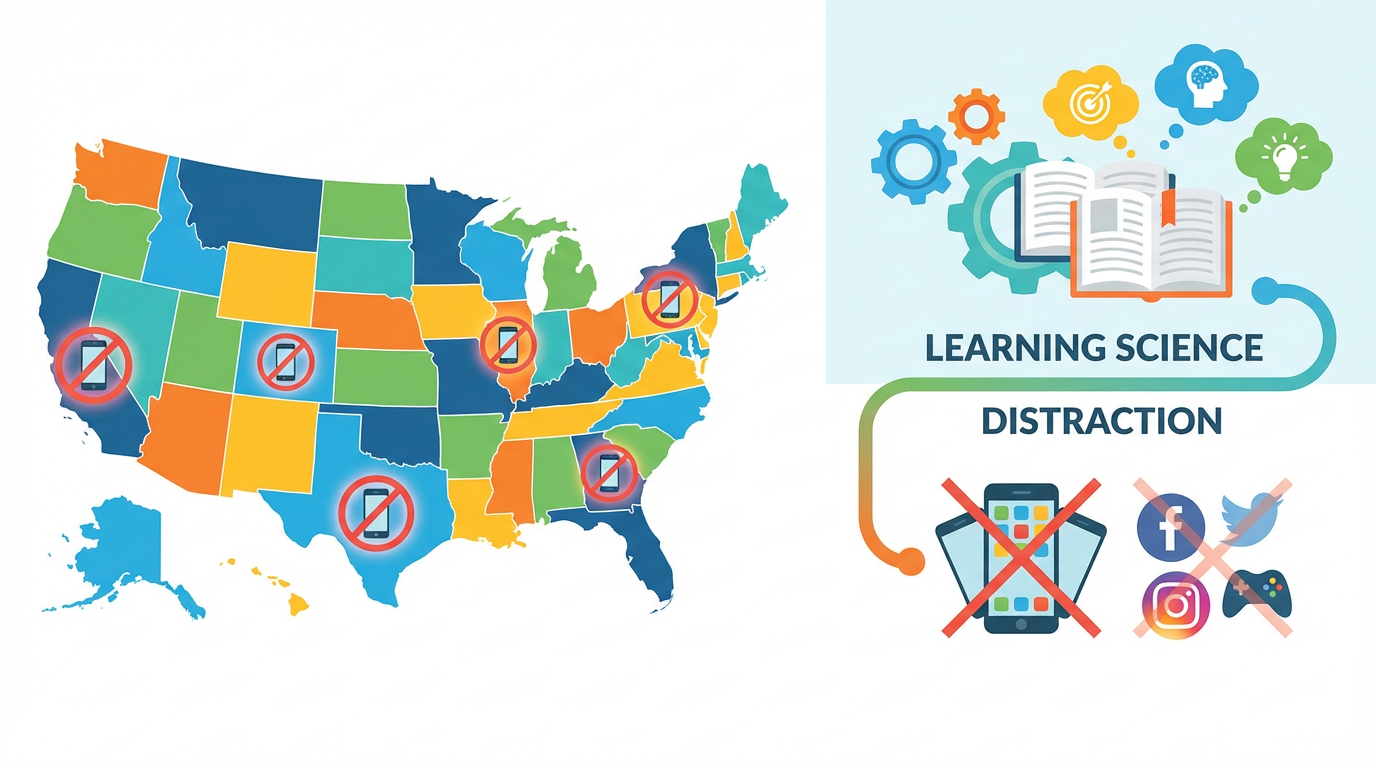
Something unexpected happened in American schools between 2024 and early 2026. Nineteen states passed or implemented laws restricting smartphone use during the school day. That’s more than double the number from just two years earlier. Think about that for a moment. Nineteen states. Legislatures actually moving on this. Not suggesting it. Not recommending it. Legally restricting it.

Why Smartphone Bans Are Sweeping Through U.S. Schools—And What the Research Actually Shows

When I first started teaching fifteen years ago, smartphones barely existed in student hands. Now they’re everywhere—in backpacks, sometimes in pockets, definitely in the collective consciousness of every kid in a classroom. What’s striking isn’t that schools are cracking down. It’s that the crackdown is accelerating, and it’s not driven by nostalgia or “kids these days” hand-wringing. It’s driven by numbers. Data. The kind of evidence that makes even skeptical administrators sit up and listen.

So let’s talk about what’s actually happening, what the learning science tells us, and what this means if you’re a parent, a teacher, or someone who genuinely cares about how young people learn.

Here’s What the Numbers Are Telling Us

Let me start with something concrete you can picture. Right now, the average American teenager spends five hours and fourteen minutes on their phone every single day. That’s not hyperbole. That’s from the Common Sense Media 2025 Technology Use Census. Now here’s the part that matters for schools: forty-three percent of that daily screen time happens between 8am and 3pm, the exact hours kids are supposed to be learning.

That’s roughly two hours and fifteen minutes every school day. During school. While teachers are trying to explain quadratic equations or the causes of the Civil War or how cells divide.

The picture gets clearer when you look at what happens when you actually remove that variable from the equation. A 2025 study published in Educational Psychology, a peer-reviewed journal, found something striking. Students in smartphone-free classrooms scored fourteen percent higher on end-of-unit assessments. They also reported twenty-two percent lower anxiety levels. A fourteen percent improvement is the kind of number that makes you reconsider what’s actually happening in your classroom.

International data gives us even more to think about. When the UK implemented a full national smartphone ban in secondary schools in 2024, their Department for Education conducted a first-year review. Test participation rates improved by 1.8 percent. That sounds modest until you remember we’re talking about millions of students across an entire nation.

Why This Matters for How Your Brain Actually Works

Here’s what happens in a classroom when a phone is present, even if it’s not in your hand. Your brain doesn’t work in neat compartments. You can’t just ignore something and then flip attention back on like a light switch. What actually happens is something neuroscientists call “cognitive load.” Your working memory, the mental space where actual learning happens, gets divided.

Imagine you’re trying to solve a complex math problem. Your teacher is explaining the steps. You’re following along. But there’s a phone sitting on the desk, not buzzing, not even lit up, just present. Part of your attention is still allocated to that device. You’re not conscious of it, but it’s there, dividing your cognitive resources. Now add the fact that most students aren’t just sitting near their phones passively. They’re actively using them. That cognitive load isn’t divided. It’s shattered.

The learning scientists at the Anxious Generation initiative, working with researchers like Jonathan Haidt, released a policy brief in late 2025 that reviewed eleven peer-reviewed studies. The finding was consistent across all of them: device-free zones work as a protective factor against adolescent depression. Not a cure. A protective factor. Something that reduces risk. Read Jonathan Haidt’s After Babel Substack — School Smartphone Policy if you want to dig into the neurological mechanisms. The short version: when kids aren’t anxiously checking their devices during the school day, their anxiety decreases.

That’s not because phones are evil. It’s because notifications are designed to be compelling. Apps are engineered to create habits. And adolescent brains are particularly vulnerable to that design because the reward centers develop faster than the impulse control centers. Your average eighth grader isn’t weak-willed. They’re neurologically set up to find phones more compelling than their algebra homework.

What This Means If You’re Actually Teaching or Parenting

I want to be honest about something here. Banning smartphones in schools works, but only if it’s actually enforced and the culture around it shifts. You can’t just collect phones at the door and then have teachers constantly battling over compliance. That defeats the purpose. The point isn’t punishment. The point is creating an environment where learning can happen without constant competing stimulation.

If your child’s school is implementing or considering a smartphone restriction, the research suggests a few things. Consistency matters more than severity. Clear rules that everyone follows are more effective than ambiguous policies enforced inconsistently. The benefits also compound over time. You don’t see the fourteen percent improvement in test scores overnight. It builds as kids’ brains adjust to having space to think deeply. The anxiety reduction tends to come faster, though. Students report lower stress within weeks when they’re not carrying the psychological weight of checking their phones.

What doesn’t work is banning phones from schools while simultaneously expecting kids to use them responsibly at home. That’s asking for something neurologically unrealistic. This is where parental involvement matters. If your school is creating phone-free learning time, that’s the moment to think about what’s happening in your home. Not as punishment, but as reinforcement. As creating a consistent space where deep focus is possible.

The Bigger Picture: Why This Is Happening Now

The nineteen states passing these laws in 2024 and 2025 weren’t doing it because of one study or one politician’s pet project. They were responding to accumulating evidence. Teachers reporting classroom management challenges. Students reporting anxiety. Parents asking questions. Researchers publishing consistent findings. When you get alignment like that, policy follows.

What’s fascinating is how rapidly the conversation has shifted. Three years ago, suggesting schools ban smartphones would have generated fierce pushback about digital natives and technological inevitability. Now it’s becoming standard policy in nearly a fifth of American states. That shift didn’t happen because older people suddenly got more conservative. It happened because the data became undeniable.

If you’re a parent trying to navigate this, a teacher wondering whether to advocate for policy changes, or a student trying to understand why your school is making these changes, the answer is pretty straightforward: learning actually works better when your brain isn’t split between two tasks. Your focus improves. Your anxiety decreases. Your test scores go up. That’s not opinion. That’s what the research shows.

What’s your experience been? If your school has implemented smartphone restrictions, what changes have you actually noticed? Or if you’re thinking about advocating for policy changes, what concerns are holding you back? I’d genuinely love to hear where you’re coming from on this, not because I have all the answers, but because figuring out how to help kids learn well is something we’re all working through together.

What Khan Academy’s Khanmigo 2.0 Actually Gets Right (And Wrong) About AI Tutoring in 2026

The Promise We Thought We Had

When Khan Academy launched Khanmigo back in 2023, the education world held its breath. Here, finally, was an AI tutor that could theoretically give every student their own personal guide—someone patient, infinitely available, and armed with pedagogical precision. The numbers initially looked good. By late 2025, the platform had logged over 50 million tutoring sessions, and middle school math completion rates jumped 23 percent among users. For Title I schools especially, where budget constraints make hiring additional tutors impossible, the Gates Foundation’s Q3 2025 commitment of $15 million to expand Khanmigo across 12 states felt like a genuine breakthrough. This wasn’t just another edtech promise. This felt real.

But here’s what I’ve learned after two decades in classrooms: promising numbers and actual learning are not always the same thing. They’re not even close sometimes. So I spent the last few months genuinely interrogating what Khanmigo 2.0 does well and where it stumbles in ways that matter for how your brain actually learns.

Where Khanmigo Actually Nails It: The Socratic Approach

The part that made me sit up and take notice involves how Khanmigo 2.0 handles questioning. Recent research from Stanford PACE Center AI in Education Reports found something remarkably clear: AI tutors that ask Socratic questions instead of offering direct answers perform 31 percent better on retention tests two weeks later. Thirty-one percent. That’s the difference between a student genuinely understanding photosynthesis and a student who memorized the steps for a quiz.

Khanmigo 2.0 has internalized this. When a student struggles with, say, setting up a multi-step algebra problem, the system doesn’t just say “multiply both sides by three.” It asks: What do you notice about the equation? What would happen if you moved all the variables to one side? What operation undoes multiplication? This mirrors what actually happens in my classroom when I’m helping a student think through something rather than handing them the answer. The research backs this up completely, and watching Khanmigo handle this correctly feels like vindication that learning science finally made it into mainstream AI design.

The platform’s work with English language learners deserves special mention because it’s where the gains feel most meaningful. According to Khan Academy’s own 2025 efficacy report, ELL students showed a 41 percent improvement in reading comprehension scores after eight weeks of Khanmigo use. That’s not a rounding error. That matters profoundly for students whose learning barriers have nothing to do with ability and everything to do with access to patient, culturally responsive instruction.

The Dangerous Problem: Students Stop Struggling Productively

But here’s where I have to be honest about something that concerns me deeply. A January 2026 RAND Corporation survey found that 67 percent of teachers using AI tutoring tools reported that their students became less likely to struggle productively with difficult problems. Let me translate what that means in learning science terms: struggle is where learning actually lives. When you wrestle with a challenging concept, your brain forms stronger neural pathways than when someone explains it to you. Productive struggle—the kind that feels hard but achievable—is essential to real understanding.

The risk with an AI tutor that’s always available and always helpful is that it can short-circuit this process. A student gets stuck, the AI jumps in with a guiding question, the student finds the answer, and everyone feels good. But the student’s brain never learned to sit with confusion. They never developed the metacognitive skills that come from pushing through difficulty on their own first. This is subtle enough that it’s easy to miss, especially when completion rates are climbing and assessment scores are improving. But it’s the difference between a student who can solve a problem and a student who is becoming a problem-solver.

Think about it this way: if I let every student check with me the moment they felt uncertain, would my classroom improve or would it create learned helplessness? That tension doesn’t disappear just because the helper is artificial. It gets more complicated.

What Khanmigo 2.0 Gets Wrong: Relationship and Accountability

There’s something about the human relationship between a teacher and student that AI, no matter how sophisticated, cannot replicate. When I remember that you found fractions impossible in September but mastered them by April, I’m not just pulling up data points. I’m acknowledging your growth. I’m communicating that I see you. That I believed you could do this. I have accountability to you in a way that an algorithm doesn’t.

Khanmigo 2.0 is extraordinarily good at being consistent, patient, and evidence-based. But it has no stake in your success beyond the parameters of its design. It cannot call your parent because it notices you’re slipping. It cannot catch the moment when you’re overwhelmed versus when you’re just procrastinating. It cannot adjust its teaching style when it senses that you learn through humor or movement or talking things out loud. These aren’t flaws in Khanmigo specifically. They’re inherent limitations of the technology, and pretending otherwise would be dishonest.

The research showing gains in math completion rates and reading comprehension is genuinely impressive. But those metrics don’t capture everything that matters in learning. They don’t measure whether a student developed genuine curiosity about the subject. They don’t track whether a student learned to advocate for themselves. They don’t capture the quiet moment when a struggling student finally believed they could do hard things.

How to Use Khanmigo Wisely (Spoiler: It’s Supplement, Not Substitute)

Here’s what I actually recommend if you’re considering Khanmigo 2.0, whether you’re a teacher, parent, or student. Use it strategically as a supplement, not a replacement. It excels at providing immediate, responsive help with discrete skills and at giving students practice with Socratic questioning, which genuinely deepens retention. The platform is particularly strong for students who are shy about asking questions in class or who need explanations at 11 p.m. on a Sunday. For ELL students and others who benefit from multiple exposures to content, the research is clear that it works.

But preserve productive struggle. Maybe Khanmigo handles practice problems, but you or your teacher handles the initial problem-solving attempt without support. Maybe you use it to check your understanding after you’ve genuinely tried. Maybe you save it for reinforcement rather than first exposure. Build in moments where the answer is not available, where confusion is the actual goal.

Check out the detailed research yourself on Khan Academy Khanmigo Research and Efficacy so you understand what the data actually supports. The research is solid where it’s solid, and it’s worth engaging with on its own terms rather than taking anyone’s word for it—including mine.

What’s your experience been with AI tutoring tools? I’m genuinely curious whether these concerns ring true in your classroom or home school, or whether you’ve found ways to use these tools that navigate these tensions better than I’m imagining.

Can AI Really Replace Your Language Teacher? What the 2026 Data Actually Shows

The App That’s Taking Over Language Learning

By early 2026, something genuinely remarkable had happened in language education. Duolingo Max, the premium tier powered by advanced AI, had reached 9.5 million subscribers and was growing faster than any other paid product tier the company offered. The numbers tell a story: 116.7 million monthly active users across the entire platform, up 38% year-over-year. These aren’t vanity metrics. They represent real people choosing to spend money on AI-powered language learning, real people betting their time and attention on conversations with machines instead of humans.

I understand the appeal completely. An AI tutor available at 11 PM on a Tuesday. No judgment when you mispronounce a word for the fifth time. Immediate feedback. Infinite patience. As someone who has spent years watching students light up when they finally understand something, I also understand why school administrators are paying attention. When language teacher positions declined by 11% in U.S. K-12 schools between 2022 and 2025, district leaders began positioning apps like Duolingo as viable supplements, sometimes as replacements. The economic pressure is real. The promise of AI is real. But the question that keeps me up at night is whether the outcomes are actually real.

What the Research Actually Says About AI Conversation Partners

Here’s what surprised me when I dove into the 2025 research: the early findings are legitimately promising within specific boundaries. A study from City University of New York tracked adult learners using Duolingo Max’s Roleplay feature, which lets users have real-time conversations with an AI language partner. Thirty minutes of daily practice over twelve weeks brought learners to A2-level proficiency on the Common European Framework of Reference, the international standard for language ability. For context, A2 is “elementary proficiency.” You can handle basic survival situations. You can introduce yourself, ask directions, order food. That’s real progress, and it happened without a human teacher in the room.

The research available through the Duolingo Efficacy Research Library reveals something worth sitting with: the app works remarkably well for building foundational skills and maintaining consistency. The AI never cancels lessons. It adjusts difficulty. It provides immediate corrective feedback. For adult learners juggling work and family, who struggle with commitment and consistency, this matters a lot. You don’t need a teacher to move from zero to A2. You need structure, repetition, and accessible practice. The app delivers all three.

The Ceiling Nobody’s Talking About

But here’s where the picture gets complicated, and I want to be absolutely clear about this because it matters for your learning decisions. The American Council on the Teaching of Foreign Languages published an important position statement in 2025, and the headline is sobering: no app-based program had demonstrated B2-level conversational fluency without human instructor intervention. B2 is “upper intermediate” proficiency. You can participate in meetings. You can express opinions. You can handle complexity. This is the threshold where language becomes genuinely useful for work, travel, and real human connection.

When I say there’s a ceiling, I’m not being pessimistic. I’m reading the data. The research shows that something fundamental shifts around the intermediate level, and that’s when having another human in the conversation becomes irreplaceable. Why? Because human teachers do something AI still doesn’t do consistently: they push you past your comfortable patterns. They ask the unexpected question. They notice when you’re using the same ten phrases instead of expanding your range. They challenge you in ways that feel supportive rather than punitive.

The Hidden Trap: Fluency Illusion and Why It Matters

I need to tell you about something troubling that MIT Media Lab researchers discovered in January 2026. They studied how learners behaved with AI conversation partners and found something they called “fluency illusion.” When students practiced with AI, they gradually avoided grammatically complex sentence structures. Why? Because the AI never corrected them. Not out of incompetence, but because AI language partners tend to prioritize communication flow over grammatical precision. So learners felt fluent, felt successful, felt like they were improving. But they were actually simplifying their language rather than expanding it.

Think about this from a neuroscience perspective. Your brain learns through challenge and correction. When there are no consequences for grammatical shortcuts, when communication is always successful no matter what, your brain optimizes for efficiency rather than mastery. You feel like you’re making progress because the conversations flow smoothly. But you’re reinforcing patterns that wouldn’t work with native speakers. This is why that distinction between A2 and B2 matters so much. At A2, this doesn’t break your communication. At B2 and beyond, these gaps become obvious and frustrating.

The Real Question: Supplement or Replacement?

So can an app replace a language teacher? The honest answer is it depends on what you’re trying to achieve and where you are in your learning journey. If you’re starting from zero, if you need daily accessible practice and you live somewhere without access to quality teachers, Duolingo Max is genuinely better than nothing and probably better than sporadic in-person instruction. The research supports this. The consistency, the accessibility, the adaptive difficulty — these matter enormously for building foundational skills.

But if you want real fluency, if you want to genuinely use a language for complex communication, if you want to understand why something is wrong and how to fix it, an app alone probably won’t get you there. Not yet, anyway. What the data suggests is that the best approach combines both: AI for consistency, accessibility, and foundational building, with teachers handling challenge, complex feedback, cultural context, and that irreplaceable human element of being truly seen and understood as a learner.

I’d encourage you to look at ACTFL Position Statements on Language Learning Technology and form your own conclusions. Think hard about where you are in your language learning journey. What are you actually trying to achieve? What gaps exist in your current approach? I’d genuinely love to hear what you discover as you navigate these tools.

When Good Science Gets Messy Politics: Understanding the Reading Wars of 2026

The Movement That Changed Everything, Then Everything Changed Again

If you’ve been teaching reading in the last five years, you’ve felt the seismic shift. The science of reading movement arrived like a lighthouse cutting through fog—finally, we had research-backed evidence that explicit, systematic phonics instruction matters enormously for beginning readers. No more guessing games about what students needed. No more philosophical debates that seemed to ignore neuroscience. For many of us in the classroom, it felt like validation. It felt like progress.

But here’s what I want to walk you through today: why that lighthouse is now casting some very sharp shadows. The science itself hasn’t changed. What’s changed is what happens when research gets translated into policy, when enthusiasm becomes mandate, and when something genuinely good gets implemented in ways that create new problems while solving old ones.

Let me start with the concrete numbers, because they tell a story. In 2020, seventeen states had passed legislation requiring structured literacy and phonics-based approaches. By January 2026, that number had grown to forty states. You can track this shift in detail through the Education Commission of the States Literacy Policy Database, and what you’ll notice is the speed of adoption. That’s not gradual evolution. That’s a movement.

From Research to Reality: Where Translation Becomes Trouble

Let me give you a concrete example of how good intentions met complicated reality. California passed AB 2222 in 2024, requiring all kindergarten through third-grade teachers to complete science of reading training by 2026. That’s roughly 78,000 teachers across the state. Think about that number for a moment. Then think about coordinating professional development at that scale, with adequate funding, with quality facilitators, with time for teachers to actually process what they’re learning.

Here’s where the practical challenge becomes apparent: implementation matters as much as the research. A teacher who receives a one-day workshop on phonemic awareness is technically trained. But is she ready to assess where each of her 24 students sits on the phonological processing spectrum? Is he equipped with the right materials to teach phonics systematically to kids who speak Arabic at home and English at school? The research says phonics matters. It doesn’t say it’s simple, or that it works the same way for every learner.

The International Literacy Association surveyed their members in 2025, and here’s what reading specialists reported: sixty-one percent felt that state mandates were being rolled out without adequate teacher training or funding for instructional materials. In classrooms, that frustration looks like this: teachers being told to implement a specific approach but not given the time to learn it deeply or the tools to do it well. That’s not the science’s fault. That’s a policy implementation problem.

The Curriculum Question: How Much Is Too Much?

Here’s a case study that shows how even expert educators are wrestling with these questions. Lucy Calkins, whose Units of Study curriculum influenced writing instruction across the country, revised her entire curriculum in 2025 to incorporate explicit phonics instruction. That matters. That’s someone listening to research and saying, “I need to change what I’ve been doing.” I respect that intellectual humility.

But here’s where it gets complicated. A research team from Johns Hopkins examined the revised curriculum and found that explicit decoding instruction still only accounted for eighteen percent of instructional time in early grades. Is that enough? That’s the question creating tension right now. The science suggests that for struggling readers and students with dyslexia, decoding needs intensive, focused attention. But eighteen percent feels like a compromise position—more than before, sure, but is it what the research actually recommends?

This isn’t a criticism of Calkins or her team. It’s an illustration of a real problem: translating research into curriculum is genuinely hard. You can’t spend eighty percent of time on one component and ignore everything else. Fluency matters. Comprehension matters. Vocabulary matters. What’s the right balance? Different teachers, different students, and different communities might have legitimately different answers to that question.

The Voice That’s Being Lost: Pushback From Experienced Educators

In late 2025, a coalition of progressive educators published what they called the Oakland Declaration, the first organized, sophisticated pushback from inside the education community. Their argument deserves to be understood carefully, not dismissed. They contend that the science of reading movement, while built on solid research about phonics, draws from a research base that doesn’t adequately represent the full complexity of how people learn to read.

Their specific concern: the research base is narrow in its focus on decoding, and that narrowness has cultural consequences. Comprehension strategies—things like activating prior knowledge, asking questions while reading, making connections to students’ lives—aren’t replaced by phonics instruction, but they sometimes get pushed to the side when phonics becomes the policy priority. For multilingual learners especially, this shift matters. If a student knows oral English but is struggling to decode, the solution isn’t just more phonics. It might be oral language development. It might be culturally sustaining reading practices. It might be honoring the literacy practices students bring from home in other languages.

I want to be careful here: the Oakland Declaration isn’t saying phonics doesn’t matter. It’s saying that phonics isn’t the whole story, and that policy mandates sometimes flatten complex teaching into something too simple. When you tell 78,000 teachers across an entire state that they all need to teach reading the same way, you inevitably lose something: the responsive teaching that meets students where they actually are.

What This Means for Teachers Right Now

So where does this leave you if you’re in a classroom today? Honestly, in a position that matters more than it might feel like right now. The research on phonics is solid. You absolutely should understand how phonemic awareness develops. You should know how to teach phonetic patterns systematically. That’s not changing.

But you also need to advocate for something that rarely makes it into policy documents: professional judgment. You need permission to look at your individual students and say, “This approach works for most of them, but Marcus needs something different. Elena’s oral comprehension is strong, but her decoding is weak. Jayden speaks three languages at home.” That’s not defying the science. That’s applying the science with wisdom.

The backlash of 2026 isn’t a rejection of the science of reading. It’s a rejection of the idea that science should become a straightjacket. If you’re feeling caught between mandate and classroom reality, you’re not wrong. That tension is real. More voices are naming it publicly now, which at least means we’re having the right conversation.

What’s your experience been? If you’ve navigated these policy changes in your own teaching, what’s worked and what’s created friction? I’d genuinely like to hear where the rubber meets the road in your classroom, because that’s where the real story of reading instruction actually lives.

The 7 Non-Negotiable Skills Employers Want: A Learning Science Approach to Teaching Them Before Graduation

What Employers Actually Want (and Why Most Graduates Don’t Have It)

There’s a troubling gap between what graduates think they can do and what employers say they can actually do. The latest Coursera Global Skills Report 2026 draws on feedback from 148 million learners and nearly 6,000 employer partners worldwide, and the findings are clear: AI literacy, data storytelling, and human-AI collaboration top the list of skills employers say new graduates lack most urgently. These aren’t nice-to-have competencies anymore. They’re the foundation of what employers expect.

The perception gap is striking. A recent National Association of Colleges and Employers survey found that 78% of recent graduates rate themselves as proficient in data interpretation, yet only 41% of hiring managers agree. That 37-point gap tells us something important: students believe they understand data, but employers don’t see that understanding translate into actionable work. This isn’t about confidence. It’s about applied skill.

What makes this urgent is the velocity of change. The World Economic Forum Future of Jobs Report projects that 39% of existing skill sets will be disrupted or become obsolete by 2030. The skills we’re teaching today need to account for a landscape that keeps shifting under our feet.

The Seven Skills You Need to Teach Explicitly

Coursera’s research identifies seven skills employers are prioritizing: AI literacy, data storytelling, human-AI collaboration, analytical thinking, creative problem-solving, digital fluency, and learning agility. But here’s what matters from a learning science perspective: these skills aren’t acquired through passive exposure. They require deliberate practice, immediate feedback, and real-world application.

The encouraging news is that demand is driving enrollment. AI-adjacent course enrollments on Coursera grew 172% year-over-year in 2025, with the most significant growth among community college students and learners in sub-Saharan Africa. Learners recognize the urgency, and educators are finding ways to meet them. The question is whether we’re teaching these skills in ways that actually stick.

Analytical and creative thinking rank as the top two skills employers intend to develop, according to WEF data. This suggests that employers see these as learnable capacities, not innate talents. They’re willing to invest in teaching them, which means schools should prioritize them before graduation. When employers have to remediate fundamental thinking skills after hire, that’s a signal something is missing from your curriculum.

Project-Based Learning with Real AI Tools Works

Here’s where learning science meets practice. A 2025 pilot program involving 12 community college districts partnering with IBM SkillsBuild tested project-based learning that explicitly incorporated AI tool usage into coursework. The results: a 29% improvement in employer-rated job readiness scores at graduation compared to traditional instruction. That’s not a marginal improvement. That’s the difference between students who can theoretically explain what AI does and students who can actually use it to solve real problems.

Why does project-based learning with AI tools work? Because it creates what learning scientists call “transfer,” the ability to apply knowledge to new situations. When students work on authentic projects that require them to use AI as a tool rather than learning about AI in the abstract, they’re building mental models they can apply on day one of employment. They’re not just learning AI literacy. They’re learning how to think with AI, how to collaborate with AI, and how to maintain critical judgment while leveraging its capabilities.

The key is making these projects genuinely complex. A project that asks students to clean a dataset and visualize it is fine. A project that asks them to clean a dataset, visualize it, identify patterns, collaborate with an AI tool to generate hypotheses, then write a narrative for stakeholders, that’s the kind of work that develops actual job readiness. That’s data storytelling in action.

How to Build These Seven Skills Into Your Teaching

Start with analytical thinking and creative thinking because they undergird everything else. These aren’t separate from content knowledge; they’re ways of thinking about content. When you teach history, ask students not just what happened but why decision-makers at the time might have thought differently with different data. When you teach biology, ask students to design experiments to answer their own questions rather than replicate prescribed procedures. When you teach literature, ask students to solve interpretive problems, not just identify themes. This develops the cognitive flexibility employers are desperate for.

Next, integrate AI literacy and human-AI collaboration into your actual assignments. Don’t create a separate unit on AI. Instead, have students use AI tools to support their work in your existing courses. Let them experiment with what AI can do well and what it cannot. Have them collaborate with AI to accomplish something neither could accomplish alone. This develops intuition about capability and limitation that no lecture can provide.

Data storytelling requires three interlocking skills: data interpretation (understanding what data means), visualization (showing it clearly), and narrative construction (telling the human story the data reveals). You can teach this across disciplines. In science courses, have students interpret research findings and explain them to non-scientists. In history courses, have students work with datasets about demographic or economic trends and build arguments from that evidence. In business or social science courses, have students present data findings to simulated stakeholders. The skill transfers because the underlying cognitive processes are the same.

Digital fluency and learning agility are best developed through problem-solving in environments where tools change. Give students problems that require them to learn new tools or platforms independently. Normalize not knowing, and provide scaffolding for self-directed learning. When something breaks or changes, that’s not a disruption to plan around. That’s the actual curriculum teaching itself.

The Perception Gap Is Your Responsibility

That 37-point gap between student self-assessment and employer assessment of data proficiency exists partly because students have practiced demonstrating knowledge in familiar, controlled environments. They can answer test questions about data interpretation because the test format is predictable. But when they encounter messy, real-world data in an interview scenario or on a job, they freeze because they haven’t practiced applying their knowledge to genuinely novel situations.

Closing this gap means designing assessment that mirrors real-world uncertainty. Don’t ask students to analyze clean datasets with clear instructions. Ask them to define their own questions about data and figure out what they need to answer them. Don’t ask them to write analyses for you, their teacher. Ask them to write for different audiences with different levels of statistical sophistication. Don’t ask them to use tools you’ve taught them. Ask them to learn new tools to solve problems you’ve posed.

This is harder to grade. This is harder to teach. And this is exactly what employers need. When you build your courses this way, your students don’t just perform better on traditional measures. They develop genuine confidence grounded in actual capability. That’s when the self-assessment gap closes.

Your Role in a Rapidly Changing Landscape

The skills employers prioritize will shift. That’s guaranteed. But the capacity to learn, adapt, and think analytically while maintaining creative flexibility, that’s stable. Your job isn’t to predict exactly what skills will matter in five years. Your job is to teach students how to become skilled. Teach them how to interpret new information, ask good questions, collaborate effectively, and apply knowledge in unfamiliar contexts. Build projects that require them to do this repeatedly with real consequences.

The employers represented in Coursera’s report of 6,000 companies aren’t looking for graduates who memorized information. They’re looking for graduates who can ask questions, learn continuously, and apply analytical and creative thinking to problems no one has exactly solved before. That’s what you’re actually teaching when you redesign your courses around genuine project-based learning, real tool usage, and authentic complexity. That’s how you close the gap between what students think they can do and what they can actually do when it matters most.