Educational content designed to spark curiosity and build real understanding.

Author: Lillie Lee (page 8 of 11)

Two Years of Khanmigo in Real Classrooms: What the Data Actually Shows About AI Tutoring and Learning Gaps

The Moment We’ve Been Waiting For: Evidence on AI Tutors and Real Student Outcomes

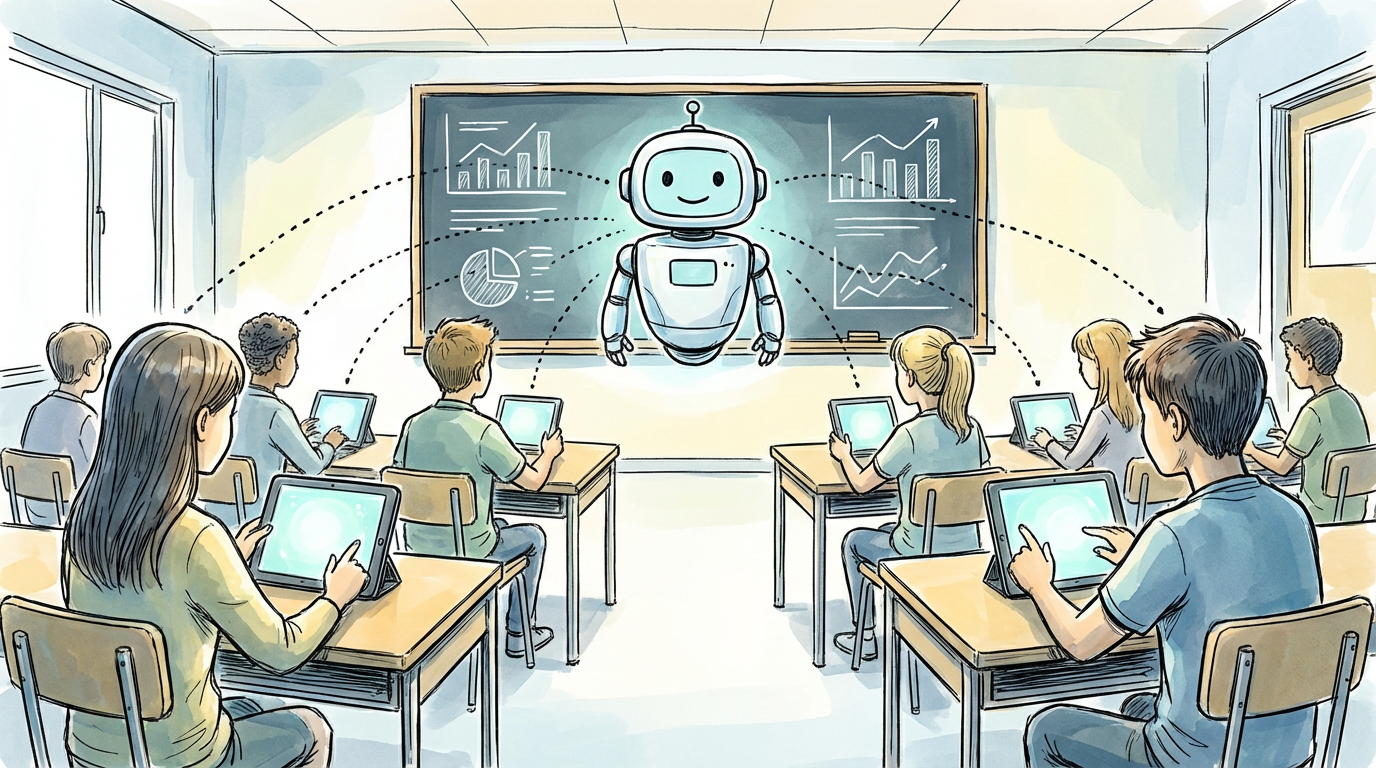
When Khan Academy’s Khanmigo first rolled out to classrooms, we were all holding our breath a little. Here was this sophisticated AI tutor, powered by GPT-4 technology, ready to provide personalized support to students who needed it most. The promise was tantalizing: an infinitely patient tutor available to every student, regardless of zip code or family income. But promise and reality are two different animals in education. Two years in, with over 2 million students in school settings now using Khanmigo and the tool expanded to all U.S. teachers for free in 2024, we finally have rigorous data on whether this actually works. The answer is more complicated and more interesting than a simple yes or no.

Two Years of Khanmigo in Real Classrooms: What the Data Actually Shows About AI Tutoring and Learning Gaps

The WestEd longitudinal study released in late 2025 gives us our clearest picture yet. Students who engaged with Khanmigo for at least 30 minutes per week showed a 0.23 standard deviation improvement in math achievement over the course of an academic year. Let me translate that number into something meaningful. That’s not transformational. It’s not the kind of leap that makes you reconsider everything about math instruction. But it’s also not trivial. It’s a solid, measurable gain. Think of it this way: if you had two students with similar starting abilities, and one used Khanmigo regularly while the other didn’t, the student with the AI tutor would likely move from the 50th percentile to somewhere around the 59th percentile. That matters.

Illustration for Two Years of Khanmigo in Real Classrooms: What the Data Actually Shows About AI Tutoring and Learning Gaps

Where AI Tutors Actually Shine: Language Learners and the Real Possibility of Closing Gaps

Here’s where the data gets genuinely compelling. The same WestEd research found something remarkable when they disaggregated the results by student population. English Language Learners using Khanmigo showed a 0.31 standard deviation improvement in math achievement. I want to sit with that number for a second, because it’s not just better than the overall group. It’s substantially better. We’re talking about students who often struggle not with the math itself but with the language barriers that prevent them from accessing math instruction, finally having a tool that can explain concepts in multiple ways, slow down as needed, and provide patient repetition without judgment.

This is the kind of finding that keeps me up at night in the best possible way, because it suggests something fundamental about how AI tutors work. They’re not replacing teachers. They can’t. But they might be particularly powerful for students whose learning barriers are wrapped up in language and pacing. When a student can ask a question in their own way and get an explanation that adjusts to their specific misunderstanding, something shifts. The gap doesn’t just narrow because the student is getting more practice. It narrows because the student is finally getting instruction that meets them where they actually are.

The Engagement Problem: Why Tools Sit Unused and What It Means for Your Classroom

But here’s where I need to be honest about the shadows in this picture. A contrasting study from Stanford’s Center for Education Policy Analysis in 2025 found something that should make every educator pause. Without structured teacher facilitation, student engagement with AI tutors dropped by 60% after the first three weeks of use. Sixty percent. That means most students who were using Khanmigo regularly in September weren’t using it by late October. That’s not a failure of the tool. That’s a failure of how we implemented it.

This finding tells us something crucial about learning science that we sometimes forget: technology is never the intervention. The intervention is what teachers do with the technology. An AI tutor sitting in a student’s account, unused, helps no one. But an AI tutor that a teacher has woven into the actual workflow of instruction, that students have been trained to use, that teachers are monitoring and responding to, that works differently entirely. I think of my colleagues who’ve had success with Khanmigo. They’re the ones who use it during class, who show students how to ask it the right questions, who check in on which problems students are struggling with, who build it into the fabric of their teaching rather than treating it as an optional add-on.

If you’re considering Khanmigo for your classroom or your own learning, this matters enormously. You can visit the Khan Academy Khanmigo educator overview to understand how to integrate it intentionally. The research is clear: passive access isn’t enough. Active, structured integration is what generates the actual learning gains we’re seeing in the data.

The Privacy Question We Still Haven’t Fully Answered

There’s another dimension to this two-year moment that we need to discuss, even though it’s less exciting than learning gains. The U.S. Department of Education released AI in Education guidance in 2025 that flagged a serious concern: 78% of educational AI tools reviewed did not fully comply with FERPA’s 2023 updated digital provisions. That’s the Family Educational Rights and Privacy Act, the law that’s supposed to protect student data. And we’re talking about tools that are collecting information about how students learn, what they struggle with, how they think through problems. That’s intimate data.

I’m not suggesting that Khanmigo is one of those non-compliant tools. But the fact that this is even a landscape we’re operating in should make us thoughtful. Before you adopt any AI tutoring tool in your classroom or recommend it to students, check the compliance status. Visit the U.S. Department of Education AI in Education guidance 2025 and understand what questions to ask your district technology leadership. Student privacy isn’t a checkbox. It’s foundational to trust, and trust is foundational to learning.

What This Means for You: Moving Forward with Eyes Open

Two years of data on Khanmigo tells a story worth paying attention to. AI tutors can help. They particularly help students who are battling language barriers alongside content barriers. But they only help when they’re actively integrated into intentional teaching, and they only help when we’re protecting student data. That’s not a disappointing conclusion. It’s a hopeful one, because it means the outcome depends largely on us. On teacher judgment about how to use a tool, when to use it, and whether to use it at all.

If you’re a teacher exploring this for your classroom, think small and structured. Start with one unit, one skill, one group of students. Monitor engagement carefully. Check in on what students are actually learning, not just whether they’re completing assignments. If you’re a student or parent thinking about using Khanmigo for additional support, understand that it works best as a supplement, not a replacement, for actual instruction. Use it when you have a specific question, when you want to see something explained differently, when you need practice at three in the afternoon and a human tutor isn’t available.

The question isn’t whether AI tutors will revolutionize education. The question is how we use them wisely, ethically, and in service of actual learning. That’s a harder question, and honestly a more important one. What’s your experience been with AI tools in learning, either as a student or educator? I’d love to hear what you’re seeing in your own context.

Why Your Math Homework Probably Looks Wrong Now—And Why That’s Actually Brilliant

The Moment Everything Changed

Remember when math homework meant doing ten problems all exactly the same way? Problem 1 through 10 were variations on a single technique. You practiced the method until your hand hurt, and by the time you finished, you felt like you’d mastered it. Then the test came, the problems looked slightly different, and suddenly everything fell apart. That wasn’t your fault. That was the homework design failing you.

Why Your Math Homework Probably Looks Wrong Now—And Why That's Actually Brilliant
Why Your Math Homework Probably Looks Wrong Now—And Why That’s Actually Brilliant

This is the reality that’s shifting right now in classrooms across the country. The science behind how we actually learn and remember information has finally caught up with classroom practice, and it’s upending everything we thought we knew about effective homework. What started as a whisper in cognitive psychology labs is now becoming mainstream curriculum design. If your student brought home math homework that looks like a chaotic mix of problem types, you’re witnessing something genuinely important happening.

Illustration for Why Your Math Homework Probably Looks Wrong Now—And Why That's Actually Brilliant
Illustration for Why Your Math Homework Probably Looks Wrong Now—And Why That’s Actually Brilliant

What the Research Actually Says About Memory and Practice

Let me take you inside the cognitive science for a moment, because this is where the magic happens. When your brain encounters a new problem type, it doesn’t just file it away neatly in one folder. It’s constantly making decisions about which mental tools to retrieve and apply. When you practice ten identical problems in a row—what researchers call “blocked practice”—your brain gets lazy in the best possible way. It remembers what worked last time and just applies the same solution again and again. You feel competent. You feel like you’re learning. But you’re actually training your brain to recognize one very specific pattern, in one very specific context.

A landmark analysis published in 2025 that reviewed 54 separate studies involving over 11,000 students found that when students mixed up their practice problems instead—solving different types of problems in the same session—they retained the material significantly better. We’re talking about an effect size of 0.42, which translates to real performance differences on actual tests. That’s not a marginal improvement. That’s the kind of change that moves a student from a B to an A.

The mechanism is what Dr. Robert Bjork’s research team at UCLA calls “desirable difficulties.” When a problem feels slightly harder because you have to stop and think about which strategy to use, that struggle is exactly what builds memory that lasts. Research from the Bjork Learning and Forgetting Lab UCLA shows that practicing with these kinds of difficulties—including mixing up problem types and spacing practice over time—can improve long-term retention by as much as 40% compared to traditional practice where you do all the same type of problem at once.

What This Actually Looks Like in Real Classrooms

So what does this mean when your sixth grader hands you their homework sheet? Two years ago, you might have seen a page of fifteen fraction addition problems. This year, you’re seeing five fraction addition problems, three fraction subtraction problems, four problems that mix fractions with whole numbers, and three problems that require students to decide which operation to use before they even solve. It looks messy. It feels less focused. Your instinct might be that it’s less effective. Your instinct would be wrong.

Two of the largest K-8 math curricula in the United States—Illustrative Mathematics and Zearn—both made explicit interleaving a central feature of their 2025 updates. These curricula now reach an estimated 4.5 million students across the country. This isn’t an experimental fringe approach anymore. This is mainstream. The problem sets are intentionally designed so that students can’t coast on autopilot. They have to engage their thinking differently with each problem.

Here’s a concrete example of how this works in practice. Let’s say your student is learning about solving linear equations. With old-style blocked practice, the homework might be: solve for x in problems 1-20, where every single problem follows the pattern ax + b = c. Your student would solve problem 1, figure out the steps, then apply those same steps nineteen more times. With interleaved practice, the same homework might have students solve problems with that pattern mixed with equations where they need to combine like terms first, equations where the variable appears on both sides, and one or two problems where they need to recognize that the equation has no solution or infinitely many solutions. Students have to think about which approach fits each problem. That thinking is where learning happens.

Why Teachers Weren’t Doing This Already

Here’s something that might surprise you: most teachers never learned this in their teacher preparation programs. A 2025 survey by the Learning & the Brain Foundation of 3,400 U.S. teachers found that only 18% reported receiving any formal instruction in evidence-based memory science principles during their pre-service education. Teachers were trained to teach content, but not necessarily trained on the cognitive science of how that content sticks in students’ long-term memory. That’s changing now, but there’s a genuine lag between what the science shows and what teachers were taught.

The UK’s Education Endowment Foundation rated interleaving as a “high impact, low cost” teaching strategy in their 2025 update, estimating that it could lead to approximately seven additional months of learning progress for secondary students. When the evidence is that strong, change accelerates. Curriculum developers listen. Professional development programs shift. Teachers start asking different questions about how they design practice.

What You Can Do Right Now

If your student is experiencing this shift toward interleaved practice, you’re actually in a good position to support it in a way that matters. When your student complains that their homework “doesn’t make sense because the problems are all different,” you can explain what’s actually happening—that the variety is the whole point. You can help them see that the struggle of figuring out which approach to use is the learning itself, not a sign that something is wrong.

You can also look for this approach in the resources you choose. If you’re selecting practice problems from online platforms or supplementary materials, the Education Endowment Foundation Teaching and Learning Toolkit offers evidence-based guidance on effective practice strategies. Seek out problem sets that mix types rather than block them. Notice when your student’s curriculum is asking them to decide which strategy to use, not just apply a single known method.

Most importantly, shift your view of what effective practice looks like. Homework that feels easy and flows smoothly might actually be less effective than homework that requires more thinking and feels slightly harder. Your role isn’t to help your student get through the homework faster. Your role is to help them understand why the homework is designed the way it is, and to normalize the productive struggle that comes with interleaved practice. That’s when the real learning happens.

The Student Who Never Failed Another Test (Once I Changed How I Assessed)

When Traditional Testing Misses the Mark

Marcus sat in my chemistry class last fall, consistently earning D’s on every traditional test despite staying after school twice a week to work through problems with me. He could explain chemical bonding beautifully when we talked one-on-one, could predict reaction outcomes during lab work, and even helped other students understand concepts during group activities. Yet put a timed test in front of him, and his mind went blank.

The disconnect hit me during parent conferences when his mother mentioned he’d been diagnosed with severe test anxiety the previous year. That’s when I realized my assessment strategy was measuring his stress response, not his chemistry knowledge. The solution wasn’t lowering standards or making tests easier. It was completely rethinking how I gathered evidence of learning.

Portfolio Assessment: Building Evidence Over Time

Instead of relying only on high-stakes tests, I started using portfolio assessment where students collected evidence of their learning throughout each unit. Marcus began submitting weekly lab reflection videos where he explained what happened during experiments and why. He included photographs of his lab setups with detailed captions describing his hypothesis and observations. By the end of the semester, his portfolio contained dozens of pieces showing deep understanding of chemical concepts.

Effective portfolio assessment needs clear criteria and regular feedback loops. I created specific rubrics for different types of evidence, from written explanations to visual diagrams to peer teaching moments. Students knew exactly what showed proficiency, and I could track their growth over weeks rather than judging their knowledge based on a single testing moment. Marcus earned an A in chemistry that semester. More importantly, he discovered he actually understood the subject deeply.

Formative Assessment That Actually Informs

Real formative assessment happens in the moment, not after the fact. During my AP Biology classes, I use exit tickets with a twist. Instead of asking students what they learned, I pose a specific application question. For example, after teaching cellular respiration, students might get this prompt: “Your friend claims that plants don’t need to do cellular respiration because they photosynthesize. Write a 30-second explanation you’d give to help them understand why this isn’t accurate.”

These responses tell me immediately who grasps the concept and who needs clarification before we move forward. Sarah might write about how plants need energy at night when photosynthesis stops, showing she understands the relationship between the processes. Meanwhile, Jake might focus only on the chemical equations, revealing he knows the mechanics but misses the bigger picture about energy flow in living systems. This information shapes my lesson planning for the next day. I can address misconceptions while they’re fresh rather than discovering them weeks later during a unit test.

Performance-Based Tasks That Mirror Real Understanding

Last spring, I replaced my traditional geometry final exam with a performance task that challenged students to design a sustainable garden for our school courtyard. They needed to calculate areas for different plant zones, determine optimal angles for sun exposure throughout the day, and create scaled drawings with precise measurements. The mathematics was identical to what I would have tested on paper, but now students applied geometric concepts to solve an authentic problem.

Elena, who typically struggled with abstract geometric proofs, excelled when she could visualize how the Pythagorean theorem helped her calculate diagonal pathways through the garden space. She created detailed technical drawings and used trigonometry to figure out how much sunlight different areas would receive based on the school building’s shadow patterns. Her final presentation showed mathematical reasoning that never emerged during traditional testing situations.

Performance-based assessment works because it reveals how students think through complex problems, not just whether they can recall isolated facts or procedures. The garden project tested spatial reasoning, measurement skills, mathematical communication, and problem-solving strategies all at once. Students who typically earned C’s on tests often produced A-level work when given authentic contexts for their mathematical knowledge.

Creating Assessment Systems That Support Learning

Effective assessment requires intentional design around three core principles: clarity about what proficiency looks like, multiple pathways for students to show understanding, and regular opportunities for revision and growth. In my physics classes, I’ve moved toward standards-based grading where students can retake assessments once they’ve shown additional learning through practice problems, peer tutoring, or alternative evidence.

This approach changed how students like David approached learning. Previously, he’d given up after failing the first quiz on Newton’s laws, assuming physics “wasn’t for him.” Under the new system, his initial assessment showed partial understanding of force concepts but confusion about acceleration. Rather than accepting a failing grade, he worked through additional problems, created concept maps connecting the three laws, and eventually recorded a video explanation of how friction affects motion in everyday situations. His retake assessment score reflected his actual understanding rather than his initial confusion.

The magic happens when assessment becomes part of learning rather than separate from it. Students stop asking “Will this be on the test?” and start asking “How does this connect to what we learned yesterday?” They begin to see feedback as information for improvement rather than judgment about their abilities. They also develop skills for thinking about their own learning as they reflect on their processes and identify strategies that work best for them.

Think about your own classroom: which students might be like Marcus, showing understanding in conversations but struggling with traditional tests? What evidence of learning are you currently missing, and how might expanding your assessment toolkit reveal hidden strengths in your students?

Why Your Brain Craves Different Learning Paths (And How to Find Yours)

The Moment Everything Clicks

Picture this: You’re watching a student who has struggled with fractions for weeks suddenly light up during a cooking lesson when they realize that doubling a recipe means multiplying each ingredient by two. The same mathematical concept that felt impossible on paper becomes crystal clear when their hands are measuring flour and their brain connects abstract numbers to real-world action. This isn’t coincidence, it’s neuroscience in action.

Our brains are wired differently, and these differences create distinct pathways for how we process, store, and retrieve information. When we align our learning methods with our brain’s natural preferences, that magical “click” moment becomes far more common. The key is understanding that there’s no single right way to learn, only the way that works best for your unique neural architecture.

How Your Brain’s Networks Shape Learning

Neuroscientist Dr. Judy Willis identified three primary neural networks that influence how we learn best. The recognition network determines what information captures our attention and how we take in new concepts. Some brains focus intensely on visual details, noticing patterns in graphs and diagrams that others might miss entirely. Others are naturally drawn to auditory information, processing spoken explanations or discussions with remarkable clarity. Still others need kinesthetic input, physical movement or hands-on manipulation, to engage their recognition systems fully.

The strategic network controls how we organize and work with information once we’ve taken it in. Linear processors excel with step-by-step instructions and sequential learning, like following a recipe or working through math problems in order. Global processors need to see the big picture first before diving into details. They prefer to understand why photosynthesis matters to ecosystems before memorizing the chemical equation. Random processors make connections by jumping between concepts, often discovering insights through seemingly unrelated associations.

The affective network controls motivation and engagement, the emotional fuel that drives learning forward. Some learners thrive on challenge and competition, pushing harder when the material gets difficult. Others flourish in collaborative environments where they can process ideas through discussion and shared exploration. Understanding which emotional conditions spark your brain’s learning centers can transform a frustrating study session into an energizing one.

Reading Your Brain’s Learning Signals

Your brain constantly sends signals about how it prefers to learn, but we often miss or ignore these cues. Pay attention to when you naturally feel most engaged and when your mind starts to wander. Do you find yourself doodling during lectures not because you’re bored, but because your brain processes better when your hands are moving? That’s your kinesthetic system asking for input. Do you remember conversations word-for-word but struggle to recall what you read silently? Your auditory processing might be stronger than your visual processing.

Notice your natural study behaviors too. If you instinctively create colorful charts and mind maps, your visual-spatial network is likely dominant. If you talk through problems aloud or study better with background music, your auditory system may be calling the shots. Students who fidget, pace while thinking, or prefer standing desks often have brains that integrate physical movement with cognitive processing.

One of my former students discovered she was a global processor when she realized she couldn’t start writing essays until she had mapped out every argument on sticky notes spread across her desk. She needed to see all the pieces before arranging them into a logical sequence. Once she honored this need instead of fighting it, her writing quality improved dramatically.

Matching Methods to Mental Wiring

Once you understand your brain’s preferences, you can choose learning strategies that work with your neural networks instead of against them. Visual learners benefit from graphic organizers, color-coding systems, and concept maps that make abstract relationships visible. Try converting text-heavy information into flowcharts, timelines, or infographics. When studying history, create visual timelines that show cause-and-effect relationships between events rather than memorizing dates in isolation.

Auditory learners should embrace discussion, explanation, and repetition through sound. Record yourself explaining key concepts and play them back during commutes. Join study groups where you can talk through problems aloud. Use rhymes, songs, or verbal mnemonics to encode information. When learning a foreign language, focus on listening practice and speaking exercises rather than relying solely on written materials.

Kinesthetic learners need movement and manipulation to cement understanding. Use hands-on experiments, build models, act out historical events, or create physical representations of abstract concepts. When studying chemistry, use molecular model kits rather than just drawing structures on paper. For math, manipulate objects to understand geometric principles or use your body to demonstrate angles and movements.

Sequential learners should break complex topics into clear, logical steps and master each component before moving forward. Create detailed outlines, use numbered lists, and follow structured study schedules. Random learners benefit from concept mapping, brainstorming sessions, and making unexpected connections between ideas. Allow yourself to explore tangents that seem interesting. Your brain might be making valuable associations that linear thinking would miss.

Building Your Personal Learning Laboratory

The most effective learners become researchers of their own minds, experimenting with different approaches and paying attention to what produces the best results. Start by tracking your energy and focus patterns throughout different types of learning activities. Notice whether you concentrate better in the morning or evening, in silence or with background noise, alone or with others present.

Create multiple pathways to the same information rather than relying on a single method. If you’re studying for a biology exam, you might read the textbook, draw diagrams of cellular processes, explain concepts to a study partner, and create physical models of molecular structures. This multi-modal approach makes sure that regardless of how your brain is functioning on test day, you have multiple routes to retrieve the information.

Remember that your learning preferences aren’t fixed limitations. They’re starting points for building effective study strategies. A visual learner can still benefit from auditory techniques, and a kinesthetic learner can develop strong reading comprehension skills. The goal isn’t to box yourself into a single category but to understand your natural strengths while building flexibility across different learning modes.

What learning breakthrough moment stands out most clearly in your memory? What conditions were present when everything suddenly made sense? Your brain has been showing you the way all along. Now it’s time to start listening.

When Emma’s Third Grade Tears Changed Everything: What Finland’s Homework Revolution Means for Your Family

The Moment That Made Finland Rethink Everything

Picture eight-year-old Emma, sitting at her kitchen table at 7:30 PM, tears streaming down her face as she struggles through her third worksheet of multiplication problems. Her mother hovers nearby, equally frustrated, trying to remember algorithms she learned decades ago while dinner grows cold and bedtime slips further away. This scene, playing out in millions of homes worldwide, became the catalyst for Finland’s radical decision to eliminate traditional homework for children under twelve.

When Emma's Third Grade Tears Changed Everything: What Finland's Homework Revolution Means for Your Family
When Emma’s Third Grade Tears Changed Everything: What Finland’s Homework Revolution Means for Your Family

In September 2025, Finnish educators took a step that sent shockwaves through the global education community. They officially replaced traditional homework assignments with what they call ‘family learning experiences’ and optional skill-building activities. The decision wasn’t made lightly. Years of observing scenes like Emma’s, combined with mounting research about childhood stress and family well-being, convinced Finnish policymakers that the nightly homework battle was doing more harm than good.

The results speak volumes about what happens when we prioritize learning over busy work. Early data from Finnish schools shows that student stress levels dropped by 41% while family satisfaction with education jumped by 67% in just the first semester. But perhaps more telling is what replaced those tearful kitchen table sessions: families began having real conversations about learning, children started pursuing interests they actually cared about, and homes became spaces of curiosity rather than conflict.

Illustration for When Emma's Third Grade Tears Changed Everything: What Finland's Homework Revolution Means for Your Family
Illustration for When Emma’s Third Grade Tears Changed Everything: What Finland’s Homework Revolution Means for Your Family

What Actually Happens When Homework Disappears

When I first heard about Finland’s approach, my teacher brain immediately wondered about the practical stuff. How do students practice essential skills? How do parents stay connected to their child’s learning? The Finnish model provides answers that challenge what we think we know about how learning actually happens.

Instead of worksheets and rote practice, Finnish families now do what educators call ‘authentic learning experiences.’ A third-grader might help plan a family garden, naturally encountering concepts of measurement, seasons, and biology. Siblings might cook together, exploring fractions through recipe modifications and chemistry through ingredient interactions. Evening reading shifts from assigned chapters to chosen adventures, with parents asking open-ended questions that spark genuine discussion rather than checking for comprehension.

The University of Helsinki homework effectiveness study published in January 2026 provides crucial context for understanding why this approach works. Researchers found absolutely no correlation between homework completion and academic achievement in elementary grades. This suggests that our deeply held beliefs about homework’s necessity might be more tradition than truth. This data point alone has educators worldwide questioning whether we’ve been solving the wrong problem all along.

The American Education Battle Lines Form

The Finnish experiment has created a fascinating divide across American school districts. It reveals deep philosophical differences about childhood, learning, and family life. Twenty-three progressive districts have launched pilot programs inspired by Finland’s approach, while 156 districts have explicitly rejected no-homework policies through heated school board votes that often feel more like cultural battlegrounds than educational discussions.

In districts embracing homework reform, the changes mirror Finland’s experience. Teachers report that classroom discussions become richer when students aren’t exhausted from late-night worksheet completion. Parents describe rediscovering joy in their children’s natural curiosity. Children begin asking questions driven by genuine wonder rather than assignment requirements. The shift is more than policy change. It’s a fundamental reimagining of how families and schools can work together to nurture young minds.

However, resistance remains fierce in many communities. Parent advocacy groups voice legitimate concerns about college preparation and competitive readiness. The worry comes from a deeply American belief that academic rigor requires visible effort, that struggle itself teaches valuable lessons about persistence and responsibility. These concerns deserve serious consideration, even as we examine whether traditional homework actually delivers on these promises or simply creates the appearance of academic seriousness.

The Hidden Cost of Kitchen Table Tears

Perhaps the most compelling argument for homework reform comes from an unexpected source: child therapists’ offices. Mental health professionals report that 78% of therapy sessions with school-age children involve homework-related stress. This transforms homework from an educational strategy into a public health concern.

Consider what happens in homes where homework becomes a nightly battle. Children learn to associate learning with conflict. Parents become enforcers rather than guides. Family time gets consumed by academic anxiety. The ripple effects extend far beyond completed worksheets. Children develop negative associations with challenging material, parents feel inadequate when they can’t help with unfamiliar curricula, and siblings learn that education means stress and tears.

The Finland’s Ministry of Education homework policy research reveals how dramatically these dynamics can shift when homework pressure disappears. Families report that evening conversations become opportunities for genuine connection rather than academic interrogation. Children approach challenging concepts with curiosity rather than dread because learning no longer carries the weight of grades and deadlines.

Building Bridges Between Philosophy and Practice

The homework debate ultimately reflects deeper questions about childhood, family values, and our collective vision for education. Finnish educators believe that young children learn best through play, exploration, and meaningful relationships. American educators often emphasize preparation, practice, and measurable progress. Both perspectives contain wisdom. The challenge is creating educational approaches that honor children’s developmental needs while preparing them for future success.

The most promising developments happen when districts move beyond all-or-nothing thinking toward approaches that consider individual children, families, and communities. Some schools replace traditional homework with family projects that connect to curriculum goals while honoring different learning styles and family circumstances. Others create optional extension activities that allow motivated students to explore topics more deeply without penalizing children who need evenings for rest and play.

The Finnish experiment offers valuable data about alternative approaches, but every community must wrestle with how these insights apply to their unique context. The key is remembering that education should enhance family life rather than dominate it. True academic preparation includes nurturing children’s natural love of learning alongside their skill development.

What does this homework revolution mean for your family? I’d love to hear about your own kitchen table experiences and how they’re shaping your thinking about learning at home.

Why Your Best Lesson Plan Might Be the One You Threw Out Yesterday

The Moment Everything Clicked

Last Tuesday, I watched Sarah’s face transform during what should have been a routine chemistry lesson about molecular bonds. We were fifteen minutes into my carefully crafted PowerPoint when I noticed half the class staring blankly at their desks. So I scrapped the slides, grabbed a handful of magnetic building blocks from the elementary classroom next door, and suddenly Sarah was building water molecules with her hands, explaining to her neighbor why oxygen “hogged” the electrons. That spontaneous pivot taught me more about effective lesson planning than any curriculum guide ever could.

The research backs up what happened in that moment. Cognitive load theory tells us that when we overwhelm working memory with too much information at once, learning grinds to a halt. Sarah’s breakthrough came when I reduced the cognitive load by making abstract concepts tangible and interactive. But here’s the thing about creating engaging lessons: the magic isn’t in the perfect plan. It’s in flexible frameworks that can adapt when students need them to.

Building From the Brain Backward

The most engaging lesson plans start not with activities, but with understanding how memory actually works. Research from cognitive scientist Daniel Willingham shows that we remember what we think about, not what we’re exposed to. This means your lesson’s success depends less on how much content you cover and more on what mental work you’re asking students to do. When I plan a history lesson about the Industrial Revolution, I don’t start with “students will learn about factories.” I ask: “What thinking will stick with them long after they forget the dates?”

Consider the difference between these two approaches. Traditional approach: students read about textile mills, watch a documentary, then answer comprehension questions. Brain-based approach: students examine primary source photos of child workers, then debate whether they would have supported labor laws knowing the economic consequences for families. The second version forces deeper processing because students must analyze evidence, consider multiple perspectives, and apply moral reasoning. That cognitive effort creates lasting memories.

The practical application is straightforward. Before adding any activity to your lesson plan, ask yourself: “What specific thinking does this require?” If the answer is just “remembering” or “understanding,” push deeper. Can students analyze patterns, evaluate arguments, or create something new? These higher-order thinking tasks engage more neural pathways and create stronger memory traces.

The Hook That Actually Catches Fish

Every teacher knows about “hooks,” but most of us get them wrong. We think engagement means entertainment: funny videos, elaborate games, or flashy technology. But neuroscience research reveals that genuine engagement comes from curiosity gaps. Those moments when students realize they don’t know something they want to know. The most effective hooks create productive confusion, not passive amusement.

Here’s how this works in practice. Instead of starting my physics unit on gravity with Newton’s biography, I begin by dropping two balls of different masses simultaneously. Most students predict the heavier ball will hit the ground first. When both balls land together, that prediction error creates a curiosity gap. Suddenly, they’re not learning about gravity because it’s in the curriculum. They’re investigating it because they need to resolve the cognitive dissonance.

The key is choosing phenomena that violate students’existing mental models. Show middle schoolers two identical glasses of water where one sinks and one floats (one has salt water). Present high schoolers with identical twins who have dramatically different life outcomes, then explore the role of environment versus genetics. These moments of productive surprise activate the brain’s seeking system, priming students for deeper learning throughout the lesson.

Making Abstract Ideas Stick Through Concrete Examples

The human brain evolved to understand concrete experiences, not abstract concepts. This creates a fundamental challenge in education, where we constantly ask students to grasp invisible ideas: democracy, photosynthesis, algebraic thinking. The solution lies in systematic concretization. Consistently connecting abstract concepts to familiar, tangible experiences that students can see, touch, or relate to their own lives.

Research from the Learning Sciences shows that students understand new information by connecting it to existing knowledge structures. This means effective lesson plans don’t just explain concepts; they build bridges between what students already know and what you want them to learn. When teaching about economic systems, I don’t start with definitions of capitalism and socialism. We examine how their school cafeteria operates, then gradually abstract those concrete observations into broader economic principles.

The most powerful concrete examples share three characteristics: they’re familiar to your specific students, they preserve the essential structure of the abstract concept, and they can be extended or modified as understanding deepens. Teaching about cell membranes? Start with how nightclub bouncers decide who gets in. Explaining checks and balances in government? Use the dynamics of group projects where different people have veto power. These aren’t just cute analogies. They’re cognitive scaffolds that support deeper thinking.

Designing for the Messy Reality of Different Brains

The most beautifully planned lesson falls apart when it meets the reality of twenty-five different brains processing information in twenty-five different ways. Universal Design for Learning research shows that effective lessons provide multiple means of representation, engagement, and expression. Not as an accommodation for struggling students, but as good teaching practice for everyone.

This doesn’t mean creating twenty-five different lesson plans. It means flexible structures that naturally accommodate different learning preferences and processing speeds. When teaching about the water cycle, I might provide visual diagrams for spatial learners, kinesthetic movements for embodied learners, and narrative storytelling for sequential processors, all within the same lesson framework. The key is building in choice points where students can access information and demonstrate understanding through their strongest channels.

Consider how you might structure a single lesson to serve different needs simultaneously. Present information through multiple modalities (visual, auditory, kinesthetic). Provide options for how students process that information (individual reflection, partner discussion, small group analysis). Offer various ways to demonstrate learning (written explanation, visual diagram, verbal presentation, physical demonstration). This approach isn’t about lowering standards. It’s about providing multiple pathways to reach the same rigorous learning goals.

The research is clear: when students feel competent and autonomous in their learning, engagement and achievement both increase. Your next lesson plan might be the one that finally reaches the student who’s been struggling all semester, not through complicated interventions, but through thoughtful design that honors how different brains actually learn. What would change in your classroom if every lesson was built with that kind of flexibility from the start?

Why My Student Changed Her Mind About Vaccines After Learning to Question Sources

The Moment Everything Clicked

Sarah walked into my classroom convinced that vaccines were dangerous. She had read articles, watched videos, and felt certain about her position. Three months later, she approached me after class with a completely different perspective. “I can’t believe I fell for that,” she said, shaking her head. “I never actually checked who funded those studies or looked at the methodology.” This transformation didn’t happen because I lectured her about vaccines. It happened because she learned to think critically, step by step.

Critical thinking isn’t about changing minds or winning arguments. It’s about developing the mental tools to navigate information thoughtfully and independently. When students master these skills, they become confident learners who can tackle any subject with curiosity rather than confusion.

Start With the Question Behind the Question

Critical thinking begins with learning to ask better questions, not finding quick answers. When a student tells me “Shakespeare is boring,” I don’t defend the Bard. Instead, I ask: “What specifically feels boring to you? Is it the language, the plots, or something else?” This approach teaches students to examine their own thinking first before diving into analysis.

Practice this with any topic by using the “Five Whys” technique. If a student claims “math is useless,” ask why they think that. When they say “I’ll never use algebra in real life,” ask why they believe that’s true. Continue digging until you reach the root assumption. Often, students discover they’re reacting to past frustration rather than evaluating the subject itself. This self-awareness becomes the foundation for all critical thinking skills.

The key is creating a safe space where questioning feels natural, not threatening. When students learn that examining their own assumptions leads to understanding rather than judgment, they become eager to apply this skill everywhere.

Teach Source Evaluation Through Comparison

Instead of starting with abstract concepts about credibility, show students two sources side by side. I once presented my class with a Wikipedia article about climate change alongside a blog post from a petroleum company’s website. Both looked professional and cited statistics. The magic happened when students compared them paragraph by paragraph, noticing differences in language, evidence, and transparency about funding.

Guide students through this checklist for every source: Who wrote this and what’s their background? Who published or funded it? When was it created and updated? What evidence supports the claims? Are there obvious biases in word choice or presentation? This systematic approach transforms source evaluation from guesswork into a skill they can apply consistently.

The breakthrough moment comes when students realize they already use these skills in daily life. They naturally check reviews before buying products online, comparing multiple sources and considering reviewer motivations. Connecting academic source evaluation to familiar experiences makes the process feel achievable rather than academic.

Build Evidence Analysis Through Detective Work

Students love playing detective, so frame evidence analysis as solving mysteries. Present them with a claim like “Students learn better when they take notes by hand rather than typing” and challenge them to investigate. Provide them with study summaries, but don’t tell them which evidence is strongest. Let them discover that correlation doesn’t equal causation and that sample size matters.

Create scenarios where students must weigh conflicting evidence. Show them three studies about homework effectiveness with different conclusions, then guide them through comparing methodology, sample sizes, and limitations. When they realize that one study followed 50 students for two weeks while another tracked 5,000 students for two years, they internalize why some evidence carries more weight.

The goal isn’t to make students skeptical of everything, but to help them become thoughtful consumers of information. They should learn to ask: “How was this information gathered? Are there alternative explanations? What would change my mind about this conclusion?” These questions become automatic with practice.

Practice Perspective-Taking Without Losing Your Own

One of the most challenging critical thinking skills is understanding opposing viewpoints without adopting them. I assign students to argue for positions they personally disagree with, but with a twist: they must find the strongest possible version of that argument, not create strawmen. A student who supports gun control might research the most compelling self-defense statistics and constitutional arguments from the other side.

This exercise teaches intellectual empathy while strengthening their own reasoning. When students understand opposing arguments deeply, they can address real concerns rather than caricatures. They also discover weaknesses in their own positions and learn to refine their thinking accordingly.

The transformation is remarkable. Students who once dismissed opposing views as “stupid” begin saying things like “I still disagree, but I understand why someone might think that given their experiences.” This shift from dismissal to engagement marks real growth in critical thinking maturity.

Make It Stick Through Daily Application

Critical thinking skills fade without regular practice, so embed them into everyday classroom activities. When discussing a novel, ask students to evaluate narrator reliability using evidence from the text. During science labs, have them identify potential sources of error and suggest improvements to methodology. In math class, challenge them to explain why their solution method works and when it might fail.

Create “Critical Thinking Moments” throughout your lessons. When presenting any information, occasionally pause and ask: “How might we verify this claim? What assumptions are we making here? Who might disagree and why?” These brief interruptions normalize critical analysis without overwhelming students with constant skepticism.

The real test comes when students apply these skills independently. Sarah’s vaccine revelation happened months after our formal lessons ended, when she encountered new information and automatically applied the source evaluation and evidence analysis skills we’d practiced together. That’s when you know critical thinking has become a habit, not just a school subject.

What assumptions are your students carrying into your classroom today? How might questioning those assumptions together open new pathways for learning?

Why Your Brain Actually Learns Better with These 4 Digital Tools (According to Science)

The Spacing Effect Meets Modern Technology

Picture this: you’re cramming for a chemistry exam, frantically reviewing molecular structures for the third hour straight. Your brain feels like mush, and somehow you know less about covalent bonds than when you started. Sound familiar? Your brain isn’t broken—it’s actually following a well-documented pattern that learning scientists call the “forgetting curve.”

Here’s where digital tools become genuinely powerful, not just convenient. Spaced repetition software like Anki or Quizlet’s smart study mode uses what Hermann Ebbinghaus discovered in the 1880s: we remember information much better when we review it at increasing intervals over time. Instead of spending three hours in one sitting, you might review those molecular structures for ten minutes today, fifteen minutes in three days, then again in a week. The algorithm tracks exactly when your brain is about to forget each concept and surfaces it for review at that optimal moment.

What makes this particularly brilliant is how it personalizes to your actual learning patterns. If you consistently nail the structure of water molecules but struggle with complex organic compounds, the software notices and adjusts accordingly. This isn’t just efficiency—it’s working with your brain’s natural architecture instead of against it.

When Visualization Actually Accelerates Understanding

Remember trying to understand photosynthesis from a static diagram in your textbook? Those little arrows showing carbon dioxide going in and oxygen coming out never quite captured the elegant dance happening inside each leaf. Interactive simulations like those found in PhET Interactive Simulations or Labster completely transform this experience by letting you manipulate variables and see immediate results.

Take PhET’s greenhouse effect simulation, where you can add and remove greenhouse gases while watching temperature changes in real-time. Students who use this tool don’t just memorize that carbon dioxide traps heat—they develop an intuitive understanding of the relationship between gas concentration and temperature change. The learning science here is solid: when we can manipulate variables and observe outcomes directly, we build what researchers call “causal mental models” much more effectively than through passive observation.

The key difference between truly useful simulations and flashy but empty ones lies in what learning scientists call “productive failure.” The best digital tools let you test hypotheses that might be wrong, see the results, and adjust your thinking. When you can add too much fertilizer to a virtual plant and watch it wilt, you’re learning about nutrient balance in a way that sticks.

Immediate Feedback That Actually Teaches

Traditional homework often creates a frustrating cycle: you practice problems for an hour, turn them in, then discover three days later that you’ve been making the same conceptual error throughout. By then, that incorrect approach has been reinforced dozens of times. Platforms like Khan Academy, IXL, or even well-designed language learning apps like Duolingo interrupt this cycle with immediate, specific feedback.

But not all feedback is created equal. The most effective digital tools don’t just tell you whether you’re right or wrong—they help you understand why. When Khan Academy’s algebra practice detects that you’re consistently forgetting to distribute a negative sign, it doesn’t just mark your answer incorrect. It shows you exactly where the error occurred and gives you a similar problem with step-by-step guidance. This addresses what learning scientists call “error analysis”—the important skill of recognizing and correcting your own mistakes.

Language learning apps exemplify this beautifully. Instead of waiting until your next class to discover you’ve been pronouncing French “r” sounds incorrectly, speech recognition technology can catch and correct pronunciation errors immediately. Your brain gets to practice the correct version right away, before the mistake becomes entrenched. This immediate correction loop is something traditional classroom instruction simply cannot match at scale.

Collaborative Learning That Transcends Geography

One of my former students, struggling with calculus concepts, found her breakthrough moment not in my classroom but in a late-night Discord study group with peers from three different time zones. They were working through related rates problems together using a shared whiteboard app, each contributing different approaches and catching each other’s errors in real-time.

Digital collaboration tools like Miro, Jamboard, or even sophisticated platforms like Desmos Classroom create opportunities for what learning scientists call “distributed cognition”—where the thinking load is shared across multiple minds, each contributing unique strengths. When students can simultaneously work on the same problem space, they naturally engage in the kind of peer explanation that research shows dramatically improves learning outcomes.

The magic happens in tools that make thinking visible. When students use collaborative concept mapping software to build their understanding of historical causes leading to World War I, they’re not just sharing information. They’re negotiating meaning, challenging each other’s interpretations, and building more robust mental models together. The digital medium captures all of this thinking in ways that traditional group work often cannot, creating a permanent record of the learning process that students can revisit and refine.

The Science Behind Why These Tools Work

What separates genuinely effective digital learning tools from sophisticated distractions comes down to how well they align with what we know about how brains actually learn. The most powerful tools use three key principles: they provide spaced practice over time, they offer immediate and specific feedback, and they help students build connections between new information and what they already know.

Consider how adaptive learning platforms like ALEKS or Smart Sparrow continuously adjust difficulty based on your performance. This isn’t just personalization for its own sake—it’s implementing what learning scientists call “desirable difficulty.” The tool keeps you in that sweet spot where problems are challenging enough to promote learning but not so difficult that they become frustrating and counterproductive.

The most sophisticated tools also address what researchers call “cognitive load theory.” They present information in ways that don’t overwhelm your working memory, using multimedia principles that have been validated through decades of research. When an anatomy app lets you peel away layers of muscle tissue with a finger swipe while highlighting the relevant names and functions, it’s managing your cognitive resources much more effectively than a textbook page crammed with text and static diagrams.

Next time you’re choosing a digital learning tool, ask yourself: does this help me practice with optimal spacing? Does it give me immediate, specific feedback? Does it help me see connections I might miss otherwise? The answers will tell you whether you’re looking at a genuine learning accelerator or just an expensive distraction dressed up in appealing graphics.

Why Your Brain Craves Stories: Transform Any Subject Into an Unforgettable Memory Palace

The Chemistry Student Who Couldn’t Forget

Last spring, I watched Maria struggle through our unit on chemical bonding. She’d stare at her notes about ionic and covalent bonds, muttering formulas under her breath, only to blank out completely during quizzes. Then something clicked during our review session. Instead of memorizing that sodium gives up an electron to chlorine, she started picturing sodium as a generous friend who always lends money, while chlorine was the friend who gratefully accepts and holds onto every penny. Suddenly, NaCl wasn’t just a formula, it was a story about two very different personalities forming the perfect partnership.

Why Your Brain Craves Stories: Transform Any Subject Into an Unforgettable Memory Palace

Maria’s breakthrough wasn’t accidental. Her brain had stumbled onto one of the most powerful learning tricks around: turning abstract information into concrete, memorable stories. When she gave those elements human characteristics, she activated multiple neural pathways at once. Her visual cortex painted the scene, her emotional centers connected with the friendship metaphor, and her language processing areas wove it all into a coherent story. Three weeks later, she aced her chemistry final, confidently explaining electron transfer as if she were describing old friends.

This transformation reveals something profound about how memory actually works. Our brains didn’t evolve to memorize isolated facts or abstract formulas. They evolved to remember stories, relationships, and spatial information that kept our ancestors alive. When you force your mind to process disconnected information, you’re working against millions of years of evolution. But when you tap into your brain’s natural storytelling machinery, learning becomes not just easier, but actually enjoyable.

Illustration for Why Your Brain Craves Stories: Transform Any Subject Into an Unforgettable Memory Palace

Building Your Mental Architecture: The Method of Loci

Picture walking through your childhood home. You can probably navigate from the front door to your old bedroom without conscious effort, remembering where the squeaky floorboard sits and which light switch controls what fixture. This spatial memory is one of your brain’s most reliable storage systems, and you can use it deliberately through the ancient method of loci, also called the memory palace technique.

Here’s how it works in practice. Choose a familiar route, your daily walk to the coffee shop, your path through the grocery store, or even the layout of your favorite video game level. This becomes your mental framework. Now, as you encounter new information you need to remember, you strategically place vivid, often absurd images along this familiar path. The more bizarre and emotionally engaging these mental images, the better they stick.

Consider how Jake, one of my AP Biology students, memorized the stages of mitosis. He mapped them onto his walk from his dorm room to the campus library. At his door, he visualized DNA replication as his twin roommates making identical copies of their homework. Walking down the hallway, he imagined chromosomes lining up like students waiting for the cafeteria to open. At the library entrance, he pictured the chromosome pairs splitting up like couples after an argument, each walking to opposite ends of the building. By the time he reached his favorite study spot, he had mentally walked through prophase, metaphase, anaphase, and telophase in a sequence he couldn’t forget.

The beauty of this technique lies in its reliability. Unlike rote memorization, which depends on perfect recall of abstract sequences, the method of loci gives you multiple retrieval cues. If you forget one image, the spatial sequence guides you to the next landmark, where another vivid scene awaits. You’re not just memorizing facts, you’re creating a mental journey that becomes more detailed and automatic with each review.

The Power of Active Recall: Testing Your Way to Mastery

Sarah spent hours highlighting her psychology textbook in rainbow colors, convinced she was studying effectively. Her notes were works of art, perfectly organized, color-coded, and beautifully written. Yet when exam day arrived, she struggled to recall information that felt familiar but remained frustratingly out of reach. She had fallen into one of the most common learning traps: mistaking recognition for actual knowledge.

The solution lies in active recall, a deceptively simple technique that transforms passive review into powerful learning. Instead of re-reading your notes for the fifth time, close your textbook and write down everything you remember about the topic. Create practice questions and answer them without peeking at your materials. Explain concepts out loud as if teaching them to someone else. This process forces your brain to reconstruct information from memory rather than simply recognizing it on a page.

Research consistently shows that this approach, though initially more challenging, produces dramatically better long-term retention. When you struggle to retrieve information from memory, you strengthen the neural pathways that lead to that knowledge. Each successful recall makes the next retrieval faster and more reliable. Think of it like blazing a trail through a forest. The more often you walk the same path, the clearer and more permanent it becomes.

The key is embracing the difficulty. When Sarah started using active recall, her study sessions felt harder at first. She couldn’t coast through familiar material or rely on the false confidence that comes from re-reading highlighted passages. But within weeks, she noticed something remarkable: information that previously slipped away after exams now stuck with her months later. She was building genuine understanding rather than temporary familiarity.

Spaced Repetition: The Science of Perfect Timing

Thomas was frustrated with his Spanish vocabulary progress. He’d drill the same word lists every night, feeling confident after each session, only to discover that words he “knew” the evening before had vanished by morning. His approach reflected a common misconception about memory: that intensive, massed practice produces the best results. In reality, he was working against one of memory’s basic principles.

Memory strength follows a predictable decay curve. Without reinforcement, newly learned information fades rapidly. You might retain 60% after an hour, 40% after a day, and perhaps 20% after a week. But here’s the counterintuitive part: reviewing information just as it begins to fade creates much stronger memory traces than reviewing it while it’s still fresh. This principle, called spaced repetition, transforms forgetting from an enemy into a learning ally.

The optimal review schedule expands gradually. You might review new vocabulary words after one day, then three days, then a week, then two weeks, then a month. Each time you successfully recall information that was beginning to fade, you extend its staying power exponentially. Modern spaced repetition systems like Anki automate this scheduling, but you can implement the principle with simple flashcards or a basic calendar system.

When Thomas shifted to spaced repetition, his vocabulary retention transformed dramatically. Instead of cramming 50 new words each night and forgetting most of them, he introduced 10 new words daily while systematically reviewing older vocabulary at optimal intervals. Six months later, he had accumulated over 1,000 words that he could recall reliably, compared to the few dozen that previously stuck using his old massed practice approach. The secret wasn’t studying harder, it was studying smarter, working with his brain’s natural rhythms rather than against them.

Connecting the Dots: Building Your Personal Learning System

These techniques work together, each amplifying the others’ effectiveness. Start by transforming your most challenging material into vivid stories or spatial journeys. Use active recall to test your memory palace navigation and story details regularly. Apply spaced repetition to ensure these mental constructions grow stronger over time rather than fading away.

Remember that building these skills takes patience and practice. Your first memory palace might feel awkward, your initial attempts at active recall might seem frustratingly difficult, and your spacing intervals might need adjustment. This is normal and expected. Like Maria discovering her sodium and chlorine friendship or Jake walking through mitosis, your breakthrough moments will come when you find the specific applications that work for your learning style and subject matter.

I’d love to hear about your own experiences with these memory strategies. Which techniques have you tried? What subjects are you working to master? Share your stories and questions in the comments below. Your insights might be exactly what another learner needs to hear.

From “I Can’t Do Math” to “I’m Learning Math”: How One Student’s Journey Shows Us the Path to Growth Mindset

The Moment Everything Changed

Sarah slumped into her desk chair, staring at the algebra worksheet with tears threatening to spill over. “I’m just not a math person,” she whispered, the words carrying the weight of years of struggle. This was October of her sophomore year, and she had convinced herself that mathematical ability was something you either had or didn’t have. Sound familiar? Sarah’s story isn’t unique, but what happened next changed not just her relationship with math, but her entire approach to learning.

From "I Can't Do Math" to "I'm Learning Math": How One Student's Journey Shows Us the Path to Growth Mindset
From "I Can’t Do Math" to "I’m Learning Math": How One Student’s Journey Shows Us the Path to Growth Mindset

Three months later, that same student bounded into my classroom asking if she could tackle an extra credit problem. Not because she needed the points, but because she was genuinely curious about how to solve it. The change wasn’t magic, and it wasn’t overnight. It was the result of deliberately building what psychologist Carol Dweck calls a growth mindset—the belief that abilities can be developed through dedication, hard work, and learning from failure.

Sarah’s journey from “I can’t” to “I’m learning” gives us a roadmap for helping all students discover their potential. Let me walk you through exactly how this change happened, because understanding the process is the first step toward replicating it in your own classroom or with your own children.

Illustration for From "I Can't Do Math" to "I'm Learning Math": How One Student's Journey Shows Us the Path to Growth Mindset
Illustration for From "I Can’t Do Math" to "I’m Learning Math": How One Student’s Journey Shows Us the Path to Growth Mindset

The Power of Strategic Struggle

The breakthrough began with a single algebra problem about finding the slope of a line. Instead of giving Sarah the formula and moving on, I handed her a piece of graph paper and asked her to plot two points: (2, 3) and (6, 7). “Now,” I said, “imagine you’re walking from the first point to the second. Describe what you notice about your journey.” She traced her finger along the path, noting that she moved four spaces to the right and four spaces up. “It’s like climbing stairs,” she observed, “but the steps are equal.”

This was the moment I introduced the concept of productive struggle. Instead of rescuing Sarah from confusion, I let her sit with the challenge while providing just enough support to keep her moving forward. When she realized that slope was simply the ratio of her “up” movement to her “right” movement, the formula m = (y₂ – y₁)/(x₂ – x₁) suddenly made sense. More importantly, she had discovered it rather than memorized it.

The magic wasn’t in the mathematical concept itself, but in how Sarah’s brain responded to the struggle. Research shows that when students work through challenges and experience that “aha” moment, they build both understanding and confidence. The key is calibrating the difficulty level. Make it hard enough to require genuine effort, but not so hard that students become overwhelmed and shut down.

Reframing Mistakes as Learning Gold

Two weeks after our slope discovery, Sarah made an error that became our biggest teaching moment. While solving a system of equations, she accidentally switched the signs in her second equation. Her answer was completely wrong, and her immediate response was the familiar refrain: “See? I told you I’m bad at math.” But this time, I was ready with a different narrative.

“Sarah, you just gave me something incredibly valuable,” I told her, pulling out a fresh piece of paper. “Let’s trace through your thinking step by step.” We examined her work together, and I showed her how her systematic approach was actually quite sophisticated. The sign error was small compared to her solid understanding of the elimination method. More importantly, by analyzing her mistake, we uncovered a pattern in how she processed negative numbers that had been creating confusion across multiple topics.

This mistake became Sarah’s learning lab. We didn’t just correct the error. We used it as a diagnostic tool to strengthen her mathematical reasoning. I introduced her to the concept of a “mistake journal”—a place where she could collect her errors, analyze them, and extract lessons. Within a month, she was bringing me her mistakes with excitement, eager to decode what they revealed about her thinking process.

The research behind this approach is compelling. Students who view mistakes as learning opportunities show increased brain activity in areas associated with learning and growth. When we teach students to mine their errors for insights rather than hide from them in shame, we fundamentally shift their relationship with difficulty.

The Language of Growth

Perhaps the most important element in Sarah’s change was learning to alter her internal dialogue. Every time she caught herself saying “I can’t do this,” we practiced reframing: “I can’t do this yet.” That single word—yet—carries enormous power because it implies that current ability is not permanent destiny.

I introduced Sarah to what I call “process praise” instead of “person praise.” Rather than saying “You’re so smart!” when she solved a problem correctly, I focused on her effort and strategy: “I noticed how you checked your work by substituting back into the original equation. That’s the kind of mathematical thinking that builds mastery.” This approach helps students understand that success comes from actions they can control—effort, strategy, persistence—rather than fixed traits they cannot change.

We also developed a vocabulary for describing learning challenges. Instead of “This is too hard,” Sarah learned to say “This will take time and strategy.” Instead of “I don’t get it,” she practiced “I don’t get it yet, but I have some ideas about where to start.” These linguistic shifts may seem small, but they create space for possibility where there was once only frustration.

Building the Habits of Growth

The final piece of Sarah’s change involved establishing daily practices that reinforced her growing mindset. We created what I call “reflection rituals”—brief moments at the end of each class where students consider what they learned, what challenged them, and what strategies they want to try tomorrow. Sarah’s reflections evolved from “Math is hard” to detailed analyses of her problem-solving approaches.

I also introduced her to the concept of “learning goals” versus “performance goals.” Instead of aiming to “get an A on the test” (performance), she began setting intentions like “understand how to recognize when to use substitution versus elimination in systems” (learning). This shift helped her focus on mastery rather than grades, which paradoxically improved both her understanding and her test scores.

Perhaps most importantly, we celebrated progress over perfection. Sarah kept a “growth portfolio” where she collected evidence of her mathematical thinking journey—not just correct answers, but examples of her evolving problem-solving strategies, her improved explanations, and yes, even her most instructive mistakes. Watching her flip through those pages and see her own growth was more powerful than any external motivation I could provide.

Sarah’s story continues to unfold, and she now helps tutor other students who struggle with that same “I’m not a math person” mindset. Her change reminds us that growth mindset isn’t about positive thinking or empty encouragement. It’s about creating specific conditions where students can experience their own