
The Moment That Made Finland Rethink Everything
Picture eight-year-old Emma, sitting at her kitchen table at 7:30 PM, tears streaming down her face as she struggles through her third worksheet of multiplication problems. Her mother hovers nearby, equally frustrated, trying to remember algorithms she learned decades ago while dinner grows cold and bedtime slips further away. This scene, playing out in millions of homes worldwide, became the catalyst for Finland’s radical decision to eliminate traditional homework for children under twelve.

In September 2025, Finnish educators took a step that sent shockwaves through the global education community. They officially replaced traditional homework assignments with what they call ‘family learning experiences’ and optional skill-building activities. The decision wasn’t made lightly. Years of observing scenes like Emma’s, combined with mounting research about childhood stress and family well-being, convinced Finnish policymakers that the nightly homework battle was doing more harm than good.
The results speak volumes about what happens when we prioritize learning over busy work. Early data from Finnish schools shows that student stress levels dropped by 41% while family satisfaction with education jumped by 67% in just the first semester. But perhaps more telling is what replaced those tearful kitchen table sessions: families began having real conversations about learning, children started pursuing interests they actually cared about, and homes became spaces of curiosity rather than conflict.
What Actually Happens When Homework Disappears
When I first heard about Finland’s approach, my teacher brain immediately wondered about the practical stuff. How do students practice essential skills? How do parents stay connected to their child’s learning? The Finnish model provides answers that challenge what we think we know about how learning actually happens.
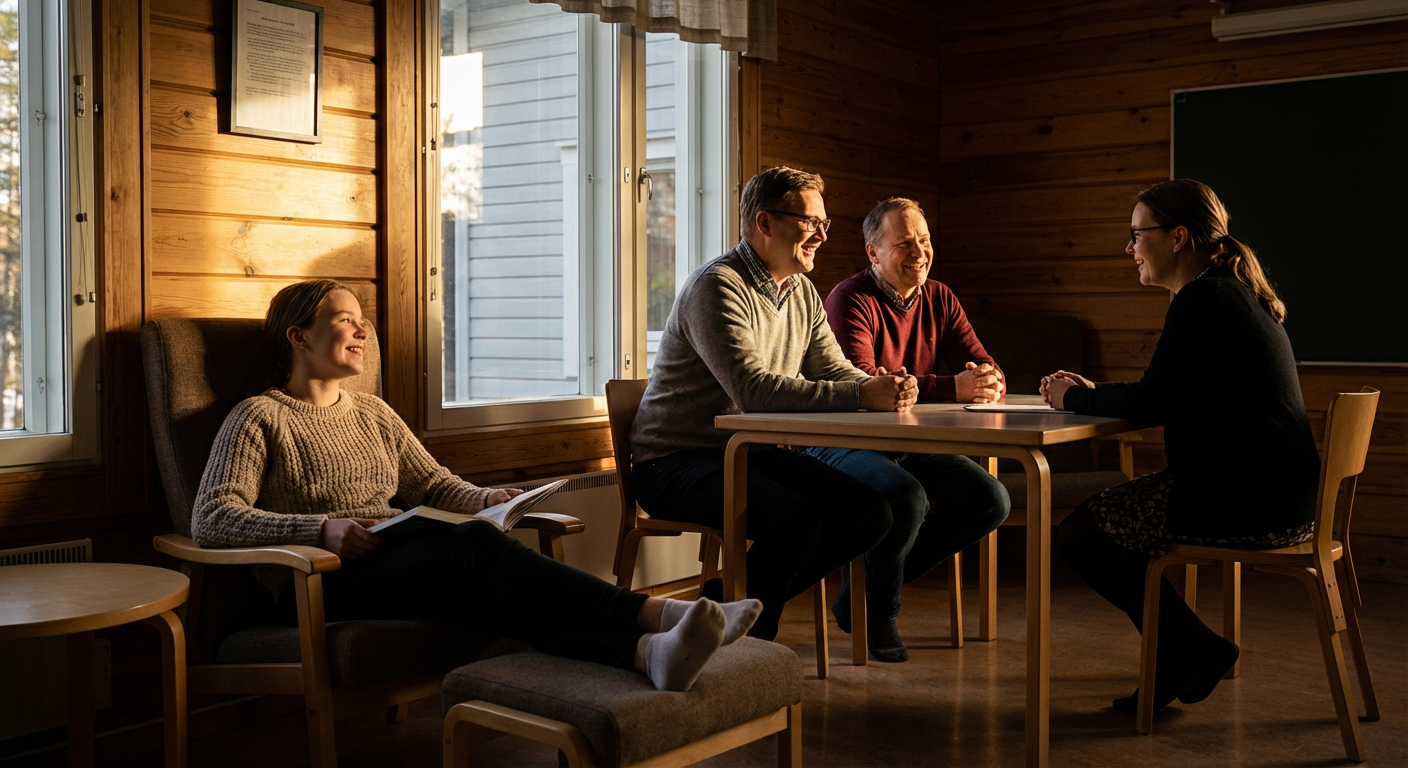
Instead of worksheets and rote practice, Finnish families now do what educators call ‘authentic learning experiences.’ A third-grader might help plan a family garden, naturally encountering concepts of measurement, seasons, and biology. Siblings might cook together, exploring fractions through recipe modifications and chemistry through ingredient interactions. Evening reading shifts from assigned chapters to chosen adventures, with parents asking open-ended questions that spark genuine discussion rather than checking for comprehension.
The University of Helsinki homework effectiveness study published in January 2026 provides crucial context for understanding why this approach works. Researchers found absolutely no correlation between homework completion and academic achievement in elementary grades. This suggests that our deeply held beliefs about homework’s necessity might be more tradition than truth. This data point alone has educators worldwide questioning whether we’ve been solving the wrong problem all along.
The American Education Battle Lines Form
The Finnish experiment has created a fascinating divide across American school districts. It reveals deep philosophical differences about childhood, learning, and family life. Twenty-three progressive districts have launched pilot programs inspired by Finland’s approach, while 156 districts have explicitly rejected no-homework policies through heated school board votes that often feel more like cultural battlegrounds than educational discussions.
In districts embracing homework reform, the changes mirror Finland’s experience. Teachers report that classroom discussions become richer when students aren’t exhausted from late-night worksheet completion. Parents describe rediscovering joy in their children’s natural curiosity. Children begin asking questions driven by genuine wonder rather than assignment requirements. The shift is more than policy change. It’s a fundamental reimagining of how families and schools can work together to nurture young minds.
However, resistance remains fierce in many communities. Parent advocacy groups voice legitimate concerns about college preparation and competitive readiness. The worry comes from a deeply American belief that academic rigor requires visible effort, that struggle itself teaches valuable lessons about persistence and responsibility. These concerns deserve serious consideration, even as we examine whether traditional homework actually delivers on these promises or simply creates the appearance of academic seriousness.
The Hidden Cost of Kitchen Table Tears
Perhaps the most compelling argument for homework reform comes from an unexpected source: child therapists’ offices. Mental health professionals report that 78% of therapy sessions with school-age children involve homework-related stress. This transforms homework from an educational strategy into a public health concern.
Consider what happens in homes where homework becomes a nightly battle. Children learn to associate learning with conflict. Parents become enforcers rather than guides. Family time gets consumed by academic anxiety. The ripple effects extend far beyond completed worksheets. Children develop negative associations with challenging material, parents feel inadequate when they can’t help with unfamiliar curricula, and siblings learn that education means stress and tears.
The Finland’s Ministry of Education homework policy research reveals how dramatically these dynamics can shift when homework pressure disappears. Families report that evening conversations become opportunities for genuine connection rather than academic interrogation. Children approach challenging concepts with curiosity rather than dread because learning no longer carries the weight of grades and deadlines.
Building Bridges Between Philosophy and Practice
The homework debate ultimately reflects deeper questions about childhood, family values, and our collective vision for education. Finnish educators believe that young children learn best through play, exploration, and meaningful relationships. American educators often emphasize preparation, practice, and measurable progress. Both perspectives contain wisdom. The challenge is creating educational approaches that honor children’s developmental needs while preparing them for future success.
The most promising developments happen when districts move beyond all-or-nothing thinking toward approaches that consider individual children, families, and communities. Some schools replace traditional homework with family projects that connect to curriculum goals while honoring different learning styles and family circumstances. Others create optional extension activities that allow motivated students to explore topics more deeply without penalizing children who need evenings for rest and play.
The Finnish experiment offers valuable data about alternative approaches, but every community must wrestle with how these insights apply to their unique context. The key is remembering that education should enhance family life rather than dominate it. True academic preparation includes nurturing children’s natural love of learning alongside their skill development.
What does this homework revolution mean for your family? I’d love to hear about your own kitchen table experiences and how they’re shaping your thinking about learning at home.
